The Badlands Loop Road is the best single thing you can do in Badlands National Park. The National Park Service describes it as a two-lane paved road that is appropriate for all motor vehicles, with several steep passes and sections with reduced speed limits. It links the Pinnacles entrance, near the town of Wall, with the northeast entrance, near Interior, and passes the Ben Reifel Visitor Center at Cedar Pass. This guide explains how to drive it, where to stop and how much time to allow.
Which direction?
Either works, and many visitors choose according to where they are staying. From Wall, enter at the Pinnacles entrance and drive toward Cedar Pass, ending at the northeast entrance near Interior. From Interior, reverse the route. Driving from the Pinnacles end puts the visitor center and the busiest trailheads in the middle of the drive, which suits lunch and a break. The light also differs: in the morning, formations along the north-facing edge show strong color, while late afternoon gives a warm glow on the eastern side of the road. Check where the sun will be before you commit.
How long?
The drive itself is modest, but the stops are the point. A rushed pass with a few photographs might take two hours, while a leisurely drive with boardwalk walks, the visitor center and a picnic is more likely to fill a half day. If you want to add a hike or a wildlife drive on the Sage Creek Rim Road, plan a full day. Because traffic can slow at the popular overlooks in summer, leave early and be prepared to wait for a parking space at midday.
Overlooks worth time
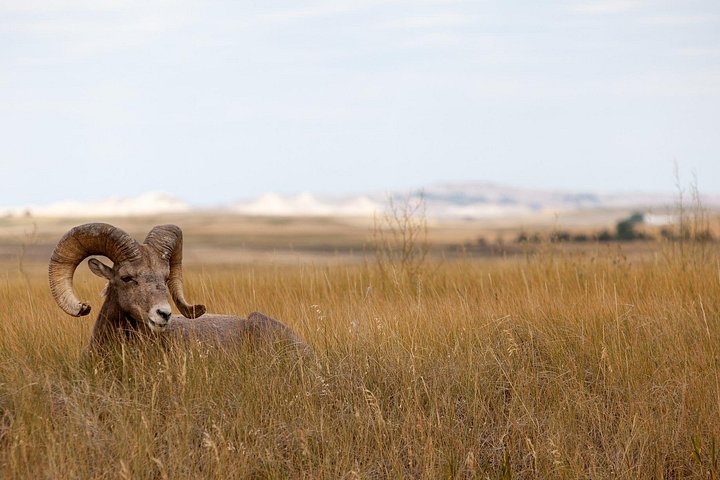
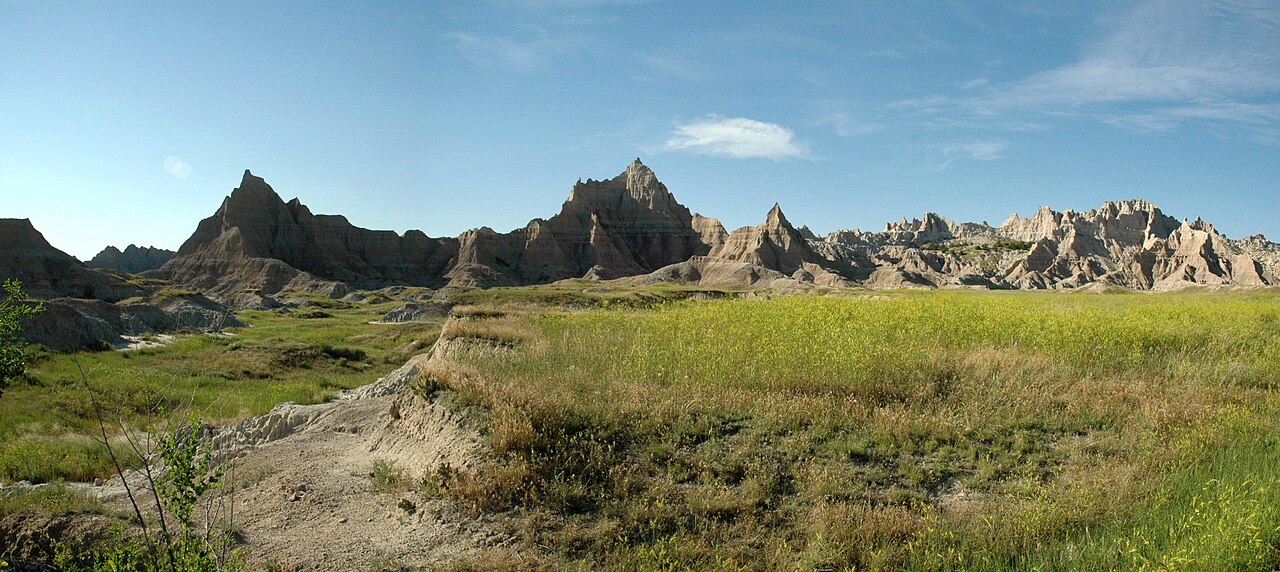
Among the stops along the road are the Pinnacles Overlook, where bighorn sheep are often seen on the rocky slopes, the Big Badlands Overlook, which is close to the Door, Window and Notch trailheads, the Yellow Mounds Overlook, with its bands of color, and the Burns Basin Overlook, where prairie dogs can be seen from the road. Panorama Point, the White River Valley Overlook and Bigfoot Pass are also worth a pause. You do not need to stop at all of them; pick the ones that match your interests, and let the light decide when to linger.
Walks along the way
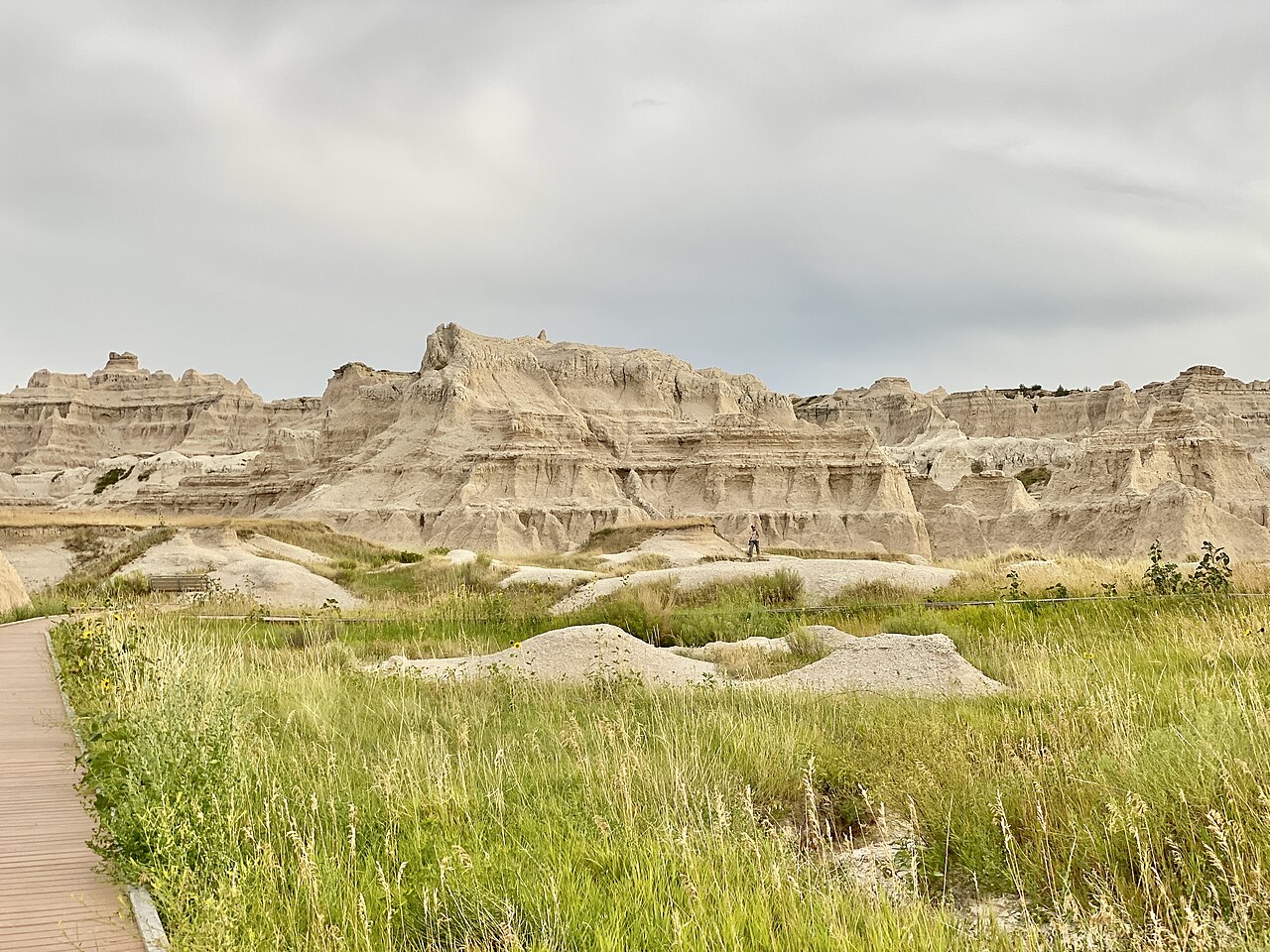
The Door, Window and Fossil Exhibit trails are easy boardwalk walks of about twenty minutes each, and they are among the best short walks in the park. The Cliff Shelf Nature Trail is a moderate loop of under a mile, and the Notch Trail is the short adventure, at about a mile and a quarter, with a ladder and a ledge. Check conditions before you go, because the Notch Trail is slippery after rain. The visitor center at Cedar Pass is worth an hour for the exhibits, the ranger desk and the fossil displays.
Safety and etiquette
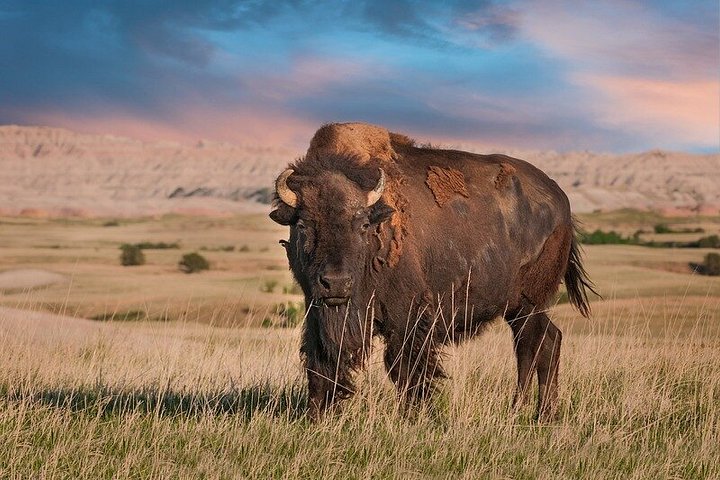
Park only in designated areas and pull fully off the road, because other vehicles and wildlife share it. Stay at least 100 feet from wildlife, and stay in your vehicle near bison. Keep pets on a leash no longer than six feet and out of trails, visitor centers and prairie dog colonies. Carry water, sun protection and a charged phone. If a storm approaches, move on, because the clay turns to mud quickly.
Beyond the paved road
The National Park Service says the Sage Creek Rim Road is a dirt and gravel road through the Sage Creek Wilderness Area that offers overlooks and wildlife viewing, and that it may be closed during or after heavy rain or snow. The Sheep Mountain Table Road is also unpaved, and the park recommends four-wheel drive there, even in dry conditions, and advises against driving it during or after storms. Check conditions with the park before venturing off the pavement.
Make it easier
A self-guided audio tour for the Loop Road provides commentary for a low price and is worth considering if you want to understand what you are looking at. A guided private tour handles the driving, the timing and the explanations. Whichever way you choose, remember that the entrance stations accept cards only, and that mobile coverage is unreliable, so download maps and audio before you enter.
A half-day sample plan
Enter early, stop at the first overlook for the light and drive on to Cedar Pass for the visitor center and the three boardwalk walks. Picnic in the shade of the developed area, then drive the second half of the road with fewer stops, saving the best light for the last overlooks. If you still have energy, finish with a dusk drive on the Sage Creek Rim Road for animals, or return to your lodging for dinner and the summer night sky program.