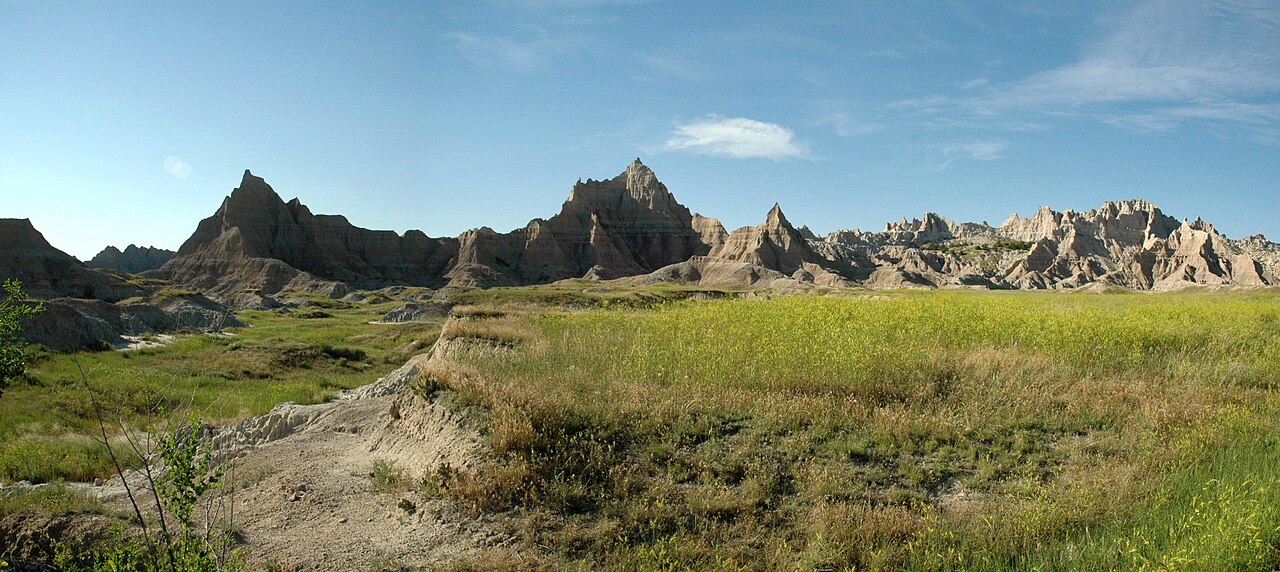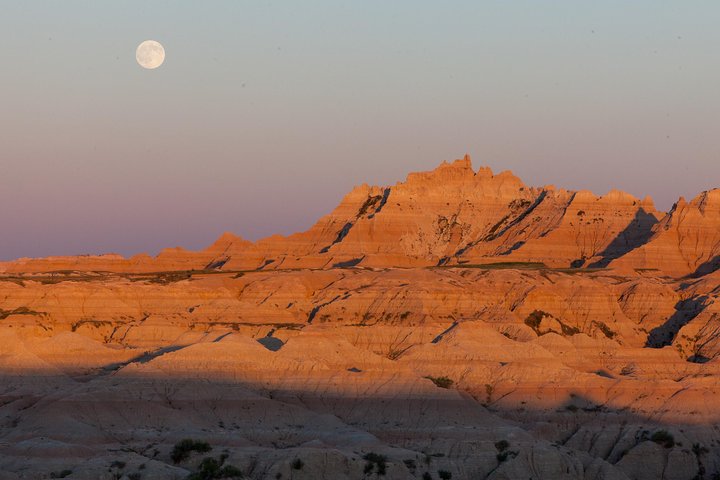
The best way to experience the Badlands night sky is to stay nearby. The park is far from major cities, the horizons are wide and the National Park Service says you can see more than 7,500 stars on any given night. This guide covers camping, the ranger programs and the lodging that puts you close to the dark.
Cedar Pass Campground
This is the main developed campground, with 96 level sites with views of the formations. The park says it typically requires a reservation, with booking for the summer season opening in early March, through Recreation.gov or Cedar Pass Lodge. It is a paid campground, open year-round with limited availability in winter, and stays are limited to 14 days. Campfires and wood collection are prohibited, but camp stoves and contained charcoal grills are allowed. It is close to the visitor center, the trailheads and the amphitheater, which makes it convenient for families and first-time campers.
Sage Creek Campground
This primitive campground is free and first-come, first-served, with 22 sites on the Sage Creek Rim Road. It has pit toilets and covered picnic tables but no water, so bring all you need or fill up at the visitor center. Motor homes, trailers and other RVs over 18 feet are prohibited, except horse trailers, and generators are not permitted. There is an active prairie dog colony, and bison are often nearby, so keep a safe distance. The road is unpaved and can close after winter storms or spring rains, so check conditions before you commit.
Backcountry
The park has a large wilderness area and offers backcountry experiences, but rules, permits and safety guidance are best confirmed directly with the park before you plan an overnight. Water is scarce, heat and storms are serious, and the terrain is easy to misjudge, so most first-time visitors are better served by a campground.
Ranger night sky programs
From Memorial Day through Labor Day, rangers hold night sky viewing at the Cedar Pass Campground Amphitheater each evening, just after the evening ranger program. They point out constellations, stars and planets, and telescopes are provided through the park's partners. The session usually starts around 9:45 pm in May through July and around 9:15 pm in August and September, depending on sunset, and it takes 30 to 90 minutes. No reservation is needed, and the path from the parking lot is an accessible paved ramp. The park also holds an annual three-day Astronomy Festival with family activities and evening presentations.
Stargazing on your own
Check the moon phase and the forecast, because a bright moon or smoke reduces what you can see. Allow at least twenty minutes for your eyes to adjust, use a red light and avoid looking at your phone. Choose a safe pull-off or the campground, and avoid walking off-trail in the dark, since the terrain has drop-offs and wildlife. Dress warmly, because nights cool quickly even in summer. A tripod and a wide-angle lens turn the Milky Way into a souvenir.
Lodging that keeps you close
Cedar Pass Lodge, inside the park, puts you steps from the amphitheater and the trailheads, and is the easiest way to combine a comfortable bed with a dark sky. The Badlands Motel and Campground in Interior is close to the northeast entrance and offers both motel rooms and camping. The motels in Wall are farther away, but they still shorten the drive compared with staying in Rapid City.
If you would rather not drive
A private sunset and stargazing tour from the Rapid City area carries you from golden hour into the dark and returns you to your hotel, which avoids a long drive on rural roads after dark. It costs more than camping, but it removes the logistics. For a cheaper option, the free summer ranger program is hard to beat. Whichever you choose, carry a payment card for park entry and plan for a cold, quiet and unforgettable night.
Practical camping tips
Arrive with everything you need, because services are limited and the nearest supplies are in Wall or Interior. Carry plenty of water, a stove, warm sleeping gear and a tent that handles wind, since gusts on the prairie can flatten a poorly pitched shelter. Secure food and trash against wildlife, keep a safe distance from bison and prairie dogs and check the forecast for storms. Cell coverage is unreliable, so share your plans with someone before you leave.