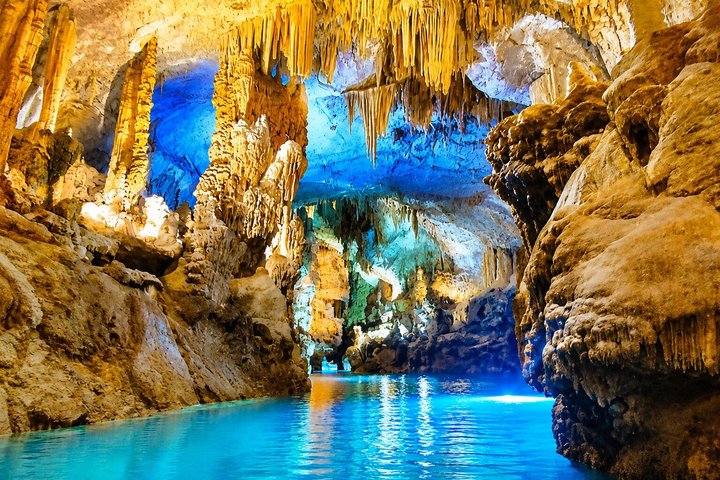
Jeita Grotto is a pair of connected limestone caves cut into the valley of the Nahr al-Kalb, about twenty kilometres north of Beirut, and it is the single most popular natural sight in Lebanon. The two levels are visited differently. The upper gallery is a dry walkway that climbs and winds beneath chambers hung with stalactites, columns and curtains of rock in shades of cream, amber and rust, some of them several metres long. The lower cave is a flooded passage that you tour by small electric boat, gliding slowly along an underground river that supplies drinking water to a large part of greater Beirut. Both levels are lit so the formations glow, and the temperature inside stays cool and damp all year, which is a welcome break from a hot coastal summer. The cave system is far larger than the stretch open to visitors, and the open parts have been fitted with raised paths and railings so nothing is disturbed. A leafy park surrounds the entrance, with gardens, a cafe and lawns, and a short ride by cable car or small train connects the lower car park to the upper entrance depending on how the site is running. Photography inside the caves is not allowed, so the memory is the souvenir, and staff are firm about it. Most people give the site between ninety minutes and two hours, longer if they linger over the gardens.
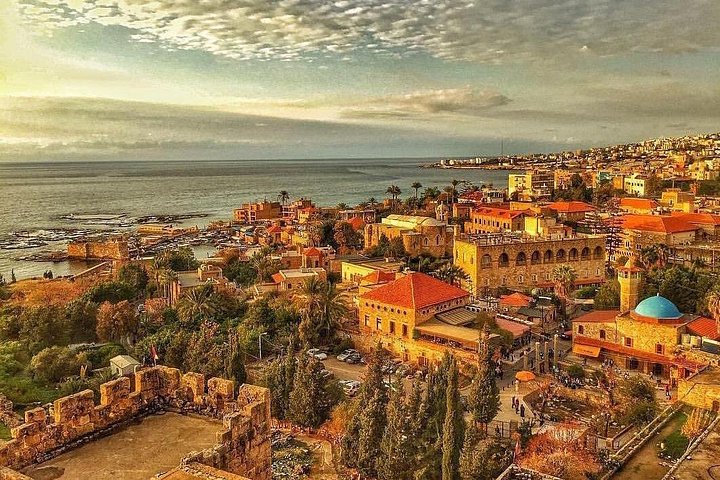
Getting there is easy, which is part of the appeal. Jeita sits just off the coastal highway and is almost always paired with Harissa and Byblos on a single day trip from Beirut, a combination that fits comfortably in one day with a guide and driver doing the navigating. The small-group tour linked from this page follows that classic loop, so you see the caves in the morning, ride up to the Lady of Lebanon shrine, and finish in the old harbour at Byblos.
Independent travellers can reach the site by taxi or hired car, and the park has a car park, but a guided day removes the parking and traffic questions entirely.
A few practical points will make the visit smoother. The site normally closes one day a week and for a maintenance period in the cooler months, so confirm opening days before you plan around it. In wet weather the lower cave can be closed when water levels rise, and the boats may not run, which is one more reason to check ahead.
Wear shoes with grip, because the walkways are damp, and bring a light layer since the caves are noticeably cooler than the outdoors. Queues build up at weekends and on holidays, when Lebanese families make the same trip, so a weekday morning is the calmest time.
What stays with most visitors is the scale and the silence. The upper gallery opens into chambers tall enough to swallow a multi-storey building, and the boat ride below is almost completely quiet apart from the ripple of the paddle and the guide's low commentary. It is an easy, unhurried highlight for families with children, older travellers who want something not too strenuous, and anyone who needs a counterweight to a week of ruins and museums. It also works well in poor weather, since most of the experience is underground.
Families with young children should know the paths include steps and slopes, though handrails are fitted throughout. If you have time, linger in the gardens afterwards, where shaded benches and a cafe make a pleasant stop before the road north. Souvenir shops near the exit sell local honey, handicrafts and sweets, which make easy gifts.
What to expect
The experience
A walk through the upper gallery followed by a boat ride on the lower cave river, usually combined with Harissa and Byblos on a small-group day trip from Beirut.
Best time
Weekday mornings are calmest. The caves stay cool all year, so it also suits hot summer days and rainy ones.
How long
About two hours at the caves; the full loop takes most of a day.
Tips
No photography inside the caves. Wear shoes with grip, carry a light layer, and check the weekly closing day and the winter maintenance period before you go.
Quick picks
- Best for
- Families, first-timers and anyone wanting a gentle, memorable natural wonder.
- Families
- Excellent. The boat ride and the glowing formations hold children's attention, and the walkways are manageable.
- Couples
- The quiet boat ride is a romantic moment, and the garden park is pleasant for a coffee afterwards.
- Pair with
- Harissa and Byblos on the same day, as most tours do.
- Time needed
- Two hours on site, a full day with the other stops.
Good questions
Can I take photos inside Jeita Grotto?+
No. Photography is not allowed inside either cave, and staff enforce the rule. Plenty of images of the formations are available at the entrance and online.
Is the boat ride included?+
Both the upper walkway and the lower boat ride are part of a normal visit, though the boats may not run when water levels are high. Check with the operator when you book.
How far is Jeita from Beirut?+
Roughly twenty kilometres north of the city, usually thirty to fifty minutes by road depending on traffic on the coastal highway.
Is it suitable for young children and older visitors?+
Yes for most. There are steps and damp walkways, but the route is gradual and the boat ride is easy. Strollers are generally not practical inside.
Is Jeita open every day?+
It normally closes one day a week and for a maintenance period in winter. Confirm the current opening days before you plan the day around it.