Belize is a small country with a very long bird list, and the Stann Creek coast around Hopkins is a good place to start it. Within a short distance you find mangrove lagoons, creek banks, farmland, forest edge and the sea, each with its own cast of birds, from herons, kingfishers and vultures to parrots, toucans, tanagers and flycatchers. The tour we link is a guided birdwatching outing of about three hours, led by a local who knows the habitats and the calls, and it is a calm, low-effort way to see wildlife. It suits both beginners who want to put names to the birds they have seen from the hotel balcony and keen birders who want help with local species, and it makes a good early-morning start to a day in Hopkins.
What the outing involves. Birdwatching is about patience and early starts, and the guide will pick the places and times that give the best chance of activity. You walk slowly, stop often and use binoculars and, usually, a spotting scope to get close views, and the guide identifies birds by call as much as by sight, which is where a local expert makes the biggest difference.
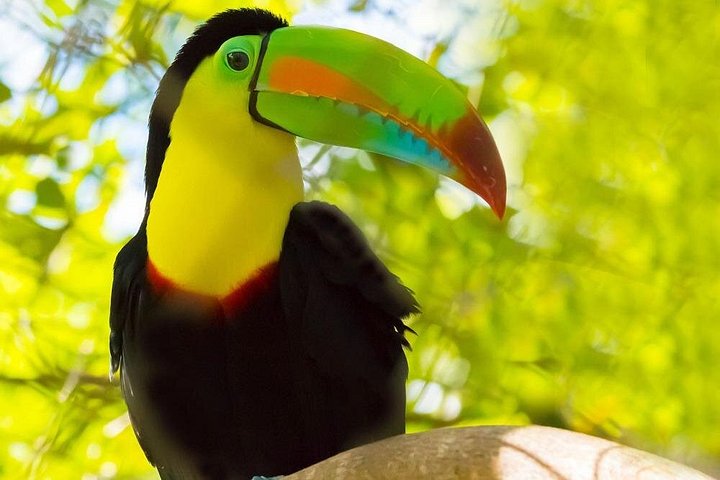
Expect a mix of common and colourful species, and perhaps a few that are harder to see. Belize's national bird, the keel-billed toucan, is a regular target, although no sighting is guaranteed.
Why it is good here. Hopkins sits between the Maya Mountains and the sea, so the habitats change quickly over short distances, and the village itself is quiet and green, with birds in the gardens as well as the wild places. The best months for birding are often the drier months and the winter migration season, when North American migrants join the residents, but the resident birds are active all year.
Early mornings are best, before the heat builds, and the trip is gentle enough for most ages and abilities. The outing is short, which leaves the rest of the day free for the beach, the village or a mainland excursion.
Practical tips. Bring binoculars if you have them, since a good pair makes a big difference, and ask whether the operator provides a scope or a field guide. Wear neutral, light clothing, closed shoes and a hat, and use insect repellent, especially near water. Keep your voice low and move slowly, and follow the guide's lead around nesting areas.
Combine the morning with a Garifuna cultural visit, a Cockscomb Basin hike or a Bocawina trip for a varied southern Belize stay. If you want a longer, wilder wildlife day, the Cockscomb Basin Wildlife Sanctuary and Monkey River trips offer more space and more species.
Do not worry about being a beginner. Guides are used to visitors who cannot yet tell a flycatcher from a tanager, and the best of them make the outing about enjoyment, not lists. By the end of the morning most people can recognise a handful of local birds by sound, which changes how you hear the forest for the rest of the trip.
Keep a simple notebook or use a free bird identification app with downloaded Belize data, since mobile signal can be patchy, and ask your guide to repeat the names of birds you want to remember.
What to expect
The experience
A guided birdwatching outing of about three hours near Hopkins, visiting lagoon, forest-edge and farmland habitats with a local bird guide.
Best time
Early morning, and the drier months or the northern winter migration season for the most activity.
How long
About three hours.
Tips
Bring binoculars, wear light neutral clothing and closed shoes, use repellent and keep your voice low.
Quick picks
- Best for
- Birders and curious beginners who like quiet, early-morning wildlife.
- Families
- Fine for patient children; the pace is slow and the outing short.
- Couples
- A peaceful sunrise activity that leaves the day free.
- Pair with
- A Garifuna cultural visit, Cockscomb Basin or a Bocawina trip.
- Time needed
- About three hours, ideally from early morning.
Good questions
Will I see a toucan?+
It is a regular target, but no sighting is guaranteed. The guide will look for habitats where toucans are active.
Do I need binoculars?+
Bring your own if you have them. Ask the operator whether a scope or binoculars are provided.
When is the best time of year?+
Resident birds are active year round, and the drier months and the northern winter migration season add variety.
How early do I need to start?+
Early morning is best, before the heat builds, so expect an early pick-up.
Is it suitable for beginners?+
Yes, the guide identifies birds by sight and sound, which makes it a good introduction.