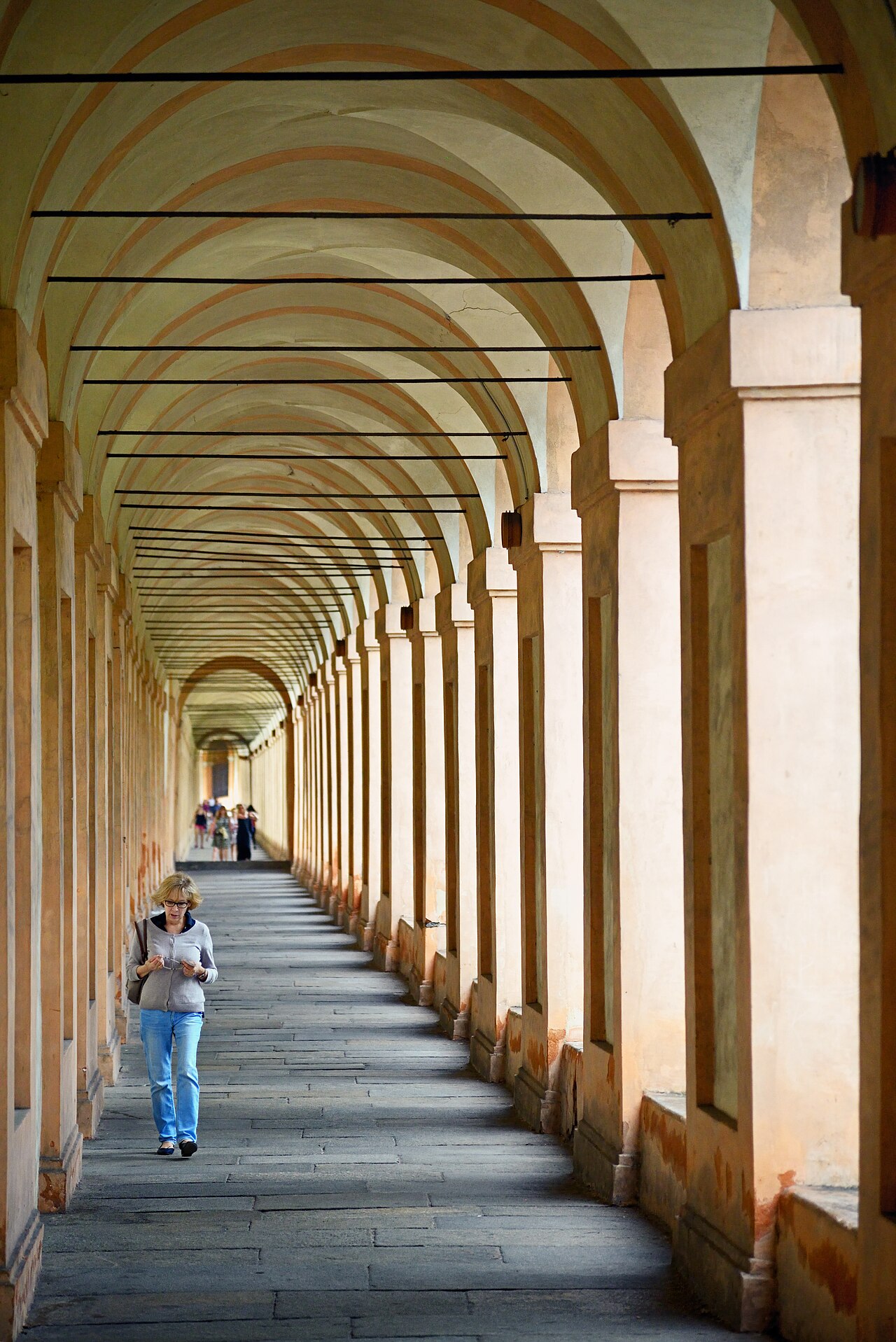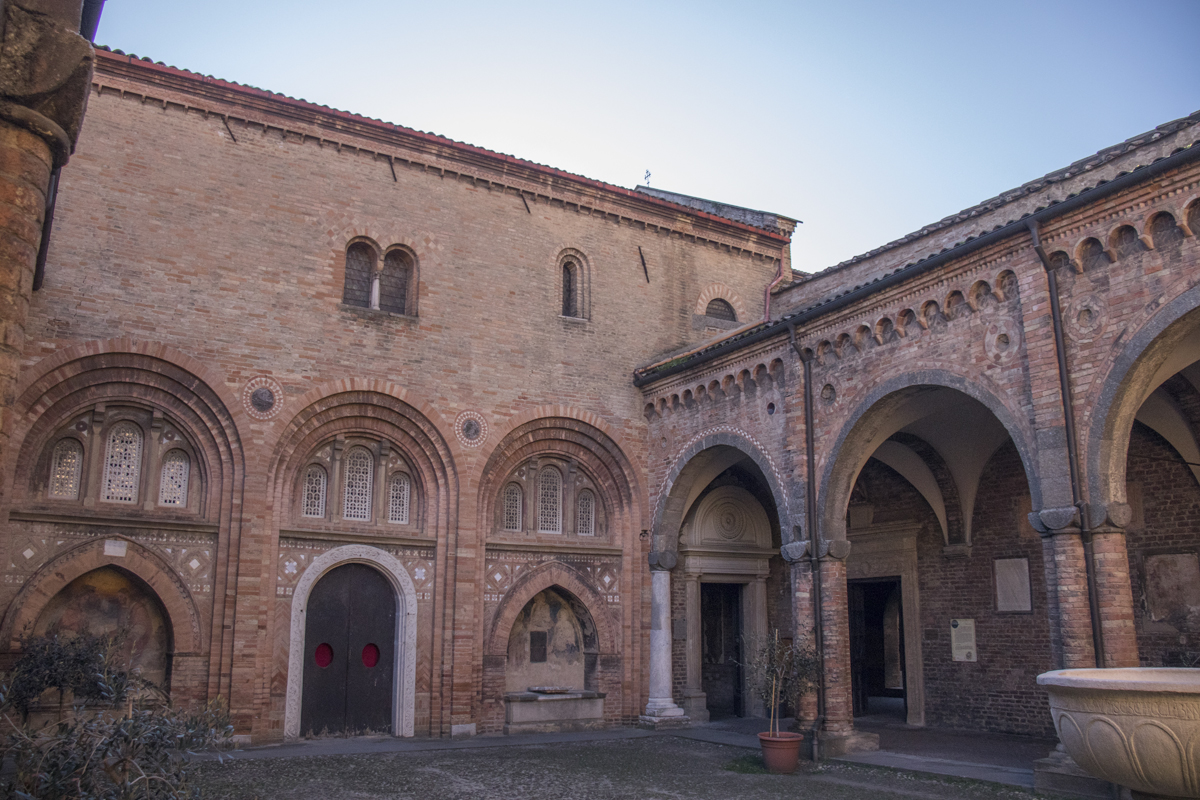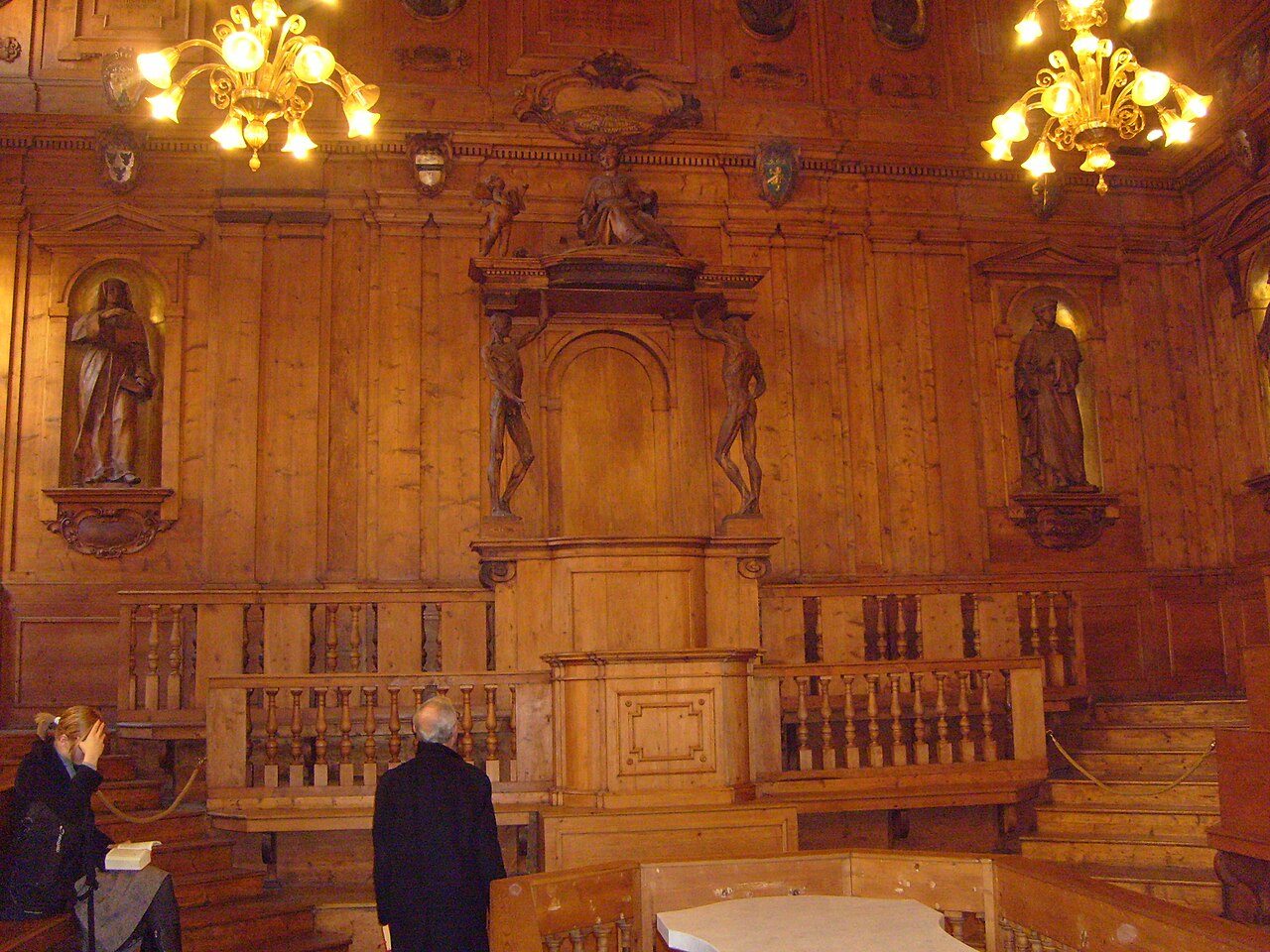
The Archiginnasio is where Bologna’s claim to be la dotta, the learned city, becomes something you can see and touch. Built in 1562 and 1563 to bring the scattered schools of the university under one roof, the palace stands just behind San Petronio along the Pavaglione portico. Its loggias, staircases and lecture halls are covered with painted and sculpted coats of arms of students and teachers, the largest heraldic wall decoration anywhere. Upstairs, the Anatomical Theatre, designed in 1637, is a room panelled entirely in carved wood, with tiered seats around a marble dissection table and a canopy held up by two flayed figures, the famous Spellati. The building has housed the city library since the nineteenth century, so it is still a working place of study. The Stabat Mater hall, a former lecture room, hosts talks and readings and is often visible from the doorway.
How it works: the courtyard and porticoes can be seen freely, while the Anatomical Theatre and the Stabat Mater hall are visited with a ticket. The Tiqets product linked here bundles entry with a smartphone audio guide and a tasting of local food, which suits independent travellers who want context without a fixed tour time. The palace is open from Monday to Saturday in the daytime and closed on Sundays, and rooms can close at short notice for library events, so a weekday morning is the safest slot.
What you see: start in the courtyard and climb either staircase to the upper loggia, where the coats of arms run unbroken along walls and vaults. The Anatomical Theatre was badly damaged by bombing in 1944 and painstakingly rebuilt from the original carved pieces, so what you see today is the historic room put back together. Look up at the ceiling figures of the constellations and down at the table where lecturers once demonstrated anatomy to students on the benches.
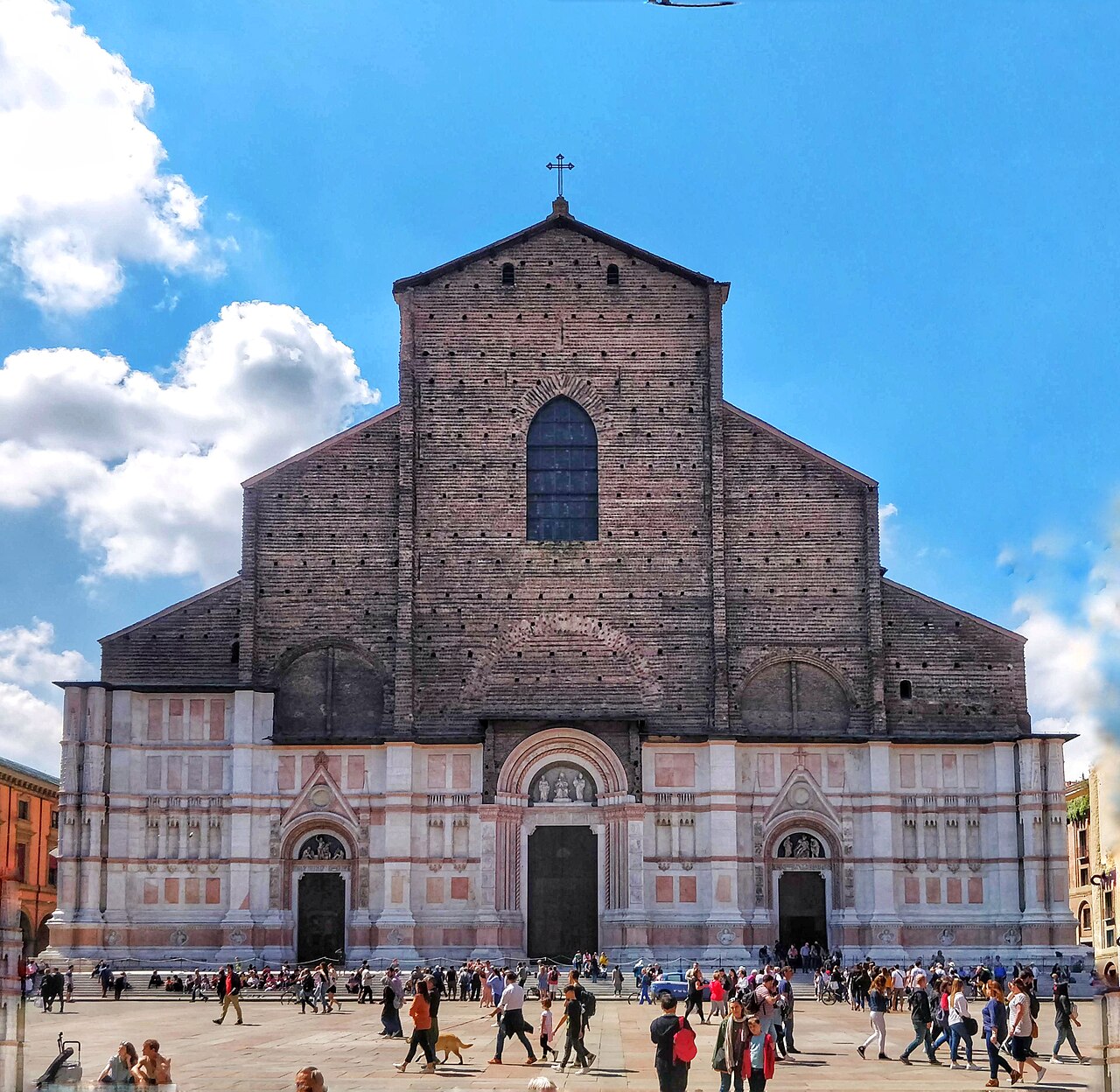
Making the most of it: give yourself time to read the crests, many of which name students from across Europe. Pair the visit with San Petronio next door and the Quadrilatero market streets a minute away. The library reading rooms are for registered readers, so keep voices low in the corridors.
What to expect
The experience
A self-guided visit with a smartphone audio guide through the courtyard, the upper loggias, the Anatomical Theatre and the Stabat Mater hall, followed by a tasting of local food.
Best time
A weekday morning soon after opening, before groups arrive and while the library is quiet; remember the palace is closed on Sundays.
How long
Plan on about an hour inside the palace, plus a little extra for the food tasting.
Tips
Bring earphones for the audio guide, keep your voice down near the reading rooms, and check for event closures if a particular hall matters to you.
Quick picks
- Best for
- History lovers, medicine and science fans, and every first-time visitor who wants to understand why Bologna is called the learned city.
- Families
- Older children are fascinated by the anatomy theatre and the skinned figures, though the visit is quiet and slow for toddlers.
- Couples
- The carved wooden theatre and the crest-covered loggias are atmospheric and photogenic, especially on a grey winter morning.
- Pair with
- The Basilica of San Petronio next door and a stroll through the Quadrilatero market lanes a minute away.
- Time needed
- About an hour, or ninety minutes including the tasting.
Good questions
What is the Archiginnasio of Bologna?+
It is the palace built in 1562 and 1563 to house the University of Bologna in a single building. Today it is the city library and a visitable monument with a famous anatomy theatre.
Is the Archiginnasio open on Sundays?+
No, the Archiginnasio is closed on Sundays. It opens from Monday to Saturday in the daytime, with occasional closures for events.
What is the Anatomical Theatre?+
It is a lecture room designed in 1637 and panelled in carved wood, where anatomy was taught around a marble dissection table. It was rebuilt from its original pieces after bomb damage in 1944.
Do I need a ticket to see the Archiginnasio?+
The courtyard and porticoes can be seen freely, but the Anatomical Theatre and the Stabat Mater hall need a ticket. The linked Tiqets option adds an audio guide and a food tasting.
How long does a visit take?+
Most visitors need about an hour inside. Add time for the tasting and for a walk to San Petronio next door.