The Bromo sunrise is the most famous experience in East Java, and it rewards a little preparation. The timetable is brutal, the air is cold and the viewpoints are crowded, but the moment when the caldera emerges from the dark is worth the effort. This guide explains how the morning works, from the first alarm to the last step at the crater rim.
The geography
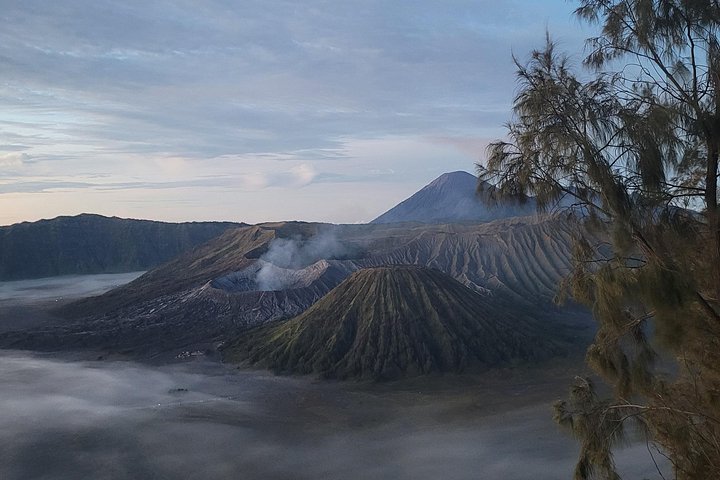
Bromo is a cone about 2,329 metres high that sits inside the much larger Tengger caldera, in Bromo Tengger Semeru National Park. Around it is the Sea of Sand, a flat plain of volcanic ash. Beside Bromo rises the symmetrical cone of Batok, and behind them stands Semeru, the highest mountain on Java, which puffs ash at intervals. The caldera wall forms a rim around the plain, and the viewpoints are on this rim.
Which entrance
There are several approaches. The most common is from Cemoro Lawang and Ngadisari on the Probolinggo side, which has the closest hotels. Another comes from Wonokitri on the Pasuruan side, and a southern route from Malang passes through Tumpang and the savanna. Where you start depends on your tour, and the route affects the timing and the sequence of stops. Ask your operator which gate they use.
The viewpoints
The best-known sunrise spot is Penanjakan, at roughly 2,770 metres, which has a large viewing platform and the classic panorama. It is also the most crowded, with queues of jeeps and a packed crowd in the dry season. An alternative is King Kong Hill, a quieter viewpoint with a similar outlook, which many guides suggest for those who want more space. Some travellers prefer a lower viewpoint near Cemoro Lawang, which is less dramatic but far calmer.
The jeep ride
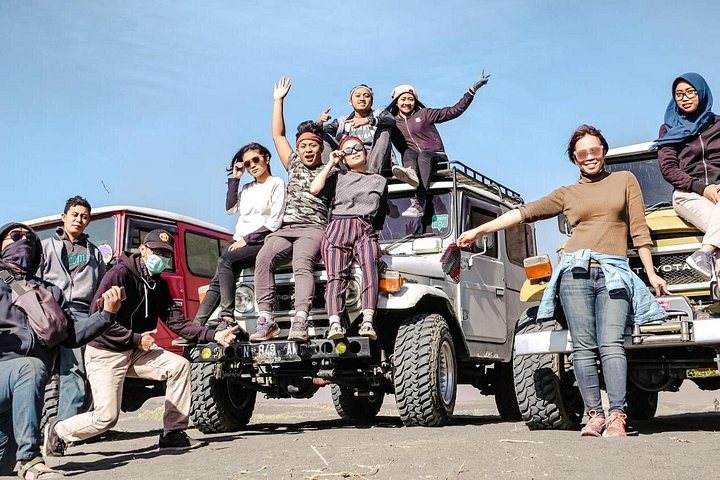
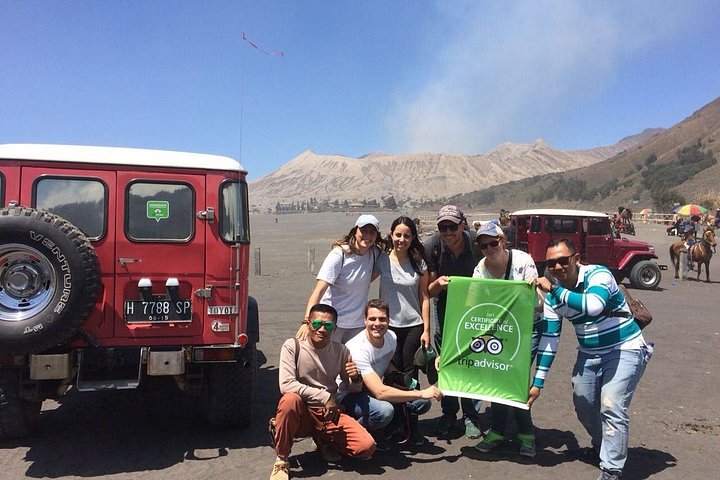
In the dark, the standard way to reach a viewpoint is a four-wheel-drive jeep. The ride is bumpy, loud and cold, and each jeep carries a small group. You may share with other travellers on a group tour or hire a private jeep. After sunrise, the same jeep takes you down to the Sea of Sand and to the foot of Bromo. The driver waits while you climb, and then takes you to breakfast or the next stop.
The timetable
A typical morning begins at midnight or in the small hours with a pick-up, followed by a drive of two to four hours depending on your starting point. The jeep leaves for the viewpoint around three or four in the morning. Sunrise itself is usually between five and six, and the show lasts about forty minutes. By seven you are on the Sea of Sand, and by eight you may be on the crater stairs.
The crater climb
From the base of Bromo, you cross the sand on foot or by pony. The final staircase has roughly 250 steps, steep and often dusty. At the top, a narrow path runs along the rim, and you can look into a smoking vent. If the volcano is restless, access can be restricted, and rangers will direct visitors. Take your time, wear a mask against the dust and hold on to the handrail.
What to wear
The cold is the main surprise. At the viewpoint, temperatures can fall close to freezing in the dry season, and the wind makes it feel colder. Wear thermal layers, a warm jacket, gloves, a hat and a scarf, plus closed shoes with good grip. A small torch or headlamp helps in the dark. A dust mask or buff is useful on the Sea of Sand and the stairs.
Photography
The soft, pink light before sunrise is the best time for photographs, so claim a spot early. A tripod helps in low light, though space on the platform is limited. Bring spare batteries, since the cold drains them quickly, and a lens cloth for the mist. Respect other visitors by not blocking the view, and keep drones for permitted areas only, as rules in national parks are strict.
Crowds and alternatives
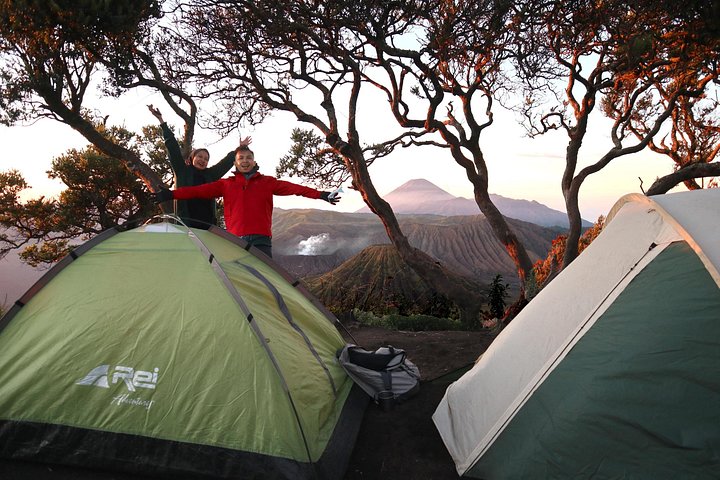
On weekends and holidays, the main viewpoint is extremely busy. If crowds put you off, consider a daytime tour that avoids the sunrise rush, a camping tour that gets you to the caldera earlier or a private tour with a flexible guide. You can also visit midweek. Whatever you choose, accept that Bromo is popular, and focus on the landscape rather than the queue.
When things go wrong
Cloud can hide the view, and rain can make the stairs slippery. Volcanic activity can close the crater, and operators sometimes change the route at short notice. Keep a flexible attitude, check the status the day before and ask your guide about alternatives. Even on a cloudy morning, the drive, the Sea of Sand and the atmosphere of the Tengger highlands are memorable.