Central Anatolia has a strong food tradition, and Cappadocia adds its own twists: a cuisine shaped by wheat, pulses, orchards and vineyards, and cooked in a landscape where cave kitchens and stone ovens have long been normal. You can eat well here without chasing fashionable restaurants, as long as you know what to order. This is a guide to the dishes worth seeking out and the experiences that put them in context.
Testi kebab, the signature
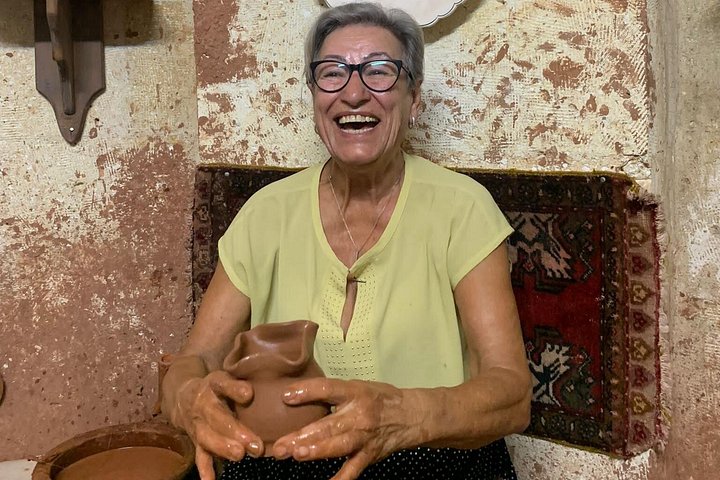
The dish most associated with the region is testi kebabı, the pottery kebab. Meat and vegetables are sealed inside a clay jar and cooked slowly, and the jar is brought to your table, where it is cracked open, often with a flourish, and the contents tipped onto your plate. It is a showpiece, but it is also genuinely good, tender and savoury, and it is a fitting meal in a country where Avanos has been making pottery for centuries. Many restaurants ask you to order it ahead because of the cooking time, so mention it when you reserve. Vegetarian versions are sometimes available, but ask.
Dumplings, pastries and pans
Mantı, the small filled dumplings served with yoghurt and spiced butter, is a staple of central Turkey, and Kayseri, a short drive east, is especially known for it. Sac tava, meat and vegetables sizzled on a round metal plate, is a dependable lunch, and you will see yaprak sarma, stuffed vine leaves, and kuru fasulye, the slow-cooked white bean stew, on home-style menus. Look too for gül böreği, a rolled pastry, and for stuffed quince in autumn, when orchards are heavy with fruit. Pekmez, a thick grape molasses, appears at breakfast and in desserts. Kayseri is also famous for pastırma, the air-dried cured beef, which turns up in local dishes and at breakfast tables.
The Turkish breakfast
If your hotel serves breakfast, treat it as a meal rather than a formality. Expect a spread of cheeses, olives, tomatoes and cucumbers, eggs, bread, honey, jams and tea, often served on a terrace facing the valleys. At the grander cave hotels it is cooked to order. The Museum Hotel runs its own restaurant, Lil'a, and Sultan Cave Suites has the Michelin-listed Seten Restaurant, which make either a good dinner reservation for a special evening.
Wine, a tradition older than the tourists
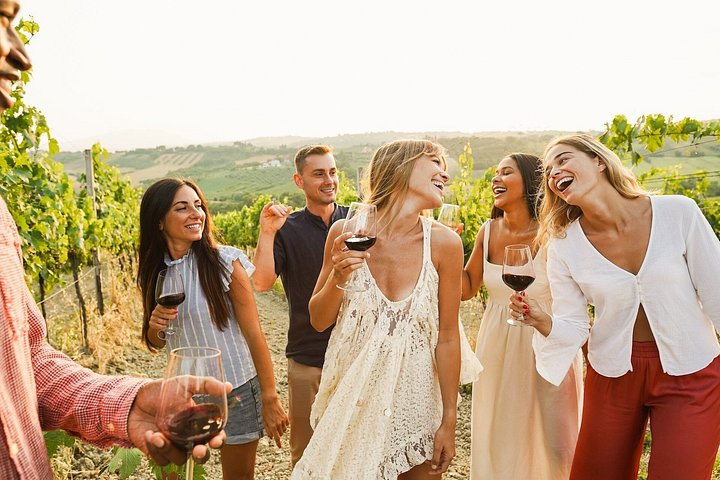
The soils and climate of the plateau have supported vineyards since antiquity, and Ürgüp, Göreme and Uçhisar all have wineries and tasting rooms, some of them in cellars cut into the rock. Local varieties are used alongside international ones, so ask the host what is poured and how it differs. Our wine tasting experience is a relaxed way to sample several wines with a guide in an afternoon, and it pairs naturally with a sunset in the valleys. Remember that Turkey is a majority-Muslim country: wine is easy to find in tourist areas, but not every small village restaurant serves alcohol, so check before you sit down.
Cook it yourself
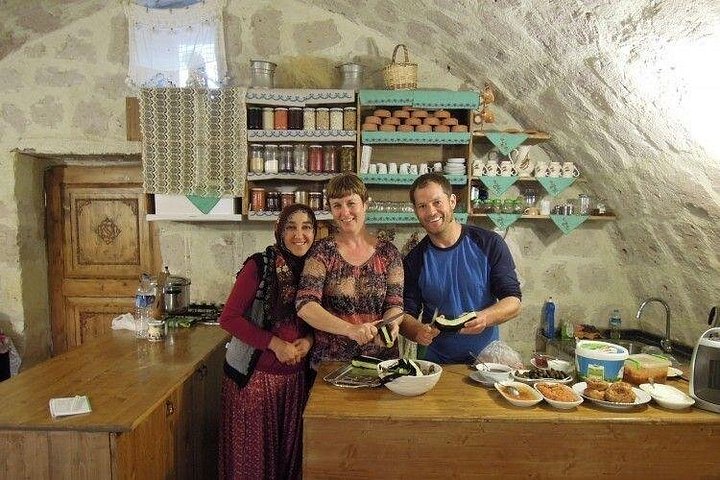
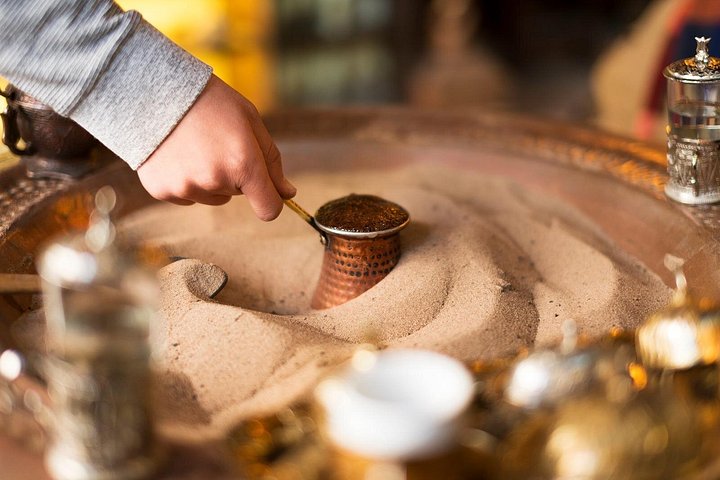
For a deeper taste of the region, take the home cooking class and meal with a local family, which pairs the recipes with a seat at a family table. The sand-brewed Turkish coffee workshop shows how coffee is heated in a small pot in hot sand, and is short enough to fit between sights. Both are good for travellers who want to learn something as well as eat. A night at a cave restaurant with a folk show combines dinner with entertainment, and our Turkish night show is the easiest way to do it.
Practical tips
Tea is offered everywhere, and it is polite to accept. Tips of around ten percent are common in sit-down restaurants, often handed over in cash even when you pay the bill by card. Menus in Göreme and Uçhisar are in English, and prices in tourist restaurants with a view can run well above those in local lokantas, the simple canteen-style restaurants where you point at dishes in a counter. Try at least one lokanta lunch, ideally in Avanos, Ürgüp or Ortahisar, away from the busiest streets. Bottled water is cheap, and tap water is best avoided unless your hotel advises otherwise.
How to plan your meals
Have the testi kebab for your first dinner, a lokanta lunch on a sightseeing day, a long breakfast on your balloon morning once you are back from the flight and a wine tasting on the afternoon you are not walking. Eat early if you want a terrace table at sunset, and keep room for dessert, as baklava, sütlaç rice pudding and kadayıf are everywhere.