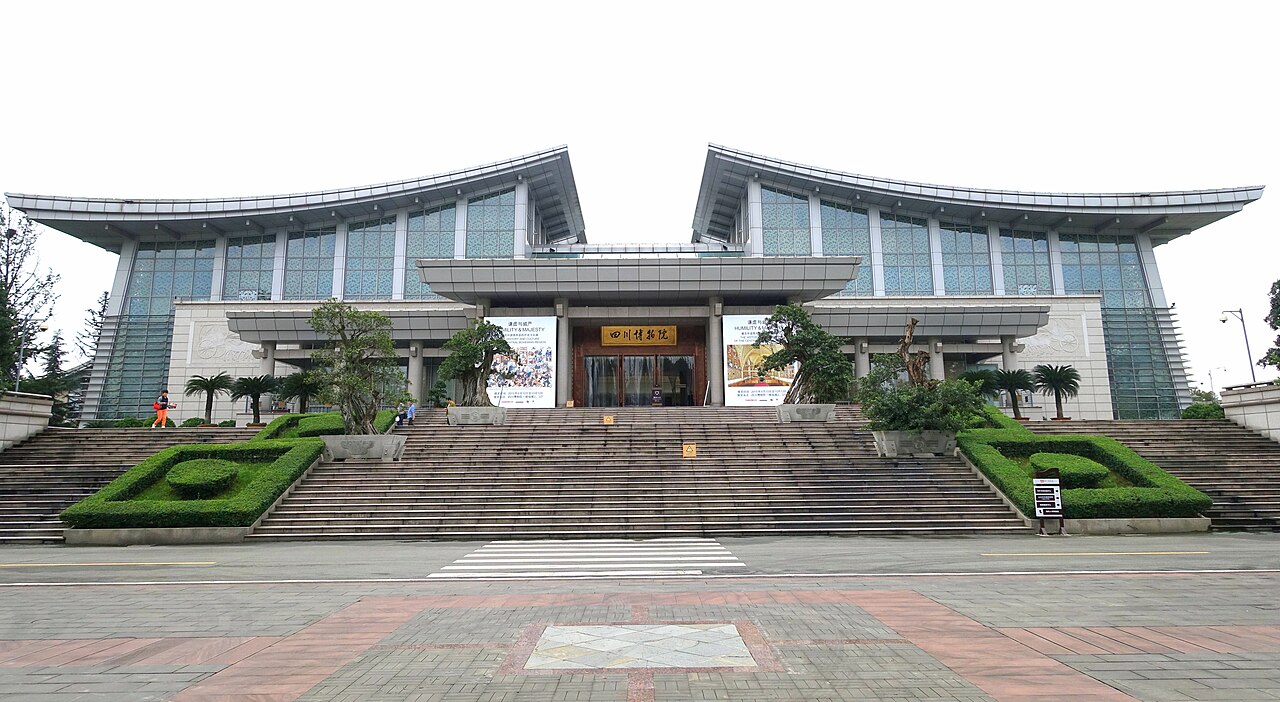
The Sichuan Museum is the province’s principal museum, a deep, scholarly collection that tells the story of the whole Sichuan region rather than just the city. It stands at 251 South Huanhua Road in the Wuhou district, covers 12,900 square metres with 14 exhibition halls, and holds about 260,000 items, which a Chinese government page describes as the sixth-largest collection in China. The layout is easy to follow. On the first floor are Sichuan relics from more than 5,000 years ago through the Qing Dynasty and the Republic of China, including bronzes from the Ba and Shu cultures and Han Dynasty pictorial bricks and pottery figures that show how people lived and worked two thousand years ago. The second floor has a dedicated hall of more than 180 works by the painter Zhang Daqian, who lived from 1899 to 1983 and is one of the most celebrated Chinese painters of the twentieth century. The third floor covers Buddhist relics, arts and crafts and the cultures of Sichuan’s ethnic groups, and gives a sense of how Tibetan, Yi and other traditions shape the western half of the province.
How to visit
Admission is free, but visitors must bring their passport, and a Chinese government page notes a daily cap of about 4,000 visitors, so arrive reasonably early on busy days. The museum is closed on Mondays except national holidays. Opening hours run until the evening, with a slightly later close in summer than in winter, and last entry is an hour before closing. Booking has traditionally been available by phone, and the museum’s website is www.scmuseum.cn, so check the current reservation process before you go.
What to expect
A quieter, more traditional museum than the city museum, which suits people who like to read labels and take their time. The Zhang Daqian hall is a highlight for anyone interested in Chinese painting, the Ba-Shu bronzes tie in with Sanxingdui and Jinsha, and the third floor gives helpful context for a trip to western Sichuan. Labels are in Chinese and English in the main galleries, though detail varies, so consider a guide or an audio guide.
Making the most of it
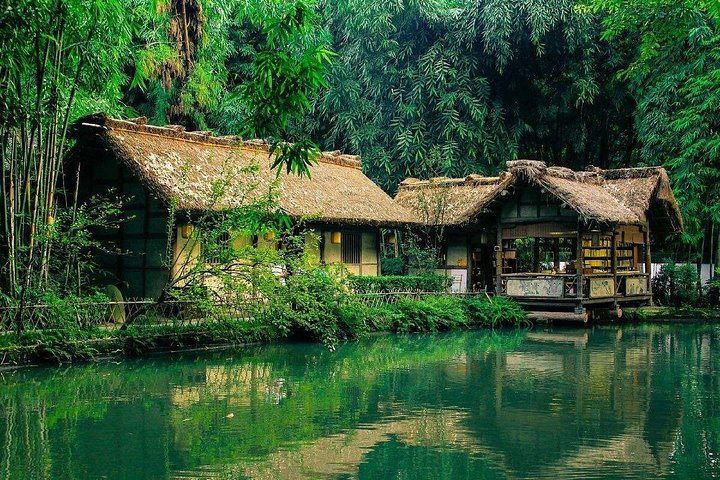
Allow two to three hours, and start on the first floor so that the story runs in order. It sits close to Du Fu Thatched Cottage and the Wuhou area, so a slow cultural day works well: museum in the morning, then lunch and the cottage gardens in the afternoon. Late opening makes it easy to fit in after another sight.
Good to know
Bags are checked, large items may need to be left at a cloakroom, and photography rules vary by gallery. It is a good option in poor weather and a calmer one on a busy holiday weekend, when the more famous attractions are crowded. Combine it with a teahouse stop for a relaxed, thoroughly Chengdu day.
What to expect
The experience
A large provincial museum across three floors, from ancient relics to Zhang Daqian paintings and Buddhist and ethnic-minority galleries.
Best time
A weekday morning for thin crowds; avoid Mondays, when it is normally closed.
How long
Two to three hours.
Tips
Bring your passport for free entry, arrive early on busy days because daily entry is capped, and begin on the first floor.
Quick picks
- Best for
- Culture and art lovers, and anyone who wants the whole story of Sichuan rather than just Chengdu.
- Families
- Better for older children; the bronzes and pictorial bricks hold interest, but the galleries are quiet and text-heavy.
- Couples
- A slow, absorbing morning, followed by lunch and the gardens at Du Fu Thatched Cottage.
- Pair with
- Du Fu Thatched Cottage, Wuhou Shrine or Jinsha Site Museum.
- Time needed
- Half a day.
Good questions
Is the Sichuan Museum free?+
Yes, admission is free, but visitors must bring a passport and daily entry is capped at about 4,000 visitors, according to a Chinese government page.
What is in the Sichuan Museum?+
About 260,000 items, including Ba-Shu bronzes, Han pictorial bricks, more than 180 works by Zhang Daqian, Buddhist relics and ethnic-minority crafts.
Which day is the Sichuan Museum closed?+
It is closed on Mondays except national holidays.
Where is the Sichuan Museum?+
It is at 251 South Huanhua Road in the Wuhou district, near Du Fu Thatched Cottage.
How does it compare with the Chengdu Museum?+
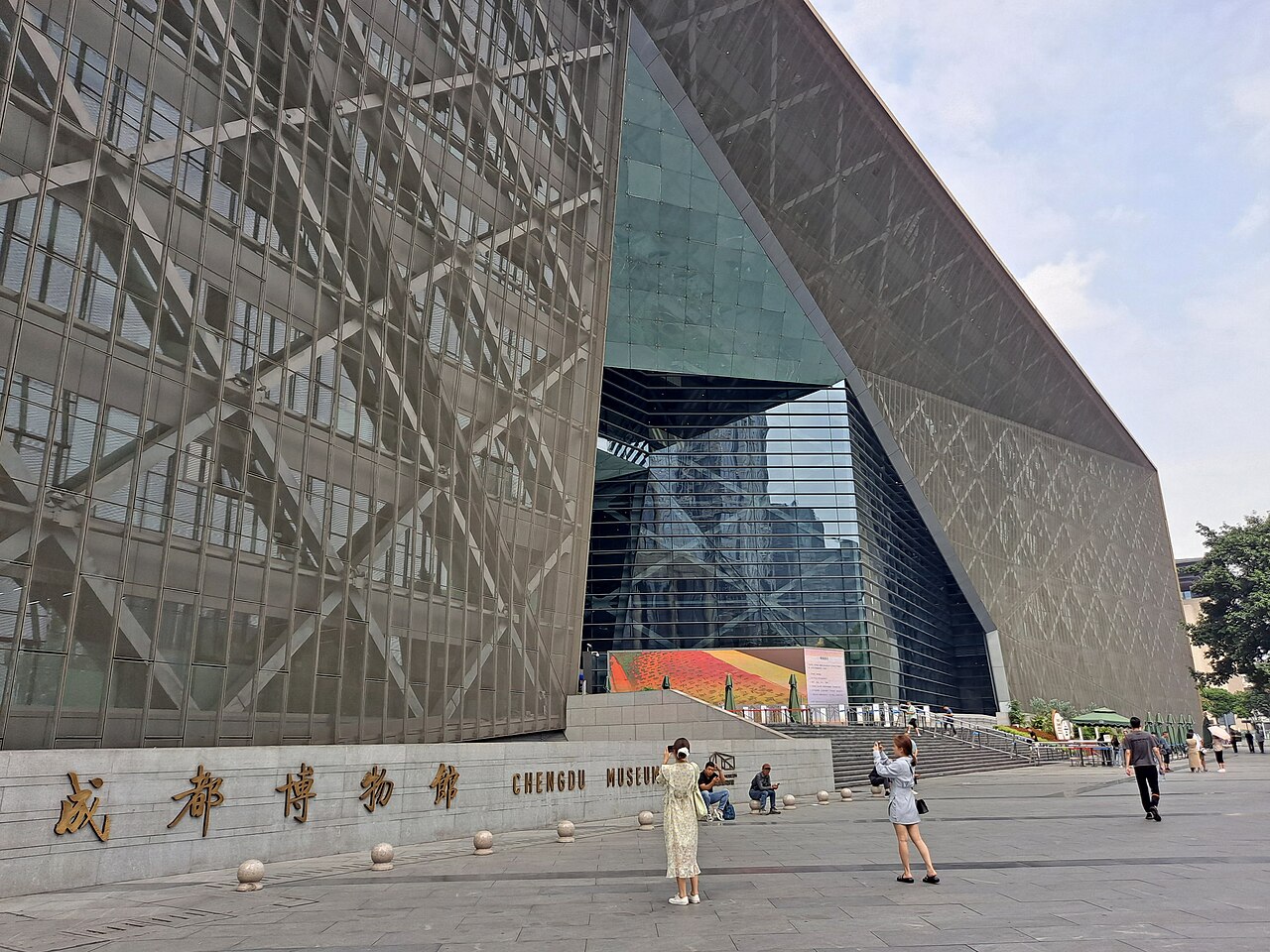
The Sichuan Museum covers the whole province with a strong painting and bronze collection, while the Chengdu Museum focuses on the city and has a shadow puppet floor. Choose one if you are short of time, or visit both for a full cultural picture.