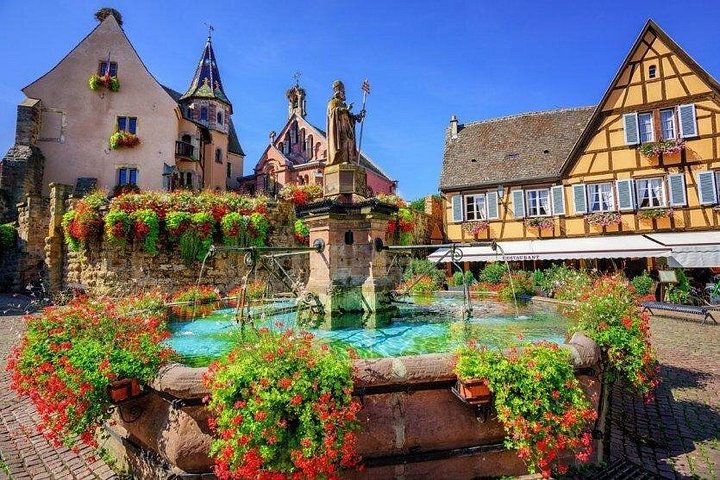
Colmar's old town is a museum of building styles that you can enter on foot at no charge. The Maison des Têtes, built in the early seventeenth century, takes its name from the many carved faces and grotesque masks that decorate the façade, and the figure of a barrel-maker standing on the roof recalls its merchant owner's trade. The Pfister House, from the sixteenth century, is a showpiece of Renaissance style, with a wooden gallery, an oriel window and painted decoration. The Koïfhus, the old customs house, is the oldest public building in the town and its tiled roof and arcades anchor the central square. A few minutes away stands the collegiate church of Saint-Martin, a large Gothic church with a broad tower, and the Dominican church nearby is home to a celebrated painting of the Virgin of the Rose Bush. Together these buildings tell the story of a prosperous trading town on the border of French and German culture, and walking between them lets you read that story in stone and timber. The tourist office publishes an architectural heritage route that links the highlights, which makes self-guided exploration easy and rewarding.
A simple route
Start at the Koïfhus on the Place de l'Ancienne Douane, where the Schwendi fountain by Bartholdi stands in the square, then follow Rue des Marchands past the Bartholdi Museum toward the Pfister House, whose gallery and oriel are best seen from across the street. Continue to the Maison des Têtes on Rue des Têtes, where the faces cover the facade like a gallery of expressions, and finish at the collegiate church of Saint-Martin, whose portals and interior are worth a few minutes. The whole circuit takes under two hours at a relaxed pace and is entirely flat.
What to look for
Details are the pleasure of this route. Notice the oriel windows, the carved beams, painted signs, wrought-iron brackets and the varied roof shapes, and compare the colours that give Colmar its character. Houses were built by wealthy merchants, winegrowers and guild members, and their decoration was a way of displaying status.
Many interiors are private, in use as shops, restaurants and homes, but their exteriors are public. The Maison des Têtes now houses a hotel and restaurant, so you can step in for a meal or a drink to see more of the interior.
Making the most of it
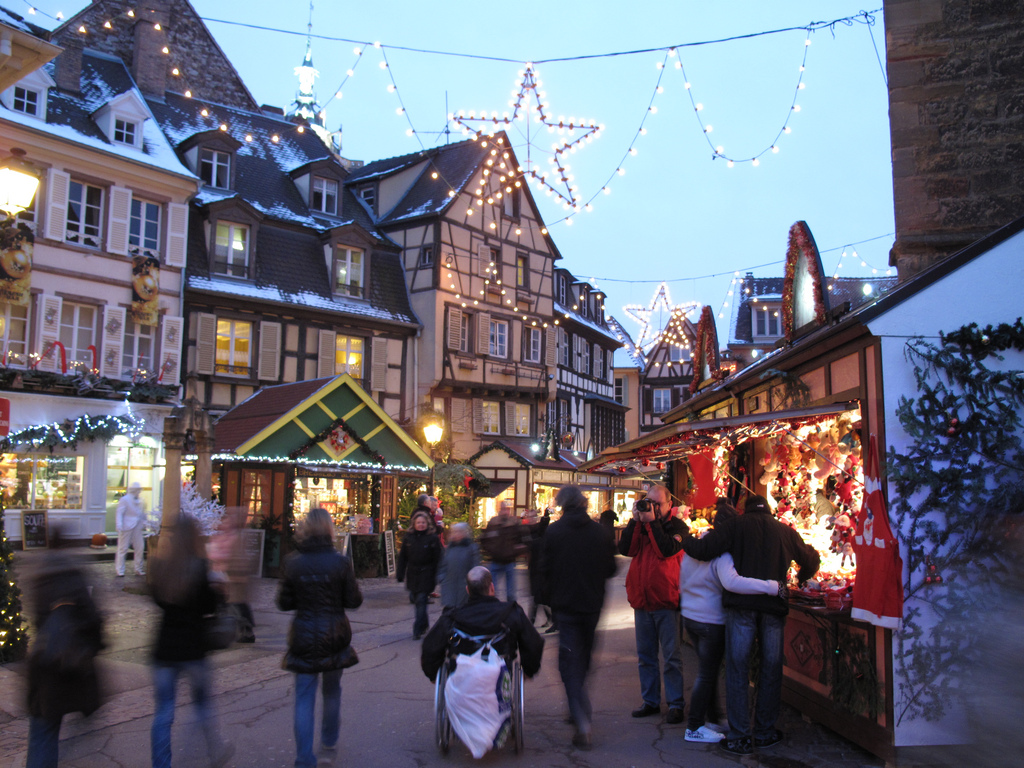
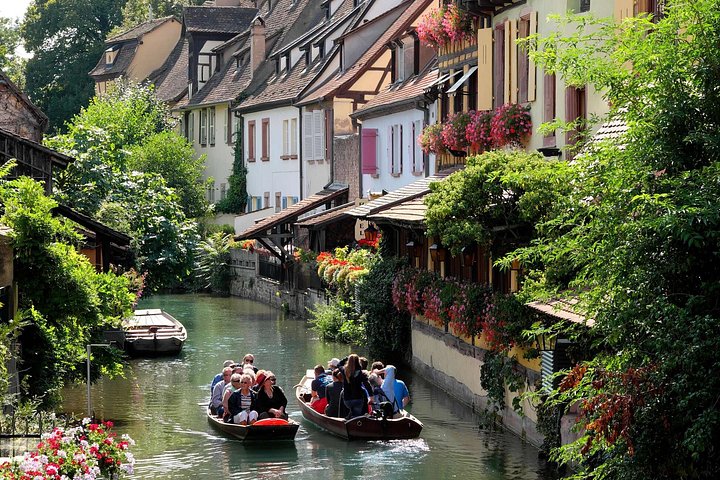
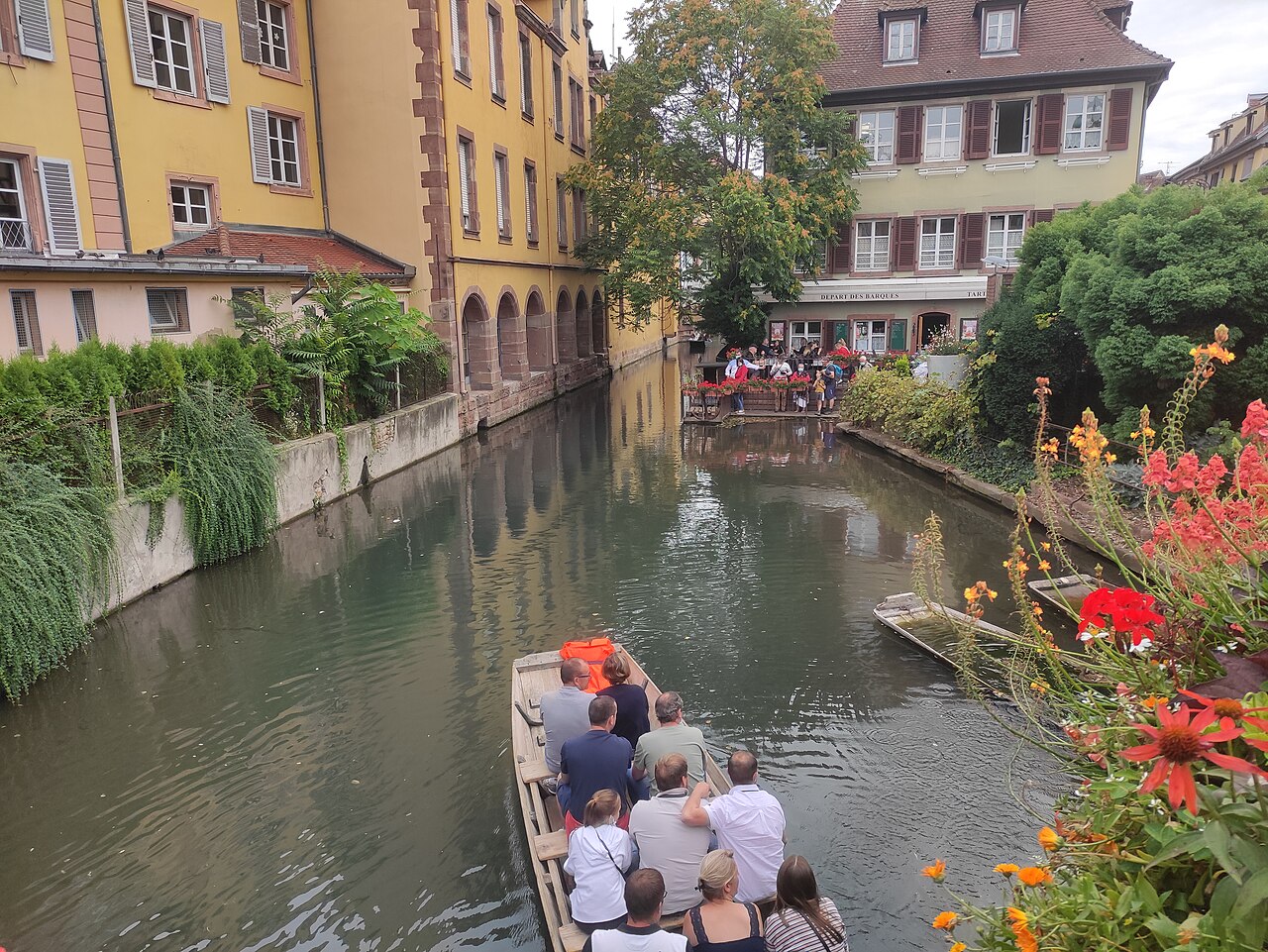
Go early or in the evening when lamps light the carved faces and the streets are quiet, and bring a camera with a decent zoom for upper storeys. In winter, the area around the Koïfhus and the Pfister House is part of the Christmas market circuit, which adds lights but also crowds. Pair the walk with the Unterlinden Museum for art, a boat ride for a different angle, and a lunch away from the main squares.
Opening times for church interiors and museums vary, so check the tourist office before planning around a particular building. The tourist office page includes the architectural heritage route and details that help you identify each house. Guided walking tours of the old town also cover these buildings, with stories about the merchants and guilds behind them, and are a good choice if you prefer a narrator to a map.
What to expect
The experience
A self-guided walk past the old town's landmark buildings, mostly viewed from the street and free of charge.
Best time
Early morning or evening for soft light and quiet lanes; lamplight brings out the carved faces.
How long
About one and a half to two hours at an easy pace.
Tips
Look up for oriels and carvings, bring a zoom lens, and check opening times if you want to enter a church or museum.
Quick picks
- Best for
- Anyone curious about how Colmar's merchants built their town, and photographers.
- Families
- Flat and compact; challenge children to count the faces on the Maison des Têtes.
- Couples
- An evening stroll past lit façades, ending with dinner in the old town.
- Pair with
- Petite Venise, the Bartholdi Museum and the Unterlinden Museum, all a few minutes away.
- Time needed
- Two hours, or half a day with museums and lunch.
Good questions
Why is it called the Maison des Têtes?+
The house is named for the numerous carved heads and masks that decorate its façade, a showy display by its early seventeenth-century owner.
Is the walking route free?+
Yes. Viewing the buildings from the street costs nothing. Only museums, some church features and meals cost money.
Can I go inside the Maison des Têtes?+
It now houses a hotel and restaurant, so guests and diners can see inside. Check with the venue about visiting hours.
What is the Koïfhus?+
It is the old customs house, the oldest public building in Colmar, which anchors a central square and hosts events and seasonal markets.
How long should I allow?+
Allow one and a half to two hours for the walking route, longer if you add a church interior, a museum or lunch.