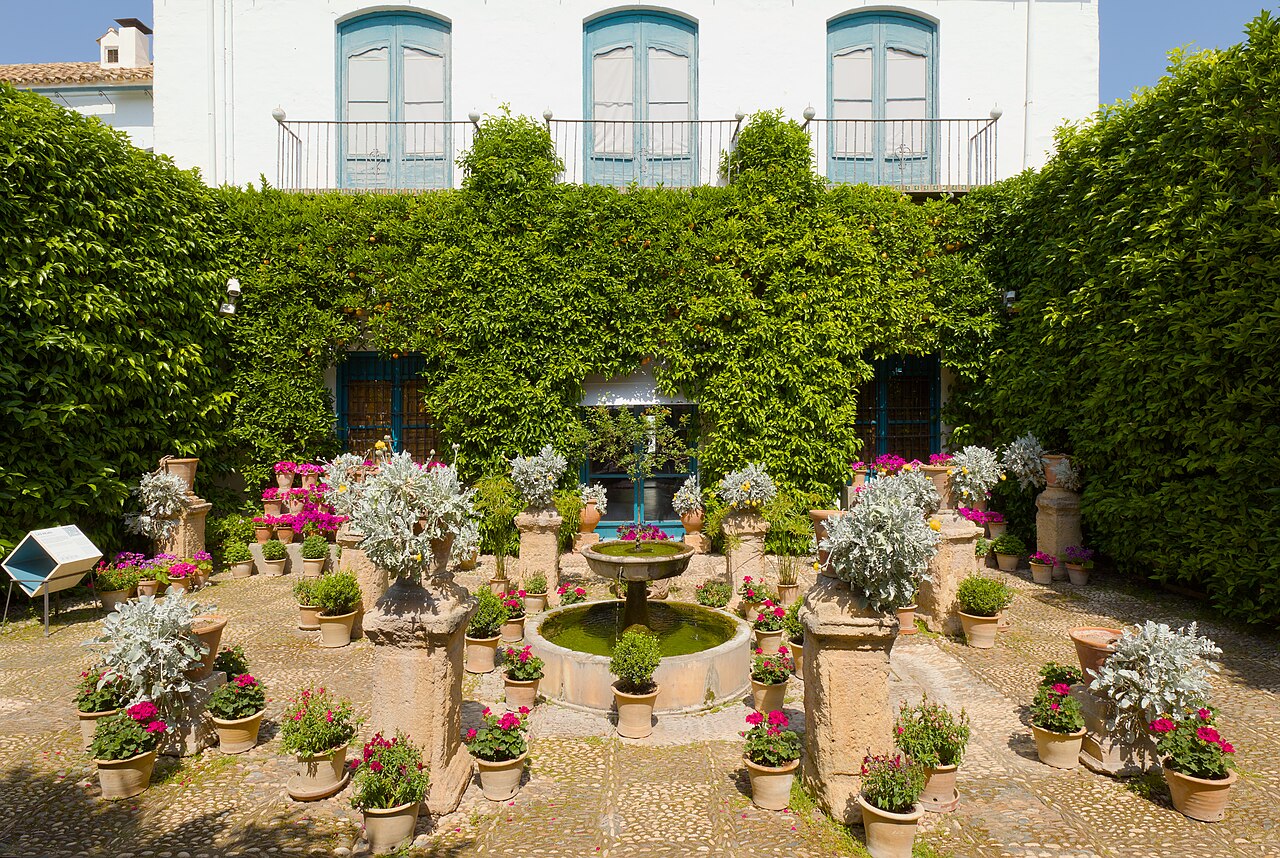
The Museum of Fine Arts of Córdoba stands on the Plaza del Potro, the historic square of inns and fountains that Cervantes knew, in a building that served for centuries as a charity hospital. Its Renaissance courtyard, with arcades and a garden, is a pleasure in itself, and the galleries around it give a clear overview of Spanish art from the late Middle Ages to the twentieth century, with a strong local emphasis. The collection includes religious paintings and sculptures from churches and convents of Córdoba, Baroque works by Andalusian masters, nineteenth-century canvases and drawings, and works by local artists who studied in the city. The museum shares its building with the Julio Romero de Torres Museum, so a single visit can cover two very different views of Cordoban art: the broad survey and the single, intense vision of one painter. Visitors who enjoy painting will appreciate the quiet atmosphere and the chance to see altarpieces and portraits at close range, and the museum is rarely crowded. Even visitors who are not art specialists will enjoy the architecture, the shaded courtyard and the sense of stepping into a corner of old Córdoba that the main tourist routes bypass.
Planning the visit
Allow about an hour for the museum alone, and up to two hours if you combine it with the Julio Romero de Torres Museum next door. Opening hours and admission follow the city's museum timetable, with different times on weekends and holidays, and the museum is usually closed on one day of the week, so check before you go. Entry has traditionally been inexpensive, and free for EU citizens in many regional museums, but confirm the current conditions at the desk.
What to look for
Begin in the courtyard and notice the contrast between the sober stone of the arcades and the colour of the paintings inside. In the galleries, look at the altarpieces and devotional scenes that show how religious art shaped the city's image of itself, then move to the portraits and landscapes of the nineteenth century, where you can see how Andalusian painters changed their subjects. Labels are mostly in Spanish, with some information in English, so a phrase book or translation app can help.
Making the most of it
The museum is a good choice for the hottest hours of the day or for a rainy afternoon, since it is cool, quiet and indoors. After the visit, sit on the Plaza del Potro by the fountain and think about the literary side of the square, then walk to the Plaza de la Corredera for tapas.
Art lovers can complete the trail with a visit to the Archaeological Museum, which shows the ancient side of Córdoba's artistic heritage, and with the Palacio de Viana, whose rooms are filled with paintings, tapestries and furniture. Together these give a rounded view of the city's art from Roman mosaics to modern canvases.
Practical notes
The courtyard is a good place to rest, a lift serves the main floors, and photography rules vary by gallery, so look for signs and ask staff if you are unsure before taking pictures, and a small shop near the entrance sells postcards and catalogues.
What to expect
The experience
A self-guided visit through galleries of Spanish and local painting and sculpture, arranged around a Renaissance courtyard.
Best time
The hottest hours of the day or a wet afternoon, when an indoor visit is most welcome.
How long
About an hour, or two with the neighbouring Romero de Torres Museum.
Tips
Check the closing day, read the English notes at the entrance and pair it with the museum next door.
Quick picks
- Best for
- Art lovers and travellers who want a cool, quiet break from the monuments.
- Families
- Best for older children; the courtyard is pleasant for a short rest.
- Couples
- A calm, cultured hour followed by a coffee on the Plaza del Potro.
- Pair with
- The Julio Romero de Torres Museum, the Plaza del Potro and the Plaza de la Corredera.
- Time needed
- One to two hours.
Good questions
Where is the Fine Arts Museum in Córdoba?+
It is on the Plaza del Potro, in a former charity hospital, and shares a building with the Julio Romero de Torres Museum.
What does the museum contain?+
It holds paintings and sculptures from the late Middle Ages to the twentieth century, with a focus on Córdoba and Andalusia.
How long does a visit take?+
About an hour for the Fine Arts Museum alone. Allow two hours if you also visit the Romero de Torres Museum.
Is it a good rainy-day or hot-day option?+
Yes, it is indoors, quiet and cool, which makes it a good choice for the middle of a summer day or bad weather.
Is the museum free?+
Admission rules can change and depend on nationality, so check at the desk. Regional museums in Andalusia often offer free entry to EU citizens.