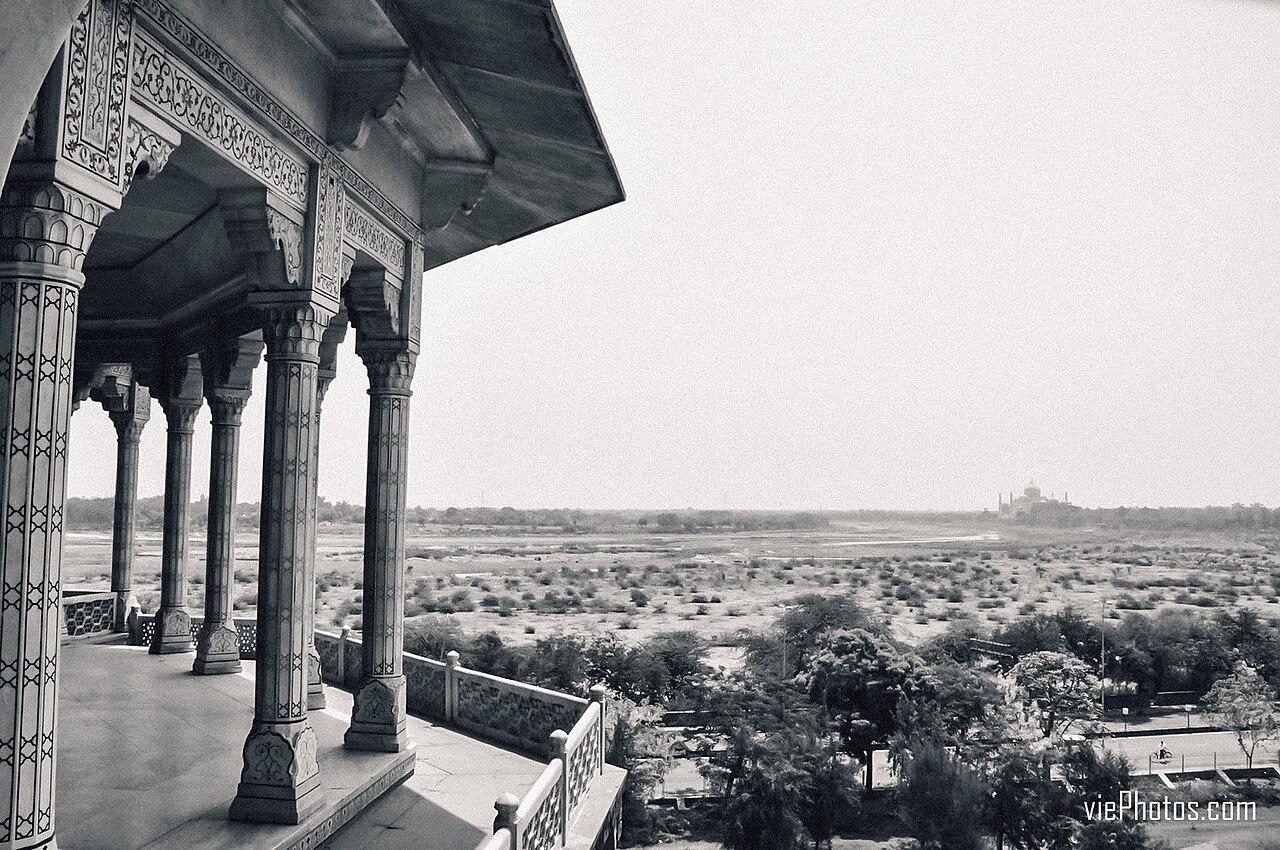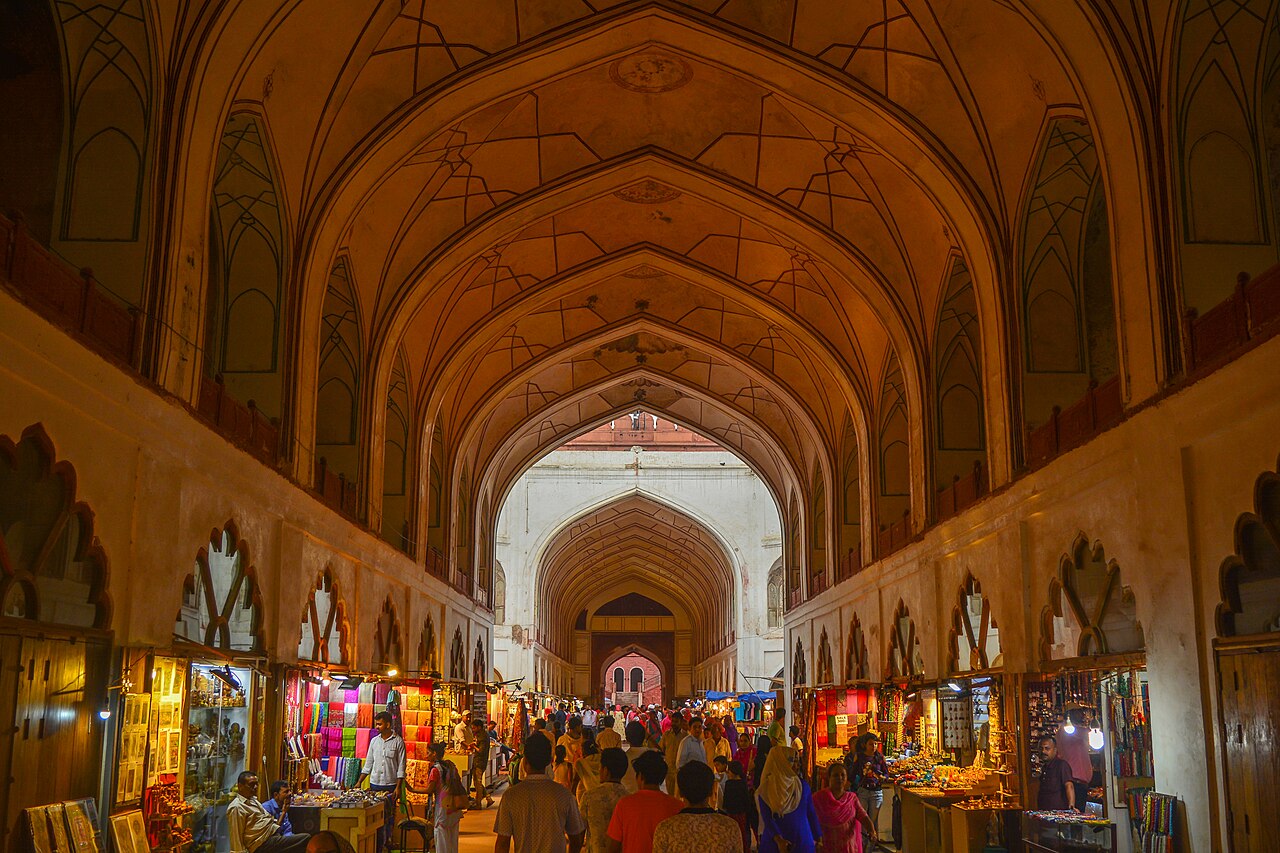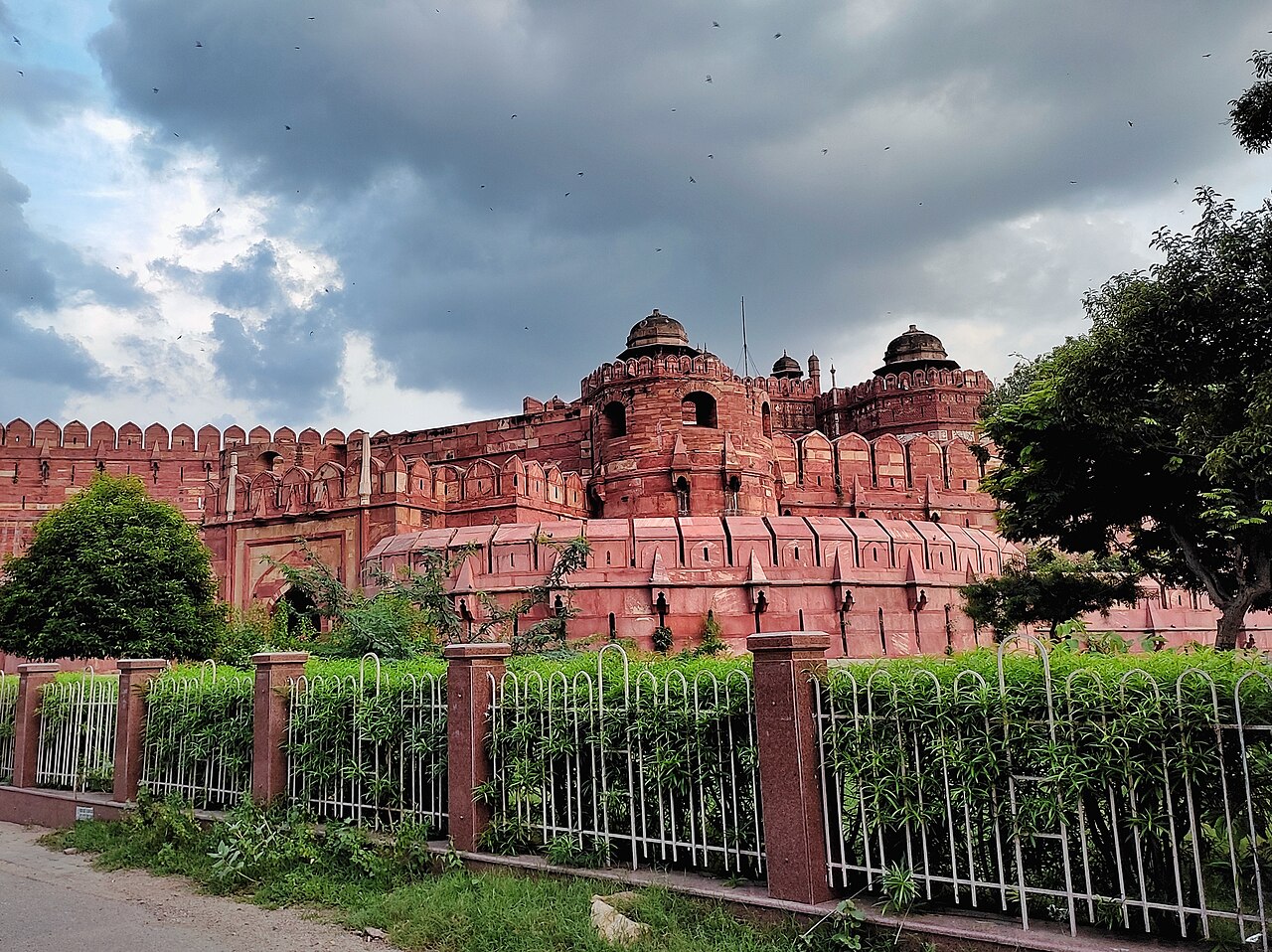
Agra Fort is the essential partner to the Taj Mahal, and many visitors find it the bigger surprise. Its massive red sandstone walls, more than two kilometres around, enclose the palaces where four generations of Mughal emperors ruled. The emperor Akbar rebuilt the fort in sandstone in the sixteenth century, and his grandson Shah Jahan, the builder of the Taj, added the white marble halls and pavilions that are the highlight of a visit: the Diwan-i-Am, the hall of public audience with its rows of scalloped arches; the Diwan-i-Khas for private audiences; and the delicate Musamman Burj, the octagonal tower where Shah Jahan, deposed by his son Aurangzeb, is said to have spent his last years gazing at his wife’s tomb downriver. Courtyards, the Jahangiri Mahal palace and the Khas Mahal fill the rest of the visit. This page links to the official ticketing page of the Agra monuments, run for the Archaeological Survey of India, where you can check fees and buy tickets online.
How to visit: Agra Fort sits on the bank of the Yamuna about two and a half kilometres upriver from the Taj Mahal, a short auto-rickshaw or taxi ride away. It is open every day from sunrise to sunset, and unlike the Taj Mahal it is open on Fridays, which makes it the obvious choice if your only day in Agra falls on a Friday. Entry is through the Amar Singh Gate in the south of the fort; much of the fort is still used by the Indian Army and is closed to visitors. Foreign visitors pay a moderate fee, a little less if you have already visited the Taj Mahal that day, and children under 15 enter free. Tickets are sold online through the official site.
What to expect: the visitor area is big, with ramps, stairs and open courtyards that get hot even in winter sun, so wear comfortable shoes and carry water. Audio guides are available in several languages, and a licensed guide brings the stories to life. Allow about two hours.
Making the most of it: visit after the Taj Mahal, when the morning crowds have moved on, and save time for the terraces of the Khas Mahal and the Musamman Burj, where the view of the Taj across the river bend is one of the best in Agra.
What to expect
The experience
A self-guided or guided walk through the gate, courtyards, audience halls and marble palace terraces of the visitor area of the fort.
Best time
Late morning after the Taj Mahal, or any time on a Friday when the Taj is closed.
How long
About two hours for the main palaces and terraces.
Tips
Wear good shoes, carry water and hire a licensed guide or audio guide to make sense of the many halls.
Quick picks
- Best for
- History lovers and anyone who wants the story behind the Taj Mahal, told in the palaces where it happened.
- Families
- Children enjoy the ramparts, gateways and big courtyards, and under-15s enter free.
- Couples
- Watch the Taj glow across the river from the marble terraces of the Musamman Burj.
- Pair with
- The Taj Mahal in the morning, then the fort before lunch.
- Time needed
- Two hours.
Good questions
Is Agra Fort open on Fridays?+
Yes, Agra Fort is open every day, including Fridays when the Taj Mahal is closed. It is the best headline sight to visit if your Agra day falls on a Friday.
How far is Agra Fort from the Taj Mahal?+
The fort is about two and a half kilometres upriver from the Taj Mahal. An auto-rickshaw or taxi takes about ten to fifteen minutes.
Can you see the Taj Mahal from Agra Fort?+
Yes, the marble terraces of the Khas Mahal and the Musamman Burj look down the river to the Taj Mahal. On a clear day it is one of the best views in Agra.
How much time do I need at Agra Fort?+
About two hours covers the main halls, palaces and terraces. History lovers can easily spend longer with a guide.
Is all of Agra Fort open to visitors?+
No, a large part of the fort is still used by the Indian Army and is closed. The visitor area still includes all the famous palaces and audience halls.