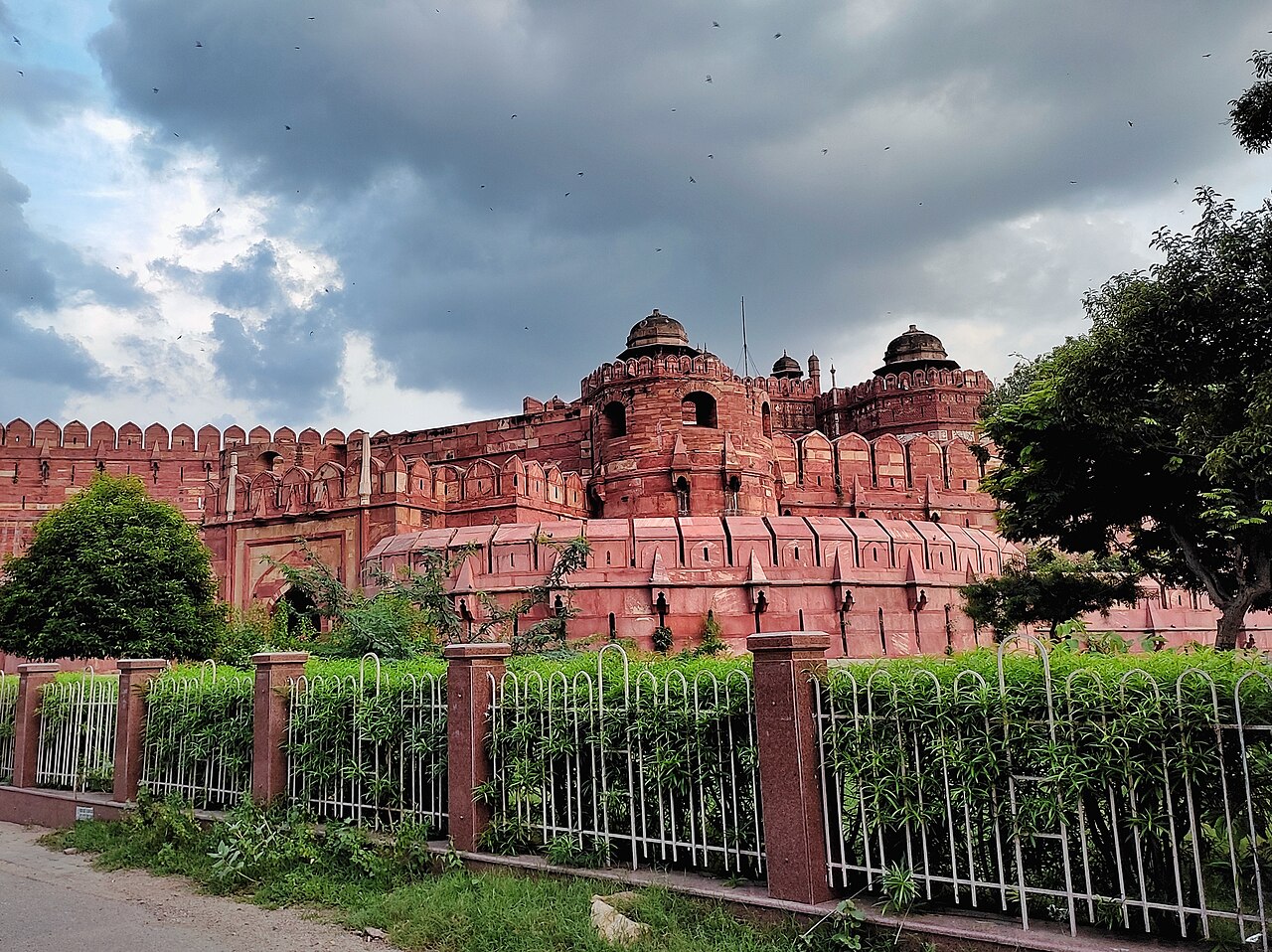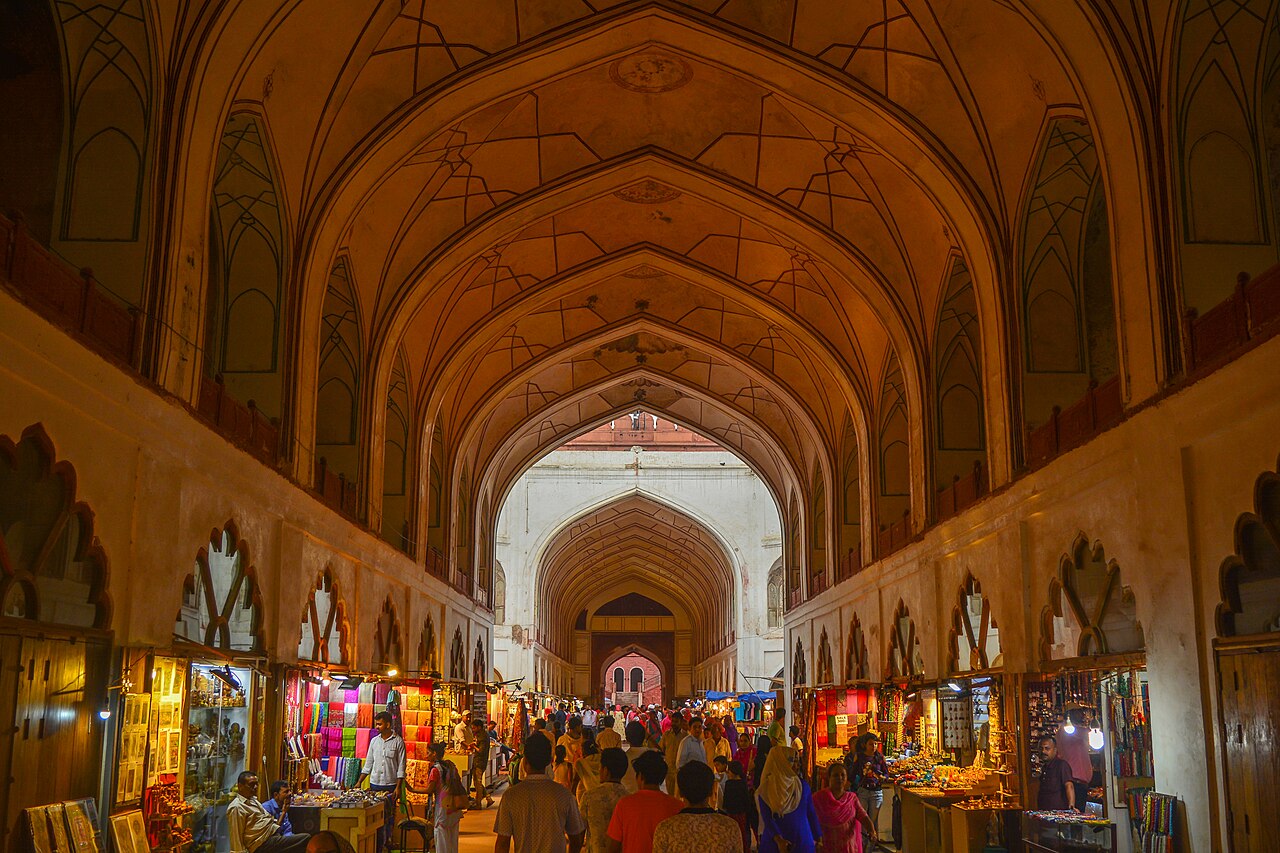
The Red Fort is the symbol of Delhi and of India itself. The Mughal emperor Shah Jahan built it in the seventeenth century as the palace of his new capital, Shahjahanabad, the city we now call Old Delhi, and its mighty red sandstone walls still dominate the end of Chandni Chowk. Every 15 August the prime minister raises the national flag over the Lahori Gate and addresses the nation from its ramparts. Inside, you pass through the vaulted Chhatta Chowk, once a royal bazaar and still lined with small shops, to the Diwan-i-Am, the hall of public audience where the emperor sat beneath a marble canopy, and on to the marble pavilions along the river side: the Diwan-i-Khas, which once held the Peacock Throne, the Rang Mahal and the royal baths. Lawns, museums and colonial-era barracks fill the rest of the enclosure. This page links to a private Red Fort tour on Viator, rated 4.7 from more than 100 reviews, that includes your entry ticket, an English-speaking guide and transfers from anywhere in New Delhi.
How to visit: the Red Fort is at the eastern end of Chandni Chowk in Old Delhi, and the Lal Quila metro station is close by. Since February 2026 the Archaeological Survey of India has kept it open every day, including Mondays, when it used to close, from early morning into the evening. Foreign visitors pay a moderate fee, with a small discount for buying online, and children under 15 enter free. Security checks are thorough, so carry a small bag only.
What to expect: the visitor area is large and mostly open, with long walks between the gate, the halls and the pavilions, so allow two hours or more. The Viator tour lasts about two hours on site with a private guide, collects you from your hotel, a station or the airport, and includes one admission ticket and water. Free cancellation is available up to 24 hours ahead, and you can reserve now and pay later.
Making the most of it: visit in the morning, then walk across to Jama Masjid and into the lanes of Chandni Chowk for lunch. The fort is also lovely in the late afternoon light, when the sandstone glows. Bring your passport, and wear shoes you can walk in for hours.
What to expect
The experience
A walk through the Lahori Gate and the covered Chhatta Chowk bazaar to the audience halls, marble pavilions and museums of the Mughal palace.
Best time
Weekday mornings, or late afternoon when the red sandstone glows.
How long
About two to three hours, longer with the museums.
Tips
Book the guided tour with entry for context and transfers, carry a small bag only, and pair it with Old Delhi for lunch.
Quick picks
- Best for
- First-time visitors and history lovers who want to understand Mughal Delhi.
- Families
- Children enjoy the gates and ramparts, and under-15s enter free.
- Couples
- A golden-hour visit followed by dinner in the old city.
- Pair with
- An Old Delhi food tour through Chandni Chowk, right outside the gate.
- Time needed
- A morning or an afternoon.
Good questions
Is the Red Fort open on Mondays?+
Yes, since February 2026 the Red Fort has been open every day, including Mondays, when it used to close. Check the closing time on the day, as hours can change for events.
How much is the Red Fort entry ticket?+
Foreign visitors pay a moderate fee, with a small discount for buying online, and Indian visitors pay much less. Children under 15 enter free.
How long do you need at the Red Fort?+
Allow at least two hours to see the main halls and pavilions. The Viator guided tour lasts about two hours on site.
Which metro station is nearest the Red Fort?+
Lal Quila station is the closest, and Chandni Chowk station is a walk away. Cycle rickshaws are a fun way to cover the last stretch.
What happens at the Red Fort on Independence Day?+
Every 15 August the prime minister raises the flag and addresses the nation from the ramparts. The fort is closed to regular visitors around the ceremony.