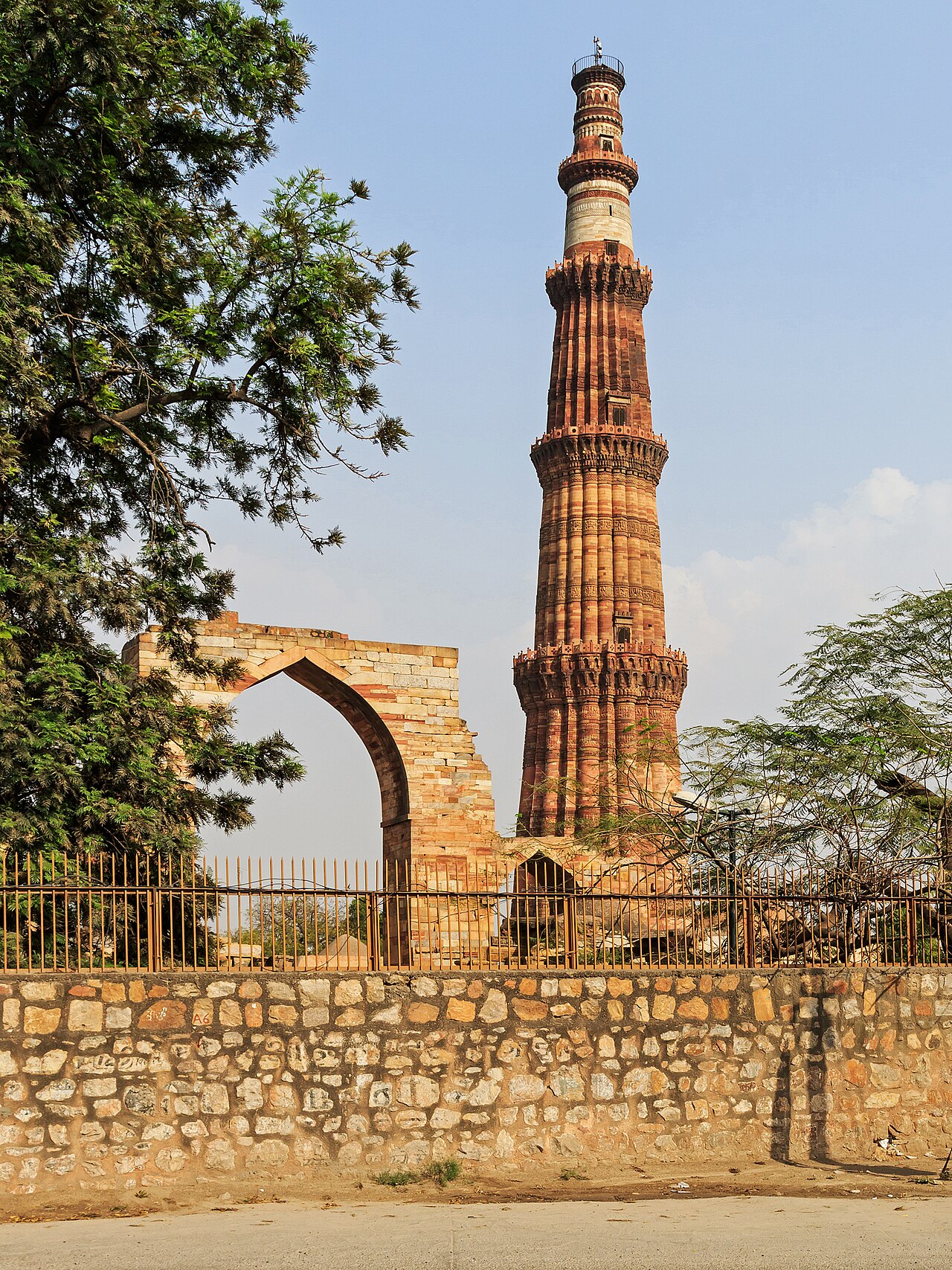
The Qutub Minar is Delhi’s tallest and oldest great monument, and one of the most striking towers in the world. Qutbu’d-Din Aibak, the first sultan of Delhi, laid its foundation in 1199 to celebrate the arrival of Muslim rule in the city, and his successor and son-in-law Iltutmish added three more storeys. Rising 72.5 metres, the fluted tower of red and buff sandstone is banded with carved calligraphy and balconies, and it tapers from a base more than 14 metres across to under three at the top. Around it lies the Qutub complex, a park of ruins and monuments: the Quwwat-ul-Islam mosque, built from the remains of earlier temples, with carved pillars; the Iron Pillar, with a fourth-century Sanskrit inscription in Brahmi script, which has stood for centuries without rusting away; the Alai Darwaza, the elegant gateway Alauddin Khalji added in 1311; and the stump of the Alai Minar, which Khalji meant to be twice as tall but never finished. This page links to the official Delhi Tourism page for the monument.
How to visit: the Qutub Minar is in Mehrauli in the south of Delhi. The Qutub Minar metro station on the Yellow Line is about a kilometre away, and an auto-rickshaw covers the last stretch. Delhi Tourism lists the monument as open from sunrise to 8:00 pm, every day. Foreign visitors pay a moderate fee, with a small discount for buying online, Indian and neighbouring-country visitors pay much less, and children under 15 enter free. You cannot climb the tower, which has been closed to visitors for many years.
What to expect: the complex is compact and easy to walk, with lawns and ruins to explore, and you can see everything in an hour to an hour and a half. It is busy at weekends and with school groups, but the space absorbs the crowds well.
Making the most of it: come in the late afternoon for the warm light on the sandstone, or in the early evening. Look closely at the calligraphy bands and the carved pillars of the mosque, which reuse older temple carving. If you have time, explore the Mehrauli Archaeological Park next door, a wooded area dotted with tombs, step wells and ruins, and finish with dinner at one of the restaurants with views of the tower.
What to expect
The experience
A walk around the tower and the ruined mosque, Iron Pillar, Alai Darwaza and unfinished Alai Minar in a compact landscaped complex.
Best time
Late afternoon or early evening, when the sandstone turns warm and gold.
How long
An hour to an hour and a half, more with the Mehrauli Archaeological Park.
Tips
Buy tickets online for the small discount, take an auto-rickshaw from the metro, and note that the tower itself cannot be climbed.
Quick picks
- Best for
- History buffs and photographers who want Delhi’s oldest great monument.
- Families
- A compact, open site that children can explore easily, and under-15s enter free.
- Couples
- Sunset at the tower followed by dinner with a view of the Minar in Mehrauli.
- Pair with
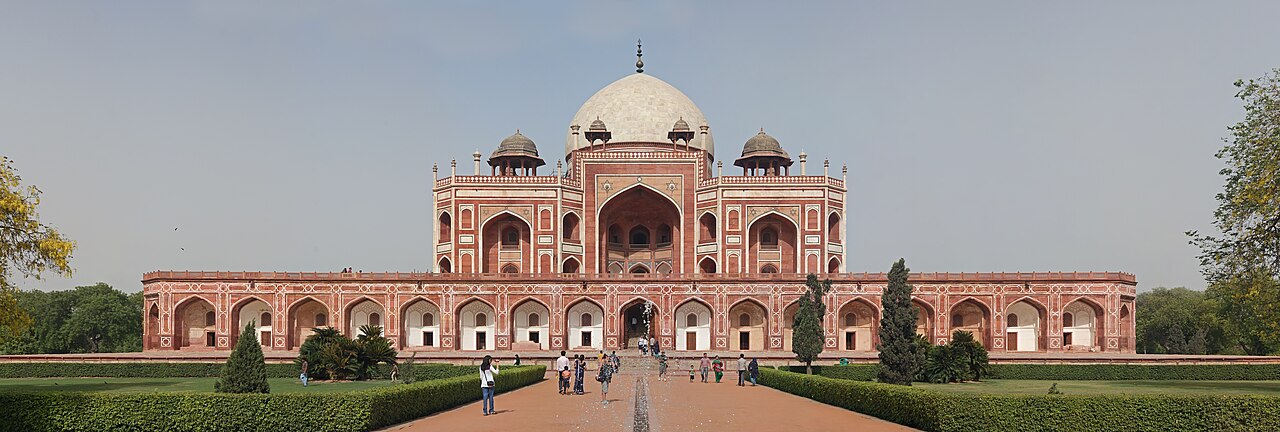
- Humayun’s Tomb on the same day of south Delhi monuments.
- Time needed
- About ninety minutes.
Good questions
How tall is the Qutub Minar?+
The Qutub Minar is 72.5 metres tall, built of red and buff sandstone. It tapers from more than 14 metres across at the base to under three at the top.
Can you climb the Qutub Minar?+
No, the inside of the tower has been closed to visitors for many years. You can walk all around it and explore the surrounding ruins.
What are the Qutub Minar timings?+
Delhi Tourism lists it as open from sunrise to 8:00 pm, every day. Late afternoon is the most photogenic time to visit.
What is the Iron Pillar at the Qutub Minar?+
It is an iron column with a fourth-century Sanskrit inscription in Brahmi script, famous for resisting rust. It was originally set up as a standard to the god Vishnu.
How do I get to the Qutub Minar by metro?+
Take the Yellow Line to Qutub Minar station, about a kilometre away. Auto-rickshaws wait outside for the short ride.