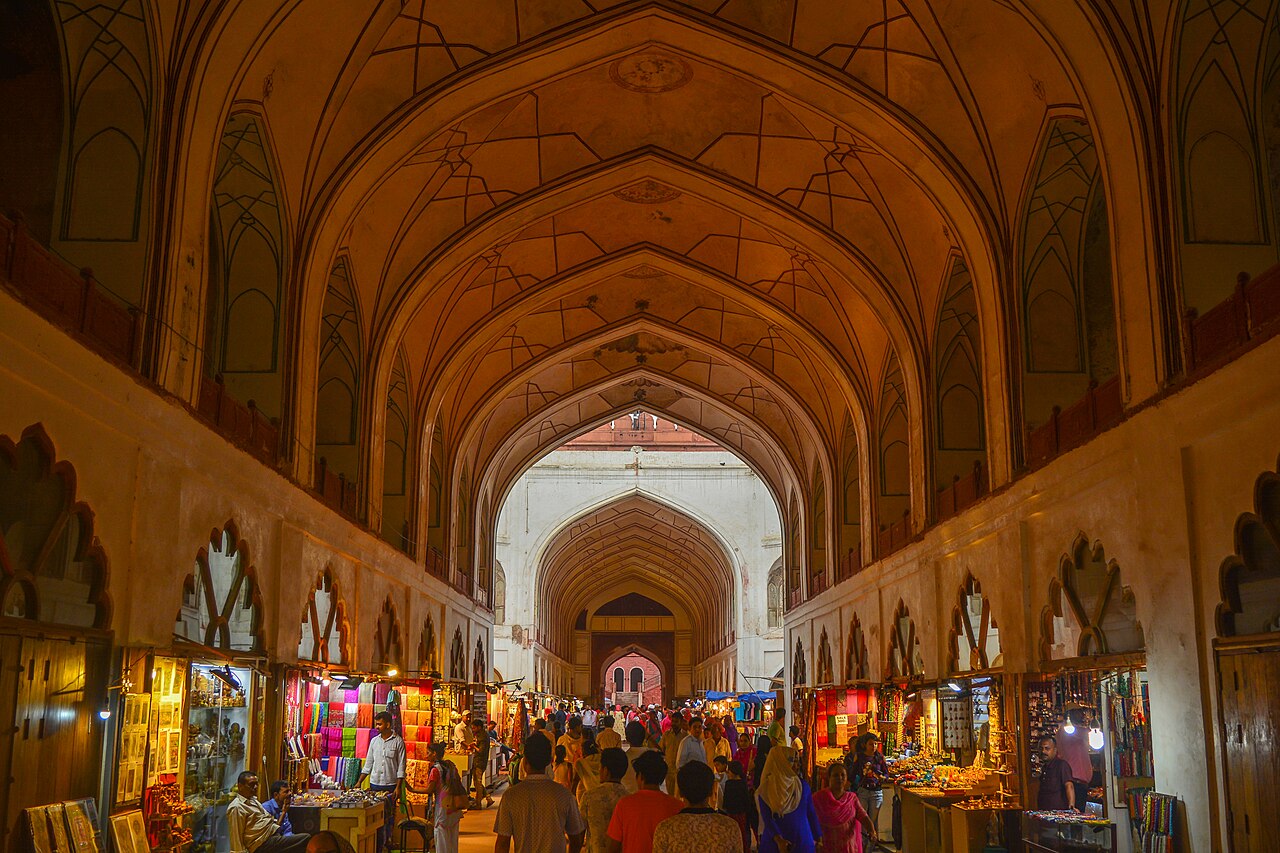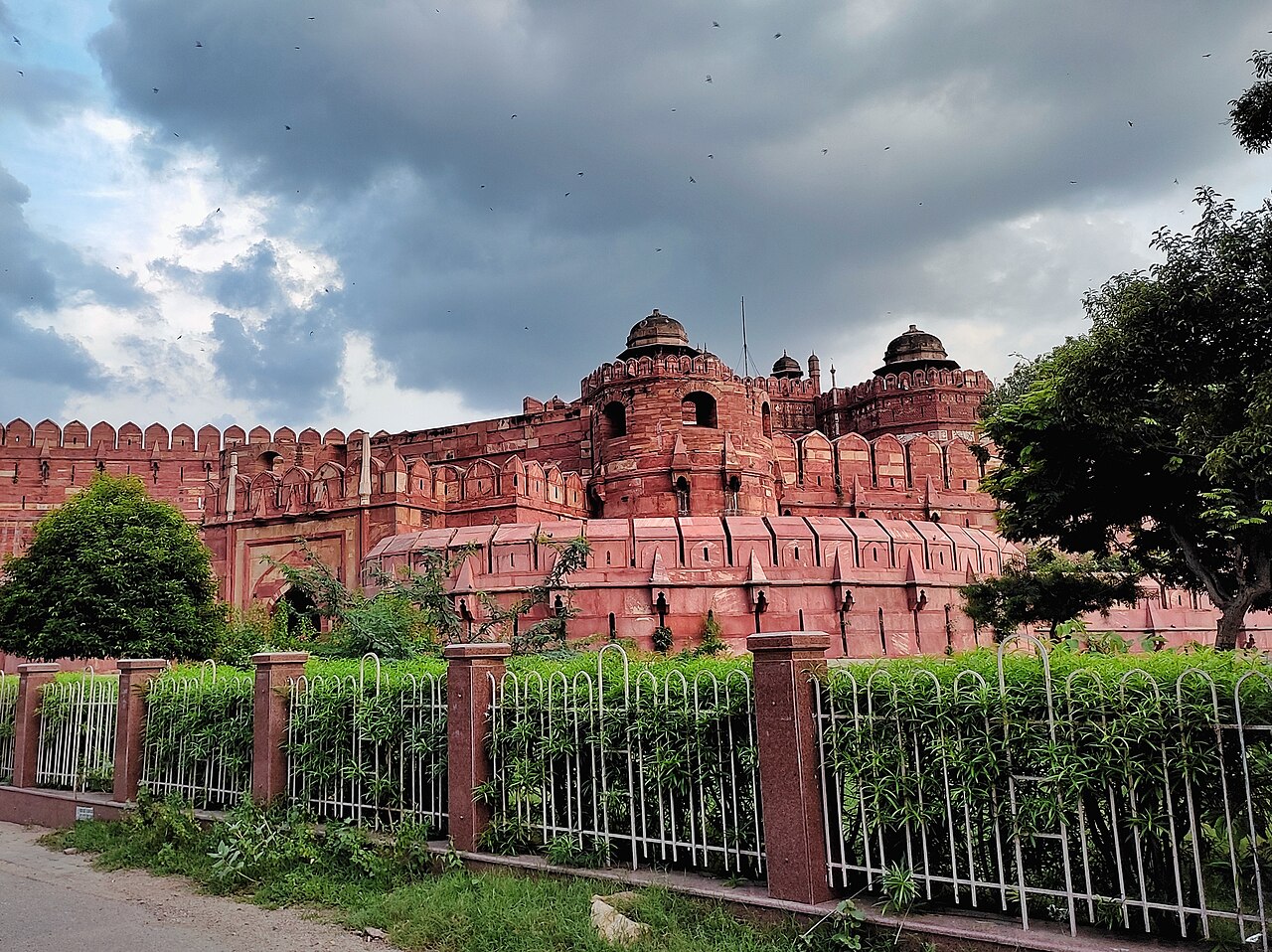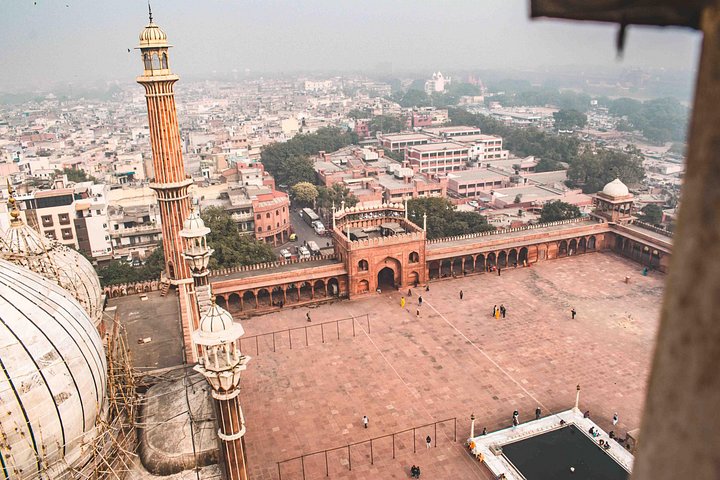
Jama Masjid is the great congregational mosque of Old Delhi and one of the largest in India. Shah Jahan, the Mughal emperor who also gave Delhi the Red Fort and Agra the Taj Mahal, began it in 1644 as the last of his major building projects, and it still serves as the city’s main place of Friday prayer. It stands on a raised platform so that its three white-marble domes, banded in black, and its two slim minarets, about 40 metres high, rise above the rooftops of Chandni Chowk and the Red Fort across the road. Three gateways of red sandstone lead into a vast courtyard that can hold about 25,000 worshippers, and the scale of that open space, with pigeons wheeling over the paving and the prayer hall facing it, is the reason most people come. The prayer hall itself is a long arcade of cusped arches, and the whole building rewards a slow look at its stonework and inlay. The walk linked here places the mosque inside a wider morning in Old Delhi: it passes through the spice market, stops at a Sikh temple and includes a rickshaw ride through the narrow lanes, which is how most visitors want to meet this part of the city. Because Jama Masjid is a working mosque, dress and conduct matter, and visiting hours for non-worshippers are limited, so a guided walk takes much of the guesswork out of the day.
How to visit
Jama Masjid stands opposite the Red Fort at the end of the Chandni Chowk lanes, and the Jama Masjid metro station on the Violet Line is the easiest way in. Delhi Tourism lists it as open every day, with visitors from abroad admitted from the morning until sunset and a fee for foreign visitors, while Indian visitors enter free. After sunset only worshippers are admitted for evening prayer, and the mosque is also closed to sightseers around prayer times, so plan your visit for the middle of the day or the late afternoon and check the hours before you set out.
What to expect
Cover your shoulders and knees, and remove your shoes at the entrance, as in any mosque. Robes can be hired at the northern gate if your clothes are not suitable, and women should carry a scarf. The paving of the courtyard heats up fiercely at midday, so socks are a sensible idea in the warmer months.
The mosque is busiest on Fridays and around festivals, and the lanes outside are crowded, loud and full of food stalls, which is part of the experience. Keep valuables close, agree on any rickshaw fare before you set off, and be respectful when taking photographs of people at prayer.
Making the most of it
A morning on foot works best, starting in the lanes, seeing the spice market and the Sikh temple, then reaching the mosque while the courtyard is still comfortable. Pair it with the Red Fort across the road, and finish with a food stop in Chandni Chowk. If the heat or the crowds are too much, the Old Delhi food tour and the heritage walk in our other entries cover the same neighbourhood at a different pace.
What to expect
The experience
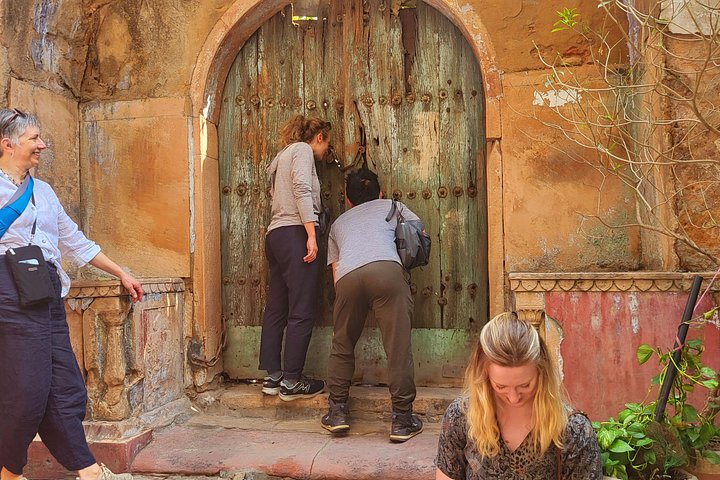
A guided walk through the lanes of Old Delhi to Jama Masjid, with the spice market, a Sikh temple and a rickshaw ride.
Best time
Morning to early afternoon, in the cooler months from October to March, and outside prayer times.
How long
Half a day including the walk and time in the courtyard.
Tips
Cover shoulders and knees, carry a scarf, wear socks for the hot paving and keep valuables close in the crowds.
Quick picks
- Best for
- Visitors who want Old Delhi’s biggest mosque in the context of its lanes, markets and food.
- Families
- Lively, but crowded and hot, so best for older children who cope with noise.
- Couples
- An atmospheric, photogenic morning, followed by a sit-down meal.
- Pair with
- The Red Fort across the road and a Chandni Chowk food stop.
- Time needed
- Half a day.
Good questions
Can non-Muslims visit Jama Masjid?+
Yes. Visitors are welcome outside prayer times, dressed modestly and without shoes, and after sunset only worshippers are admitted.
Is there an entry fee?+
Delhi Tourism shows a fee for foreign visitors and free entry for Indian visitors, so check the current fee before you go.
What should I wear?+
Cover your shoulders and knees. Robes can be hired at the northern gate, and women should carry a scarf.
How do I get to Jama Masjid?+
Take the Delhi Metro to Jama Masjid station on the Violet Line, or walk from the Red Fort through Chandni Chowk.
When is it busiest?+
On Fridays, the weekly day of congregational prayer, and around major festivals, when access for sightseers can be limited.