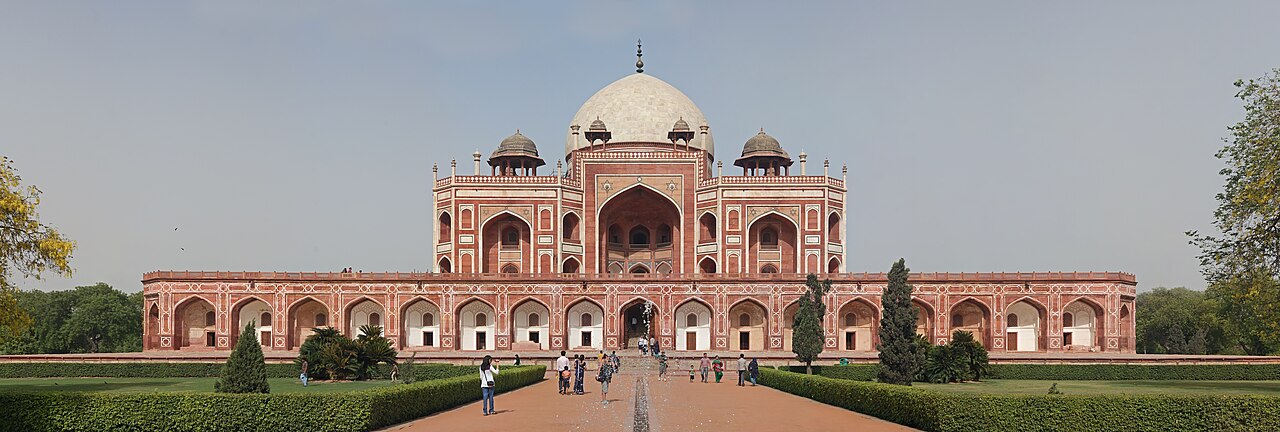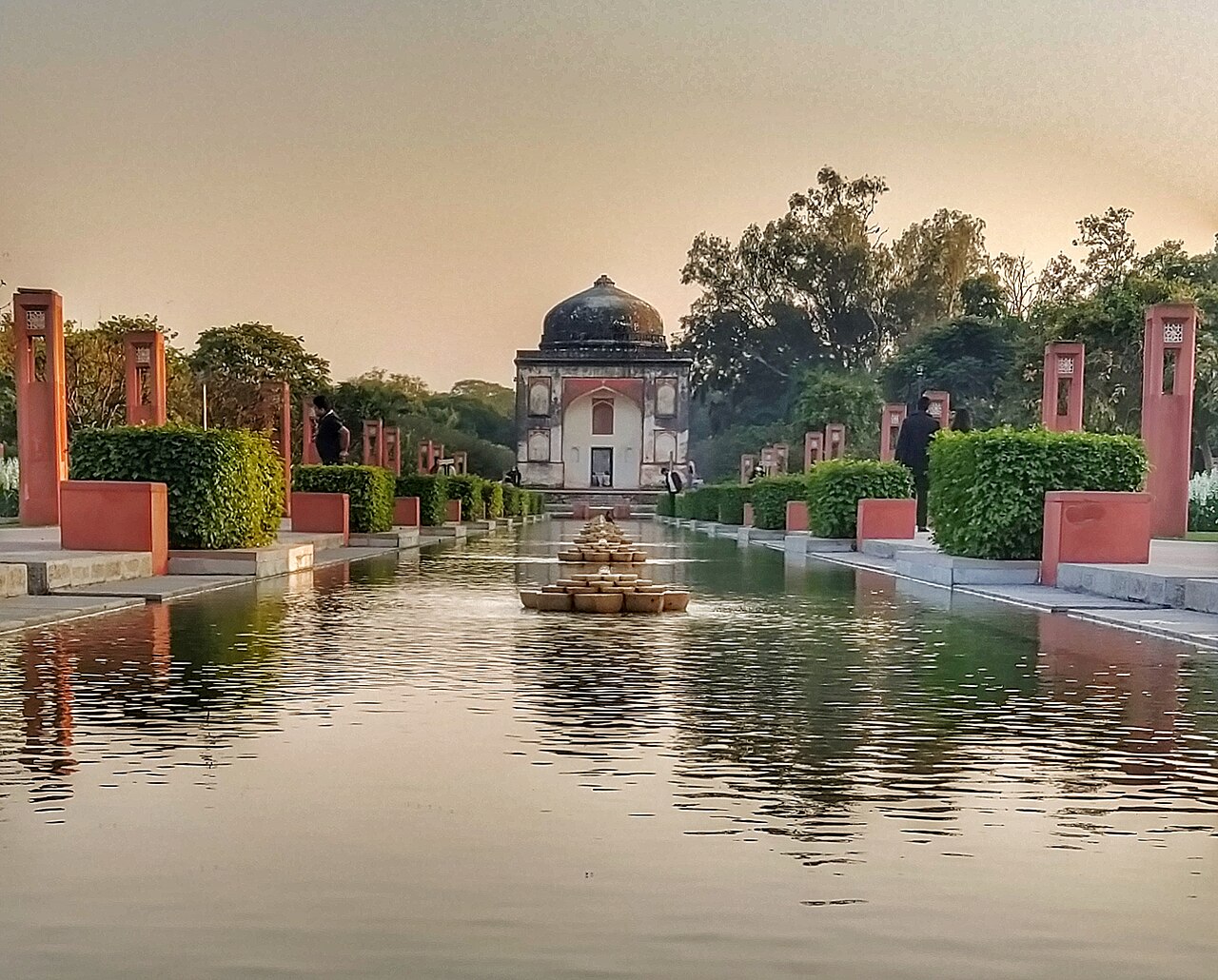
Safdarjung’s Tomb is the last great garden tomb built in the Mughal tradition, and it is one of the most overlooked monuments in Delhi. It was raised in the 1750s for Safdarjung, the Nawab of Awadh and a powerful minister of the late Mughal court, by his son. By then the empire was a shadow of its seventeenth-century self, yet the tomb still follows the grand plan that began with Humayun’s Tomb two centuries earlier: a square walled garden divided into quarters by water channels, with a high raised mausoleum at the centre, topped by a bulbous marble dome. The red sandstone is trimmed with white marble, and the interiors of the gateway and the surrounding pavilions carry plasterwork in delicate patterns. Because it sits on a busy road in the middle of the city and draws far fewer tour groups than its famous cousin, the tomb is a calm place to wander. Locals come for morning walks, couples find a quiet bench, and the lawns are a good place to understand how a Mughal char bagh garden was meant to work. The tour linked here is a private tour that covers Humayun’s Tomb and Safdarjung’s Tomb together with a guide, which makes it an efficient way to see two chapters of the same story, the beginning and the end of the Mughal garden-tomb tradition, in a single outing.
How to visit
The tomb stands on the road between the Lodhi Garden area and the airport side of the city, and Jor Bagh metro station is the nearest stop, a short auto-rickshaw ride away. It is open daily from sunrise to sunset, and foreign visitors pay a modest entry fee that is far lower than at the headline monuments. A private tour collects you from your hotel, covers both tombs with a guide who explains the architecture and the history, and drops you back, so you do not have to navigate traffic or haggle with drivers.
What to expect
Allow about an hour at Safdarjung’s Tomb itself, a little more if you like to photograph. You approach through a tall gateway into the garden, walk the axial paths to the platform and climb a short flight of steps to the mausoleum, where the cenotaph sits above the real grave in a crypt.
Look up at the dome and the corner towers, and notice how the proportions echo Humayun’s Tomb in a smaller, later and more ornamented form. A guide will point out the three surrounding pavilions, each with its own name and decorative scheme, and the small mosque beside the garden.
Making the most of it
Go in the morning, when the light is soft on the sandstone and the lawns are cool. Combine it with Humayun’s Tomb, then continue to Lodhi Garden or Sunder Nursery to make a half-day of Mughal landscape design. Wear shoes you can walk in, carry water and a hat in the warmer months, and dress modestly. If you are interested in architecture or photography, this is one of the least crowded and most rewarding monuments in the city, and it rarely feels rushed.
Good to know
There are public toilets near the entrance, but few cafés inside, so plan lunch in nearby Khan Market or Lodhi Road afterwards. The paths are flat and suitable for most visitors, although the mausoleum steps are steep. Photographers should note that tripods may need permission, and that early light from the east falls beautifully on the main facade.
What to expect
The experience
A guided visit to a walled Mughal garden and its sandstone and marble mausoleum, combined with Humayun’s Tomb on the linked tour.
Best time
Mornings, when the light is soft and the garden is quiet.
How long
About one to two hours.
Tips
Pair it with Humayun’s Tomb and Lodhi Garden, bring water, and dress modestly.
Quick picks
- Best for
- Architecture lovers and history fans who want a calm Mughal monument.
- Families
- Wide lawns give children room to walk and run.
- Couples
- A quiet garden for a morning stroll before lunch in Khan Market.
- Pair with
- Humayun’s Tomb, Lodhi Garden and Sunder Nursery.
- Time needed
- One to two hours.
Good questions
Who was Safdarjung?+
Safdarjung was the Nawab of Awadh and a leading minister of the late Mughal court. His son built the tomb in the 1750s.
Why is Safdarjung’s Tomb important?+
It is regarded as the last great garden tomb of the Mughal period, following the plan set by Humayun’s Tomb.
Is it crowded?+
No. It draws far fewer visitors than Humayun’s Tomb or the Red Fort, so it is a good choice for a quiet visit.
How long should I allow?+
About an hour is enough for the tomb itself. A combined tour with Humayun’s Tomb takes a half-day.
Which metro station is closest?+
Jor Bagh is the nearest station, followed by a short taxi or auto-rickshaw ride.