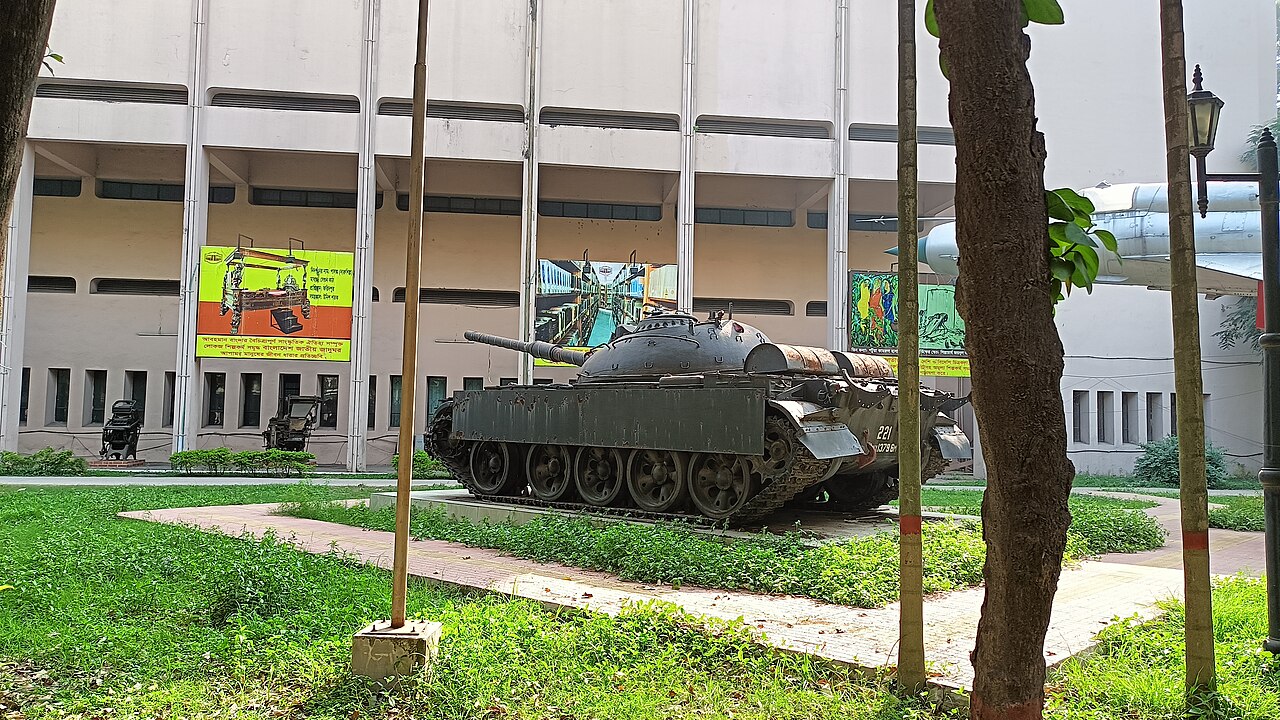
The Liberation War Museum tells the story of the 1971 war that created Bangladesh, and it does so with a depth and care that make it one of the most important visits in Dhaka. The museum was founded in the 1990s by a group of citizens determined to preserve evidence of the war, and it is now housed in a purpose-built building in Agargaon. Its galleries trace the political background of the language movement and the road to independence, then the events of 1971 itself, using documents, newspapers, photographs, uniforms, weapons and personal belongings donated by families. Oral history recordings add the voices of survivors. The tone is sober and the content can be distressing, but the museum is widely respected for its seriousness and its role in public memory. It is a place to listen rather than to hurry.
Plan a visit of about two hours. The exhibits move chronologically, which helps newcomers follow a complex story. Early galleries cover the Language Movement of 1952 and the political tensions of the following two decades. Later displays document the events of 1971, including the wartime experience of civilians and the final victory. Many objects are everyday items, such as a child's shoe or a letter, and they carry more weight than any caption.
Visiting with care is important. Photography rules vary by gallery and should be followed, and some content is graphic. Younger children may find parts upsetting, so consider your family's needs. Staff are generally helpful, and a guide or an audio resource, where available, adds context. If you are unfamiliar with the history, read a short summary beforehand so the displays make sense.
The museum has a weekly closing day and set hours, and admission is modest. Check current details with the museum's own site or your hotel. The location in Agargaon is a short ride from Parliament House, so the two make a natural pairing on a modern-Dhaka day. Dress modestly and comfortably, and bring water.
Many visitors find that the museum changes how they see the country and its people, and it prepares you for conversations with Bangladeshis, for whom 1971 remains a defining part of national identity. Leave time afterward to sit quietly, perhaps in the museum's cafe or garden, before returning to the bustle outside.
Give yourself time at the end to sit and absorb what you have seen. Many visitors find the personal objects and testimonies the most affecting parts of the museum, and talking about them afterward with a guide or a travel companion can help. If you are visiting with local friends or colleagues, listen carefully to their own family stories, which often add a dimension no museum can capture, and treat the topic with respect.
Travelers who want more background can read a short history of the independence movement before arriving, or ask your hotel to suggest a guide who can add context. The surrounding neighborhood has simple cafes where you can sit afterward, and many visitors appreciate a quiet cup of tea before returning to the traffic. The museum is not an easy visit, but most travelers describe it as one of the most worthwhile hours they spend in Bangladesh, and it deserves unhurried attention.
What to expect
The experience
A self-guided museum visit with chronological galleries, objects, photographs and oral history.
Best time
Morning or early afternoon, leaving time to reflect afterward.
How long
About two hours.
Tips
Read a short summary of 1971 beforehand, follow photography rules and check the weekly closing day.
Quick picks
- Best for
- Anyone who wants to understand modern Bangladesh.
- Families
- Best for older children and teens; some content is graphic.
- Couples
- A thoughtful, serious outing.
- Pair with
- Parliament House and the National Museum.
- Time needed
- About two hours.
Good questions
What does the museum cover?+
The Language Movement, the road to independence and the 1971 war, through documents, objects and testimony.
Is it suitable for children?+
Better for older children and teens, as some displays are graphic.
How long does it take?+
About two hours.
Is photography allowed?+
Rules vary by gallery. Follow signs and ask staff.
Where is it?+
In Agargaon, a short ride from Parliament House.