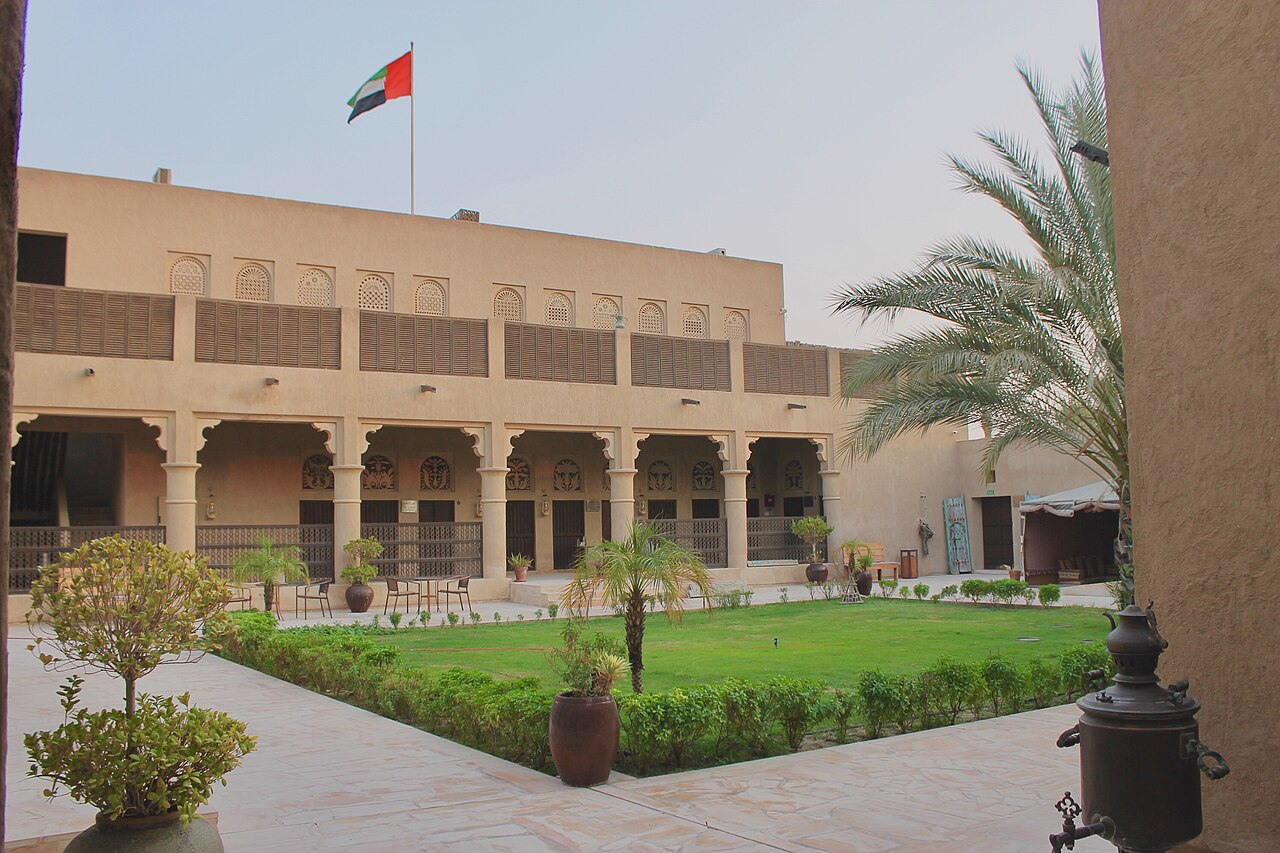
Al Shindagha Museum is the heritage museum that Dubai was missing for years, and with Al Fahidi Fort and the old Dubai Museum still closed for restoration, it is now the essential first stop for anyone curious about the city before oil. It occupies a run of restored coral-stone and gypsum houses in the Al Shindagha historic district, the narrow spit of land at the mouth of Dubai Creek on the Bur Dubai side, where the ruling family and leading merchants once lived with the water on three sides. The museum is spread across a series of pavilions, each telling part of the story: the Creek as the lifeline of trade with India, Persia and East Africa; pearl diving and the boats and tools it depended on; family life in courtyard houses cooled by wind towers; and the moment Dubai began to change, with the dredging of the Creek and the first wave of modern building. Exhibits are interactive, with projections, film, sound and hands-on displays rather than glass cases alone, which keeps children engaged. The highlight for many visitors is the Perfume House, which explores the fragrance traditions of the Gulf, from oud and bakhoor incense to rose and musk, with scents to smell and stories of how perfume threads through hospitality and daily life. Walk along the Creekside promenade between pavilions and you look across to the dhows unloading in Deira. Allow two hours or more if you like museums. Fit: first-time visitors who want context, culture lovers, families with school-age children, and anyone combining old Dubai with an abra across the Creek.
The setting matters. Al Shindagha was strategically placed at the Creek mouth, and from here the town grew up both banks: the souks, the boats and the wind-tower houses of Al Fahidi are a short walk upriver. The district has been carefully restored as a heritage area, so even the walk between pavilions, along sandy lanes and past carved doors, is part of the visit. Nearby, the curved arches of the Infinity Bridge carry traffic across the Creek, a reminder of how close the old and new cities sit.
How to do it well: buy a ticket online or at the entrance, and start with the pavilion that introduces the Creek, then follow the numbered route. Do not skip the Perfume House; it is the most memorable room in the museum and smells as good as it sounds. Combination tickets with the Etihad Museum are sometimes offered and make a good culture day. Mornings and late afternoons are pleasant for the outdoor walk between buildings; in summer, move quickly between the air-conditioned pavilions. There are cafes in the district for coffee and dates.
Getting there: Al Ghubaiba metro station on the Green Line is a short walk away, and the Bur Dubai abra station is a pleasant stroll along the Creek. Combine the museum with Al Fahidi, the textile souk and an abra crossing to the spice and gold souks in Deira for a full old Dubai day, or come late in the afternoon and finish with dinner by the water at Al Seef. Hours and prices are set by Dubai Culture and can change, so check before you go.
What to expect
The experience
Restored historic houses at the mouth of Dubai Creek, turned into pavilions on trade, pearling, family life and the growth of the city, with interactive displays and a Perfume House.
Best time
Mornings or late afternoons in the cool season for the walk between pavilions; any time in summer if you move quickly.
How long
About two hours, longer if you read everything.
Tips
Follow the numbered route and save energy for the Perfume House. Walk on to Al Fahidi and take an abra to Deira. Check for combination tickets with the Etihad Museum.
Quick picks
- Best for
- Understanding Dubai before oil, in one well-designed museum.
- Families
- Good. The interactive displays and scents keep children interested.
- Couples
- A good start to a Creekside afternoon that ends with dinner at Al Seef.
- Pair with
- Al Fahidi, the souks and an abra across the Creek.
- Time needed
- Two hours.
Good questions
Is Al Shindagha the same as the Dubai Museum?+
No. The old Dubai Museum was in Al Fahidi Fort, which has been closed for restoration with a reopening announced but not yet dated. Al Shindagha Museum is a separate, newer museum in restored houses at the mouth of the Creek.
What is the Perfume House?+
A part of the museum devoted to the fragrance traditions of the Gulf, such as oud, incense, rose and musk, with scents to smell and stories about their place in hospitality and daily life.
How do we get there?+
Al Ghubaiba station on the Green Line is a short walk away, and the Bur Dubai abra station is a stroll along the Creek.
Is it good for children?+
Yes. Many exhibits are interactive, with projections and hands-on displays, and the Perfume House is popular with all ages.
How long do we need?+
About two hours. Add time for a walk through the historic district and on to Al Fahidi and the souks.