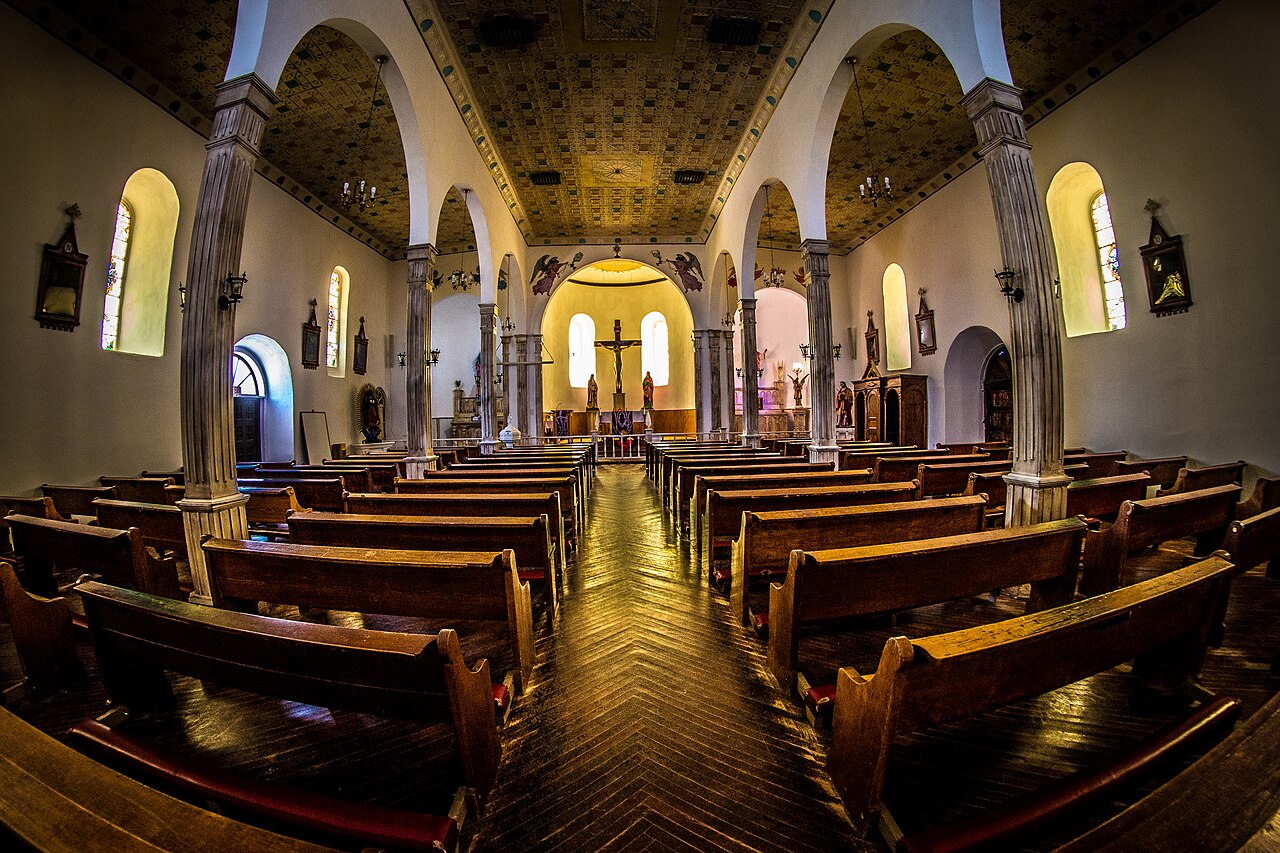
Ysleta del Sur Pueblo is the Tigua homeland on El Paso's southeastern edge, and it is one of the most distinctive cultural stops in Texas. Its people trace their story to the Pueblo Revolt of 1680, when Tiwa-speaking families from the Isleta area in present-day New Mexico traveled south with Spanish refugees and settled on the Rio Grande, where they built a mission and a community that has endured ever since. Today the Tigua are recognized as a sovereign tribal nation and are the only federally recognized tribe in Texas. A visit centers on the mission plaza and the tribal cultural programs. Mission Ysleta, with its white facade and silver-domed bell tower, sits at the heart of the community. Around it, visitors may find a cultural center, a small museum, dance performances, craft sales and, when available, bread baked in traditional outdoor ovens called hornos.
The experience is best treated as a visit to a living community rather than a standard attraction. Start at the mission, where the quiet interior and the plaza outside introduce the long history of the site, then ask at the tribal cultural center about the day's offerings, which have included artisan sales, storytelling, demonstrations and seasonal events.
Tigua dancers perform on feast days and at community celebrations, and the feast of San Antonio in June and the late-summer and autumn gatherings draw crowds from across the valley. If you can plan around an event, you will see the pueblo at its most vivid, with drumming, costume, food and family.
Hours, programs and access change with the tribal calendar, so check the pueblo's website or call ahead before you drive out. Some areas are reserved for the community, and visitors should respect signs, ask before taking photographs of people and avoid recording ceremonies. Purchase crafts, pottery and baked goods directly from tribal artists whenever possible, since that is the most direct way to support the community. A nearby casino and entertainment center also operates on tribal land, but it is a separate matter from the cultural visit.
Pair the pueblo with the rest of the Mission Trail for a full day. Ysleta lies at the western end of the trail, so many visitors begin here and then continue along Socorro Road to Socorro and San Elizario. Allow an hour or two for the plaza, mission and cultural programs, and more if there is a festival or a market.
The visit adds an Indigenous perspective to the Spanish colonial story told by the churches, and it offers a rare chance to hear that story from the people who live it. Bring curiosity, patience and respect, and you will leave with a clearer sense of why this valley has mattered for so long.
If you have more time, ask about guided visits or presentations, which are sometimes available by appointment for groups. Teachers and families may find that the cultural programs are a good way to introduce children to Native American history in the Southwest. Buying a handmade item, a loaf of bread or a book from a tribal vendor is a respectful way to support the community.
Keep in mind that tribal policies change, so confirm what is open on the day of your visit, and treat any restrictions as part of the experience of visiting a living community.
What to expect
The experience
A self-guided visit to the mission plaza and tribal cultural programs, with events, crafts and baked goods on selected days.
Best time
Feast days and tribal events, or a weekday morning; autumn to spring for comfortable weather.
How long
One to two hours, longer on festival days.
Tips
Check the pueblo website for hours and events, ask before photographing people and buy directly from tribal artists.
Quick picks
- Best for
- Travelers interested in Indigenous history and living culture.
- Families
- Open plazas, dance events and food make it engaging for children when programs are running.
- Couples
- A quiet morning at the mission followed by lunch along the Mission Trail.
- Pair with
- Mission Ysleta, Socorro Mission and San Elizario.
- Time needed
- One to two hours.
Good questions
Who are the Tigua?+
The Tigua, or Tiwa, people of Ysleta del Sur Pueblo came south after the Pueblo Revolt of 1680 and have lived on the Rio Grande ever since. They are Texas's only federally recognized tribe.
Can visitors attend events?+
Many community celebrations and dances are open to visitors, but schedules vary, so check the tribal website first.
Can I take photographs?+
Ask before photographing people, and do not record ceremonies unless you have clear permission. Follow posted signs.
What is a horno?+
An outdoor adobe oven used to bake bread and sweets in a traditional style, often demonstrated or sold on event days.
Is it part of the Mission Trail?+
Yes, Ysleta is the western starting point, with Socorro and San Elizario farther east.