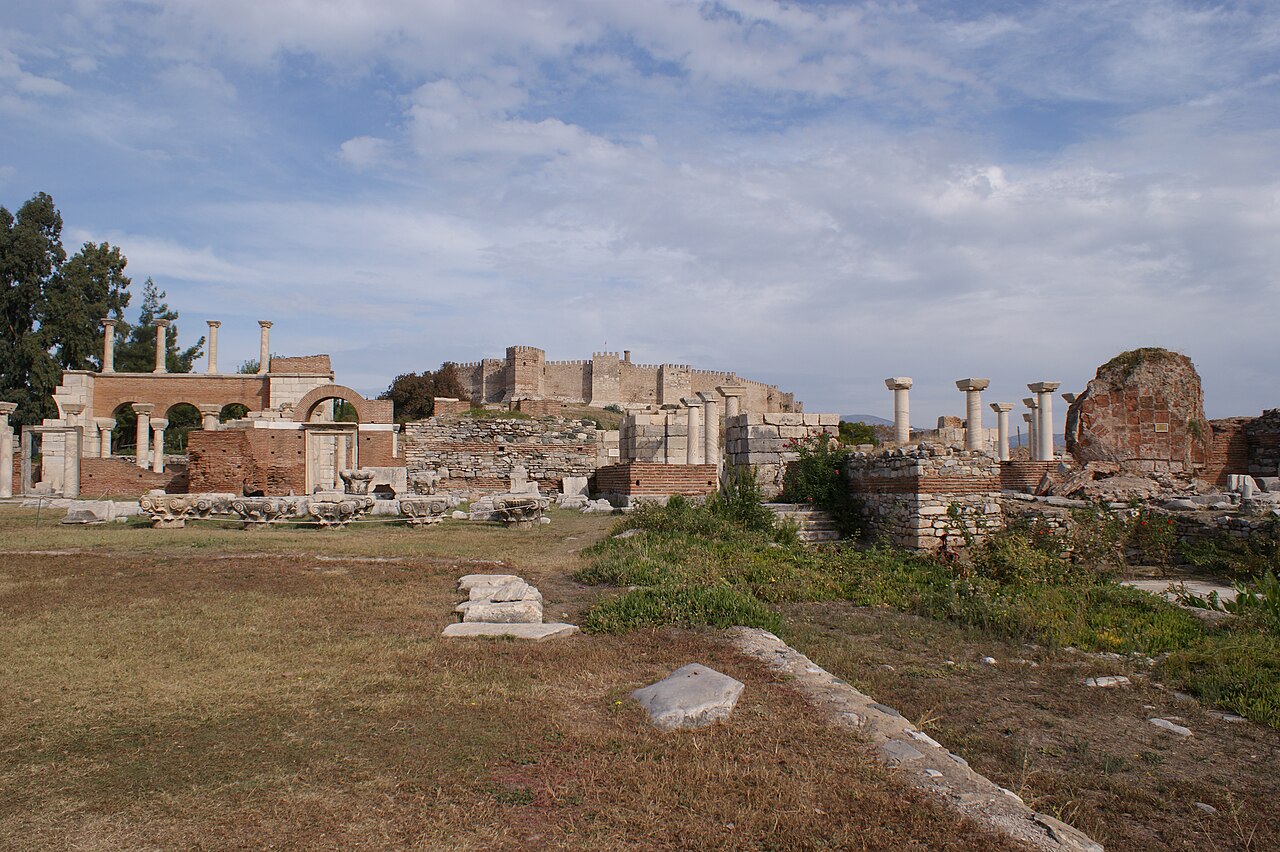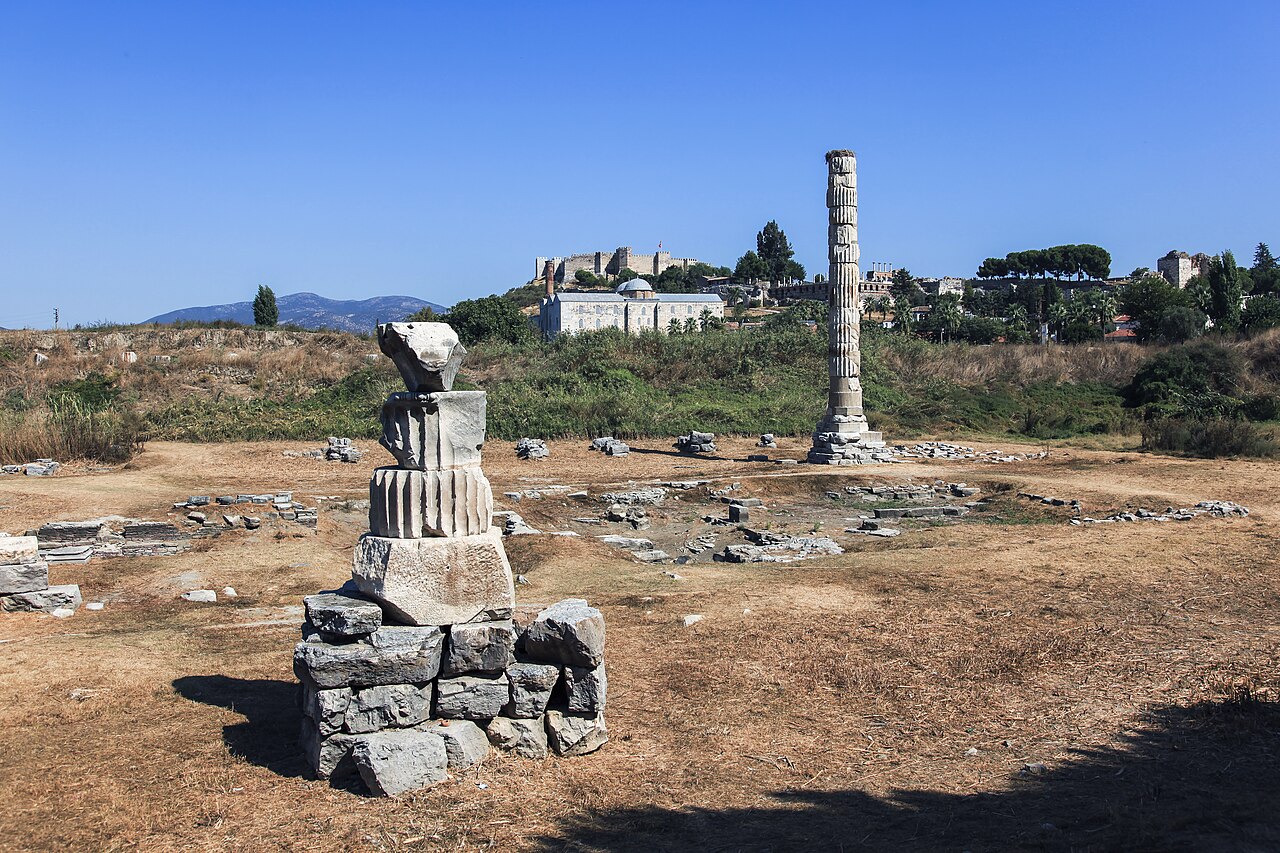
The Temple of Artemis, the Artemision, was one of the Seven Wonders of the Ancient World, and it was the first temple built entirely of marble. It was dedicated to Artemis of Ephesus, the Anatolian mother goddess, and it drew pilgrims from across the Mediterranean. Today the site is humble. A single column, reassembled from fragments, rises above a low-lying field with a few foundation stones, reeds and the occasional stork nest, and the Turkish tourism ministry notes only that a few foundation remains survive. The contrast between the legend and the reality is part of the appeal. It is a short and easy stop on the edge of Selçuk, with the Basilica of St John and its citadel on the hill above, and the Isa Bey Mosque nearby. Entry is typically free, there is no queue, and a visit takes thirty minutes at most. Information boards explain the sequence of earlier and later temples, and the museum in Selçuk holds the statues of the goddess. It makes a fitting prelude to the main ruins.
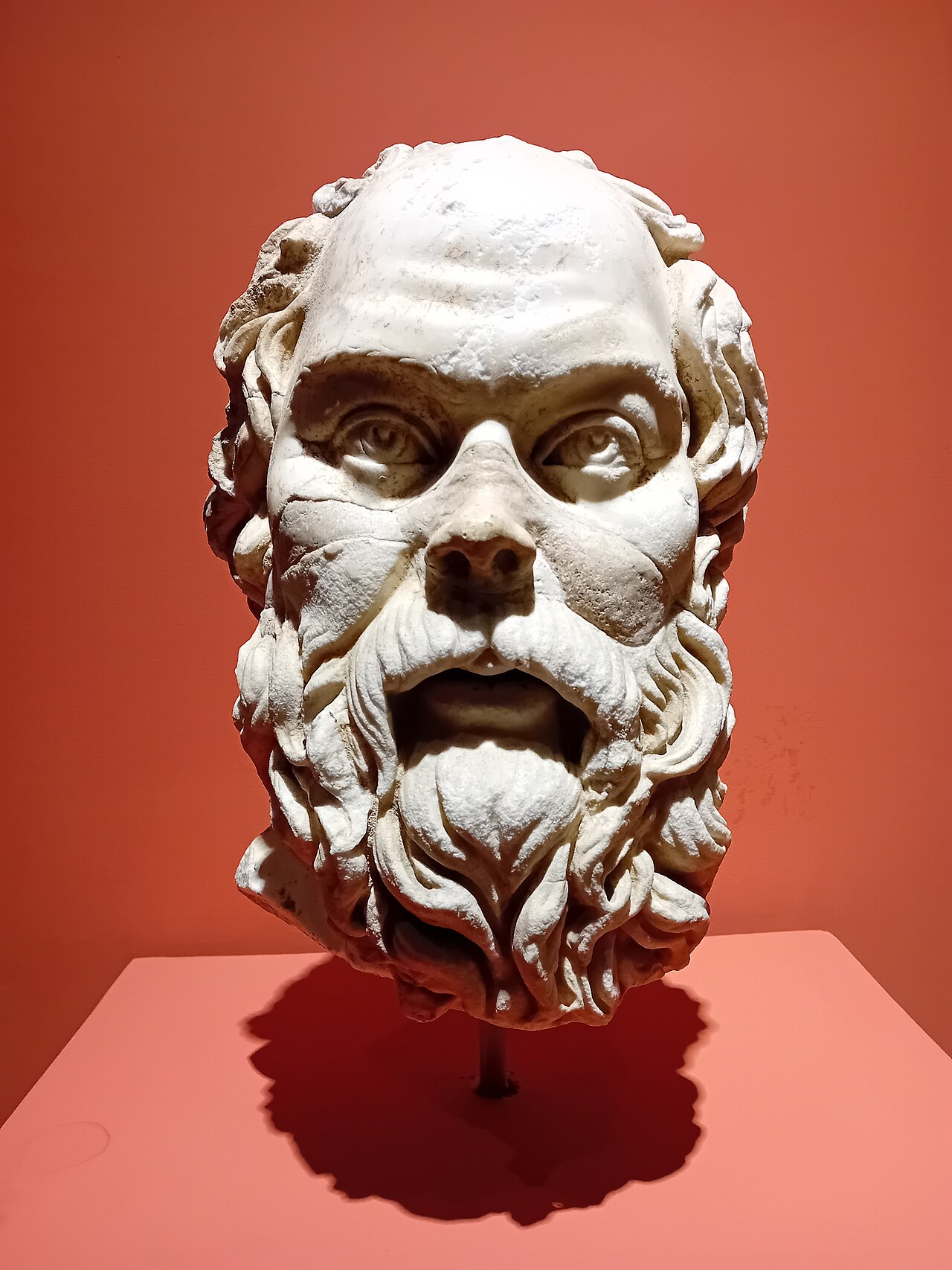
The temple's story is dramatic. Successive buildings stood on the site, and the great Hellenistic temple was said to have been burned in antiquity on the night Alexander the Great was born, rebuilt, and finally ruined by flooding, earthquakes and the reuse of its stone, with blocks ending up in later buildings including the Basilica of St John and mosques in Selçuk. Excavations in the nineteenth century, including work by John Turtle Wood on behalf of the British Museum, located the site. Visitors imagine the scale by looking at the columns shown on information panels, and the museum shows pieces of the temple frieze and statues.
Plan your stop sensibly. This is an open site that you can see from the edge of the path and walk around, so there are no timed tickets. The light is best in the early morning or late afternoon, when the column glows against the hills, and the site is exposed in the heat of the day. It sits roughly a ten to twelve minute walk from the Selçuk museum and the St John area, which makes it easy to combine with the museum and the basilica on foot.
Manage expectations: it is not a spectacular ruin, and some visitors feel underwhelmed. The best way to enjoy it is as a symbolic stop, with the story in mind, and as a visit that costs nothing. Many Ephesus tours include it for ten to thirty minutes. If you are a keen photographer, the column with storks and the hill of Ayasuluk behind it provides a classic image.
What to expect
The experience
A short walk around an open site with one reconstructed column, foundation stones and information boards.
Best time
Early morning or late afternoon for softer light and less heat.
How long
Twenty to thirty minutes.
Tips
Pair it with the Ephesus Museum to see the statues, bring water in summer, and keep expectations realistic.
Quick picks
- Best for
- History lovers who want to tick off a Wonder of the Ancient World with a story to match.
- Families
- A quick, free stop where children can look for storks and walk around.
- Couples
- A relaxed stop at golden hour before dinner in Selçuk.
- Pair with
- The Ephesus Museum, the Basilica of St John and the Isa Bey Mosque.
- Time needed
- Half an hour.
Good questions
What can you actually see at the Temple of Artemis?+
A single reconstructed column, foundation stones and information boards. The Turkish tourism ministry notes that only a few foundation remains survive.
Is the Temple of Artemis free?+
Entry is generally free and the site can be viewed without a ticket. Check locally if you want to be sure.
Why was it a Wonder?+
It was the first temple built of marble and one of the grandest buildings of its age, dedicated to the Anatolian mother goddess. Pilgrims came from across the Mediterranean.
Where are the statues of Artemis?+
The famous statues are in the Ephesus Museum in Selçuk. They are worth seeing before or after this stop.
How far is it from Ephesus?+
It is on the edge of Selçuk, several kilometres from the ancient city. It is a short taxi ride or a walk from the Selçuk centre.