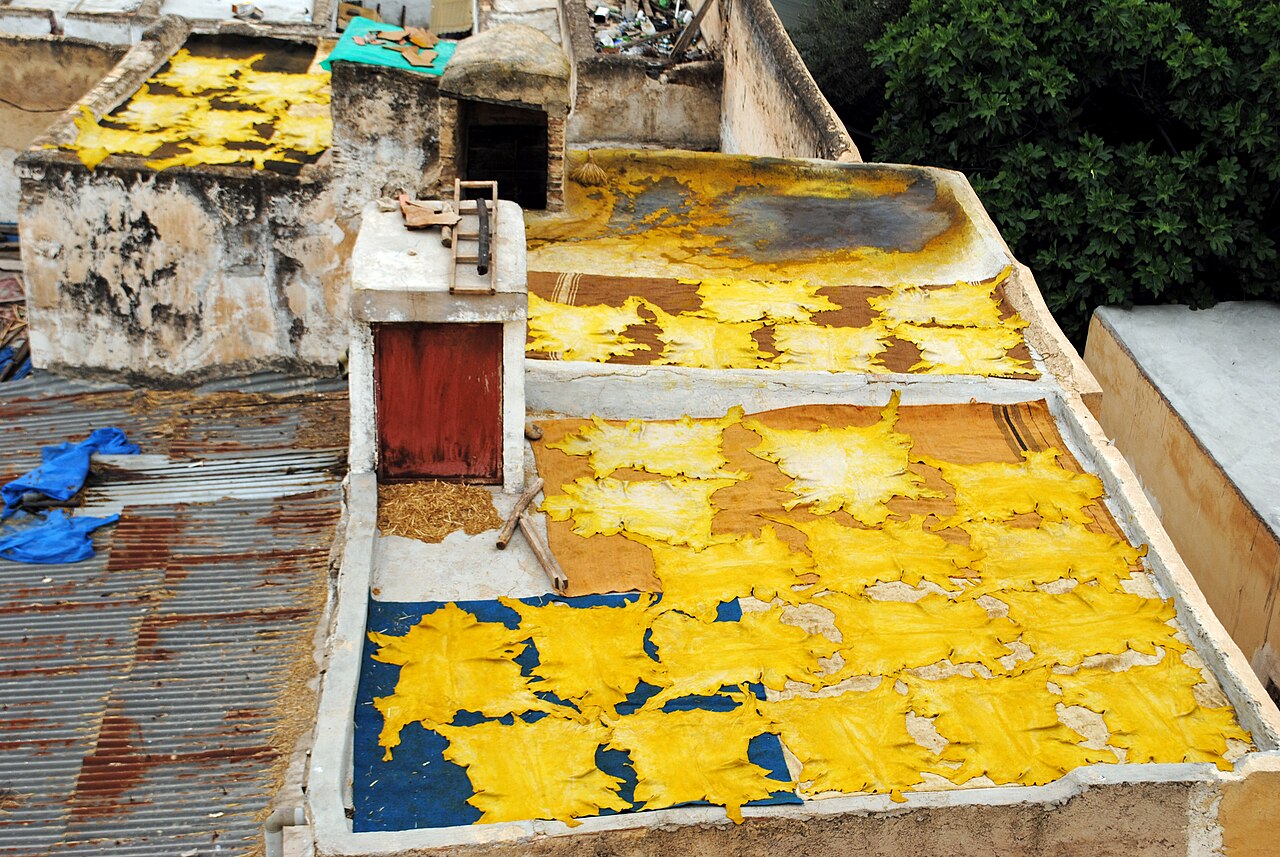
Chouara is the tannery that appears on almost every postcard of Fes, and it lives up to the image. Seen from the terraces of the surrounding leather shops, it is a patchwork of stone vats filled with dyes in saffron yellow, poppy red, indigo and green, with men standing waist-deep treading hides in the mix. Tanning here is still done largely by traditional methods, with skins first softened in pits of lime and pigeon droppings before being coloured and dried on nearby rooftops. The smell is strong, and shop staff will hand you a sprig of fresh mint to hold under your nose, which does help. There is no formal entrance fee, since access is through the leather shops that surround the vats, but you are expected to look at the goods and a small tip or purchase is the unspoken price of the view. It is a working site, so treat it with respect and ask before photographing people.
The tannery district lies on the eastern side of the medina near the river, and the views are best from the upper floors of the shops that ring the vats. Your guide will normally lead you through a showroom, up several flights of narrow stairs, and out onto a terrace with a full panorama. Do not expect to be rushed: staff explain the process, from the soaking in lime to the dyeing with natural pigments such as poppy, indigo and henna, and then invite you to browse jackets, bags, slippers and the soft leather poufs that Fes is known for. Prices start high and bargaining is expected, so go in with a sense of what you would pay at home and be willing to politely walk away.
Time your visit with care. Mornings are the busiest working period, when the vats are active and the colours are brightest, while the afternoon is calmer but less lively below. The summer heat intensifies the odour considerably, and in the cooler months the experience is gentler. The work is physically hard and not always healthy for the men doing it, which is a worthwhile thing to reflect on as you watch. A medina walk with a guide is the easiest way to include the tannery, because finding the right terrace through the lanes is part of the challenge, and a guide ensures you are taken to a reputable shop without pressure.
What to expect
The experience
A visit through a leather shop to a terrace overlooking the dye vats, with a guide explaining each stage of the tanning process.
Best time
Morning, when the vats are busiest and the colours are most vivid.
How long
About an hour including the shop visit.
Tips
Take the sprig of mint, wear shoes you do not mind getting dusty, ask before photographing workers and bargain politely if you buy leather.
Quick picks
- Best for
- Photographers and anyone curious about traditional crafts.
- Families
- Older children find it fascinating, though the smell can be too much for younger ones, so go with the mint and decide on the spot.
- Couples
- Visit late morning and buy a pair of soft leather slippers as a memento.
- Pair with
- Combine it with the medina walk and the nearby madrasas on one half-day route.
- Time needed
- Allow an hour at the site, or half a day as part of a medina walk.
Good questions
Is there an entrance fee for the Chouara tannery?+
There is no formal ticket, because you view it from the leather shops around the vats. You are expected to browse, and a small tip or purchase is customary.
What does the tannery smell like?+
Strong and earthy, especially in summer, because of the lime and natural materials used. Staff offer a sprig of mint to hold under your nose.
Can I take photographs?+
Yes, the views from the terraces are photogenic. Ask before photographing individual workers out of courtesy.
Are the tanneries still working?+
Yes, the vats are a working industrial site, and the methods remain largely traditional. It is not a staged show.
Do I need a guide to find it?+
The lanes are confusing, so a guide helps enormously. Without one, expect persistent offers of help from people steering you to particular shops.