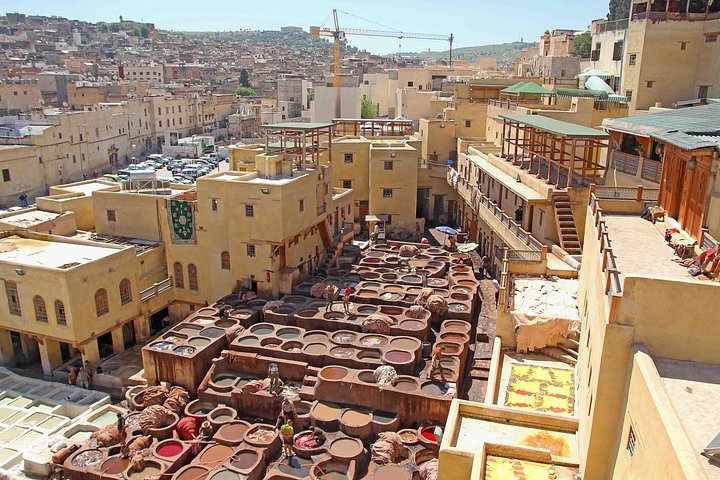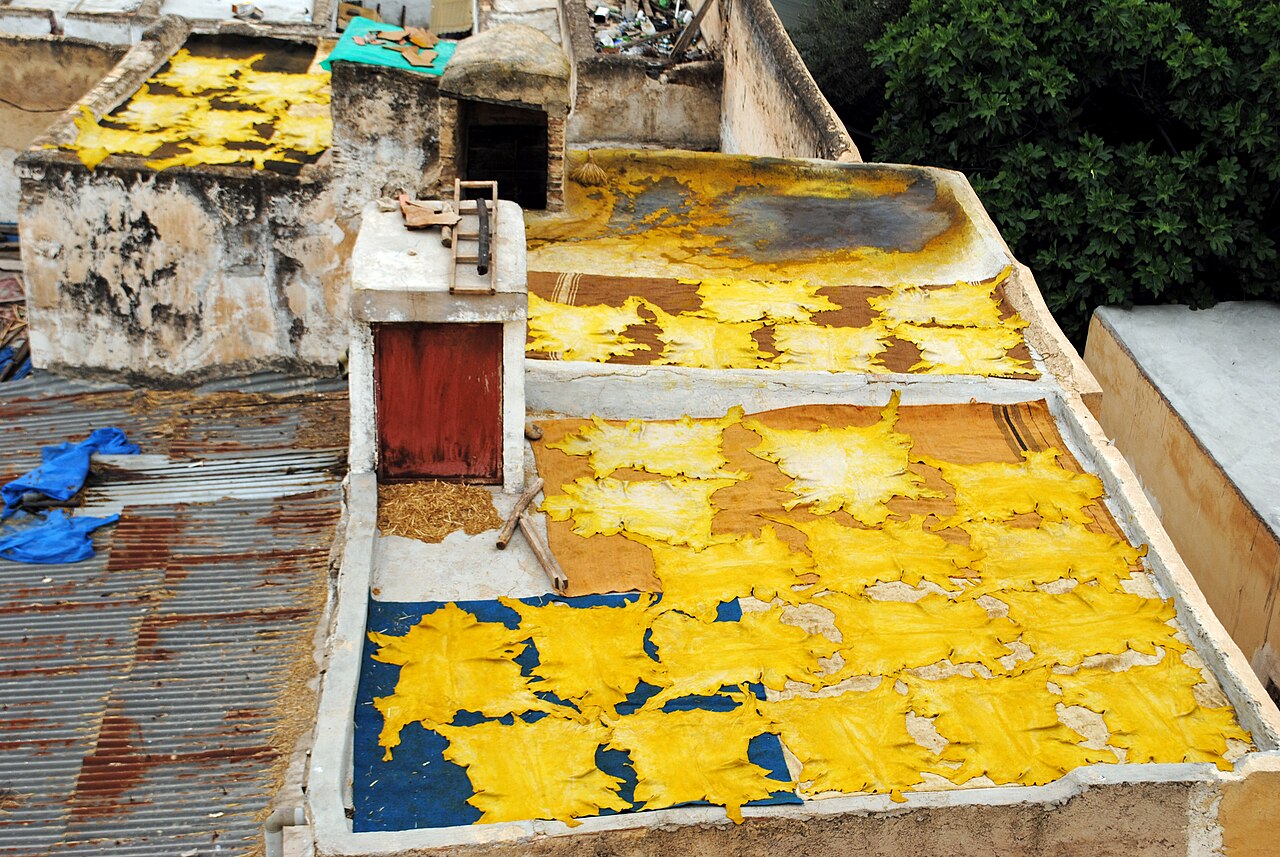
Fes is famous for the colour of its leather vats, but the city has an older, quieter dyeing tradition built around wool, silk and cotton. This workshop looks at that world through plants, minerals and patient craft. You begin with a visit to the souk where wool and dyed thread are sold, which gives you a feel for the colours that dominate Moroccan textiles and how they are used in clothing, rugs and trimmings. You then move to a workshop where a guide explains the traditional dye sources, such as pomegranate skins, indigo, saffron, henna, madder and walnut shells, and shows how wool is prepared so it holds a colour. The practical part lets you dip, stir and rinse skeins of wool and watch the shade change as it dries, a small piece of chemistry that is surprisingly absorbing. The experience is more thoughtful than flashy, with plenty of explanation for travellers who want to understand how natural colour works and why it behaves differently from the bright synthetic dyes you see on market stalls. It suits creative visitors, couples and families with older children, and it complements a visit to the tanneries by showing a softer side of Fes craft. You leave with a better eye for colour and a small coloured keepsake, depending on the session.
The souk visit is a useful introduction to the textile quarter, where you can see how skeins of wool, silk threads and finished garments are displayed and sold. Your guide can point out the difference between natural and synthetic dyes and explain the older trade routes that brought some pigments to Fes.
Then comes the workshop, usually in a small studio or a courtyard, where the dye baths are set up in advance. You will wear an apron or gloves for the dyeing, since natural dyes stain skin and clothing, so wear old clothes and shoes you do not mind getting splashed.
A typical session includes an explanation of mordants, which are the substances that help a dye bond to the fibre, then a demonstration and a chance to immerse your own wool. Colours emerge slowly, and the guide may have prepared sample skeins to show the full range from pale yellow through red to deep blue.
Ask questions about sourcing and sustainability, since the craft is changing as synthetic dyes spread. If you like what you make, you can ask where to buy naturally dyed wool or finished pieces, and what to look for when you compare them.
The experience is largely indoors and moderately active, with some standing and carrying. Check the meeting point and the length of the session when you book, and allow extra time for walking to the workshop through the lanes. It pairs well with a weaving class, since the two crafts follow the same thread from wool to textile, and with a short break for tea afterwards.
It also helps to keep expectations realistic. Natural colours are often softer and more varied than bright commercial shades, and a skein may look different when dry. That subtlety is the point, and many visitors find that it changes how they look at every rug, scarf and cushion cover they see afterward in the souk.
What to expect
The experience
A souk visit followed by a hands-on dyeing session using natural pigments on wool.
Best time
Morning, when the souk is lively and the light suits colour work.
How long
Two to three hours including the souk visit.
Tips
Wear old clothes and shoes, since natural dyes stain, and ask about the keepsake you can take home.
Quick picks
- Best for
- Creative travellers and anyone interested in textiles and colour.
- Families
- Older children usually enjoy the dipping and stirring, but dyes can stain, so dress for mess.
- Couples
- A creative activity with something small to take away.
- Pair with
- A carpet weaving workshop, to follow the thread from dye to loom.
- Time needed
- Half a morning or afternoon, with time for the walk to the studio.
Good questions
Are the dyes really natural?+
The workshop is built around traditional plant and mineral dyes. Ask the guide what is used on your day.
Will my clothes stain?+
Possibly. Wear old clothes and use the apron or gloves provided.
Can I take my wool home?+
Usually you keep what you dye once it is dry. Confirm what you can take when you book.
Is it suitable for children?+
Often yes for older children who can follow instructions. Check age guidance when you book.
Can I buy dyed wool afterwards?+
Ask your guide for trusted sellers and compare prices before buying.