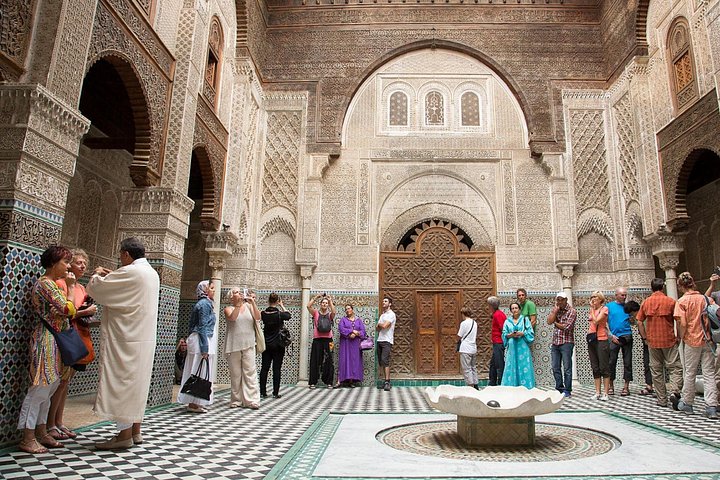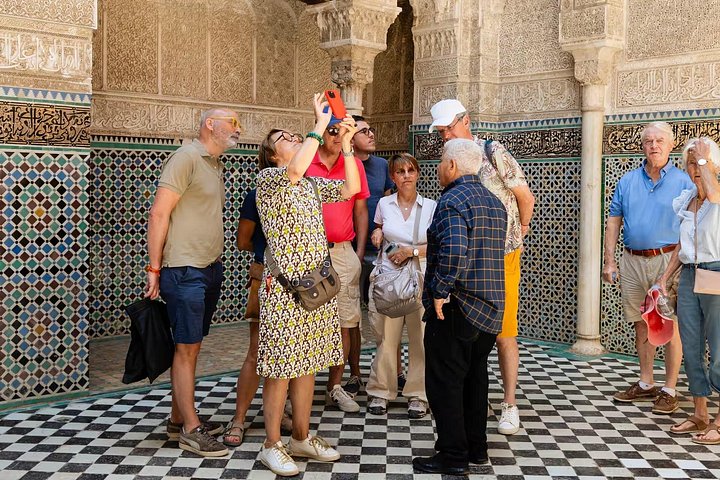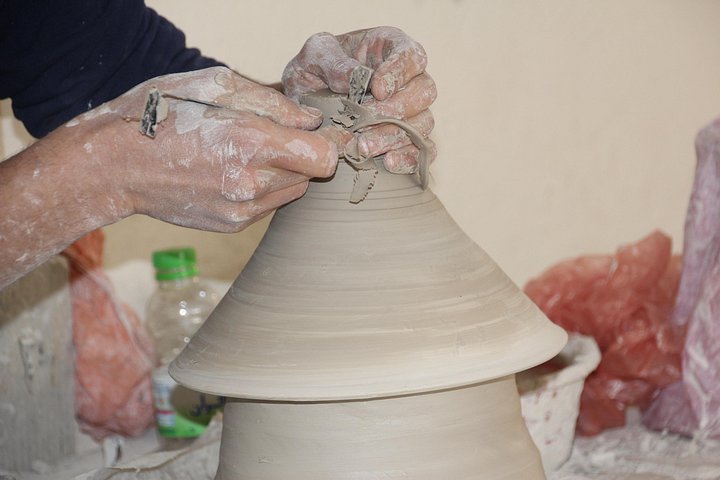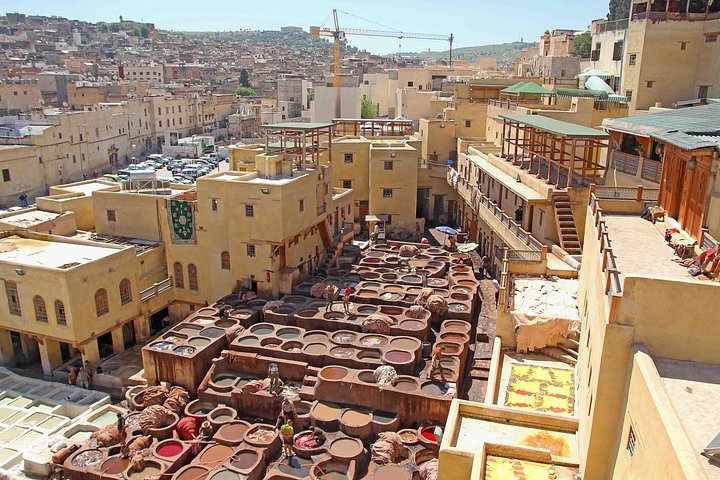
Look up in any grand building in Fes and you will see carved plaster: arabesques, calligraphic bands and lacy geometric panels that cover walls and arches. The craft is called gebs in Moroccan Arabic, and it is one of the great decorative arts of the Maghreb. In this workshop, a local craftsman introduces the material and the tools and then helps you carve a small piece of your own. You learn how wet plaster is poured and cured, how patterns are drawn and transferred and how small chisels and blades bring them out with crisp lines. It is concentrated, quiet work that rewards patience, and it quickly changes how you look at the carved walls of Bou Inania and other historic buildings. The experience is suitable for beginners and does not require artistic ability, because the craftsman guides each step and the patterns are built from simple repeating shapes. It is a satisfying choice for couples, solo travellers and families with older children, and it is a calm indoor activity that works well on a hot or wet day. You finish with a small piece to take home, which makes a lasting souvenir and a link to the architecture you have been admiring. It pairs very well with madrasa visits, since the workshop gives you a practical sense of how long the original craftsmen worked.
Expect a small studio or workshop with benches, plaster, chisels and templates, and a craftsman who may have trained in the family trade for decades. The lesson often begins with a short demonstration of how plaster is prepared and shaped into a tablet and how a design is marked on its surface. You then take a chisel and begin to cut away the background so the pattern stands out.
The work is delicate, and the craftsman will show you how to hold the tool, how much pressure to use and how to fix small mistakes. Expect plaster dust, so wear clothes you do not mind marking and consider closed shoes.
Patterns usually include stars, scrolls and vines, which reflect the Islamic tradition of avoiding figurative imagery and building beauty from geometry. If you have time, ask about the symbolism of particular motifs and how the craft was passed down. Your finished piece will need time to dry and harden, so ask how to pack it for travel. Most workshops offer finished panels for sale, and you can compare quality, but there is no obligation to buy.
Check the length of the session, the start time and the venue when you book, and note that the studio may be in a lane that is difficult to find, so allow extra time. The activity is not strenuous but requires concentration and steady hands, so it may not suit very young children. Combine it with a visit to Bou Inania or Al-Attarine madrasa to see the finished art on a monumental scale, and consider pottery or calligraphy for a day of crafts.
Understanding plaster carving also helps explain why restoration projects in Fes are so specialised. Craftsmen who repair historic walls use the same tools and patterns you will practise, and some work with the same families for generations, so a short lesson gives you a respectful glimpse into a living skill rather than a lost one.
What to expect
The experience
A hands-on lesson in carving decorative plaster with a local craftsman, finishing with a small piece to take home.
Best time
Morning or afternoon; the workshop is indoors and suits all weather.
How long
Two to three hours.
Tips
Wear clothes that can get dusty, ask how to pack your piece and check the exact venue before you go.
Quick picks
- Best for
- Craft lovers and anyone fascinated by Islamic architecture.
- Families
- Better for older children and teens who can focus on delicate work.
- Couples
- A quiet creative session with a souvenir you made yourself.
- Pair with
- Bou Inania or Al-Attarine madrasa, to see the craft at full scale.
- Time needed
- Allow around three hours including the walk to the studio.
Good questions
Do I need artistic skill?+
No. Patterns are built from simple repeating shapes and the craftsman guides you.
Do I keep what I make?+
Normally yes. Ask how to pack it once it has hardened.
Is it messy?+
There is some plaster dust, so wear clothes you do not mind marking.
Is it good for children?+
Usually for older children and teens. Check age guidance when you book.
Which buildings show this art?+
Bou Inania and Al-Attarine madrasas have excellent carved plaster and cedar, and many riads have it too.