Frankfurt's cooking is hearty, regional and unfussy, and it comes with a drink all of its own. Eating here means learning a short list of local dishes, finding the right tavern, and being willing to share a long wooden table with strangers. This guide covers what to order, where the food culture lives and how to avoid the tourist traps.
Apple wine, the local obsession
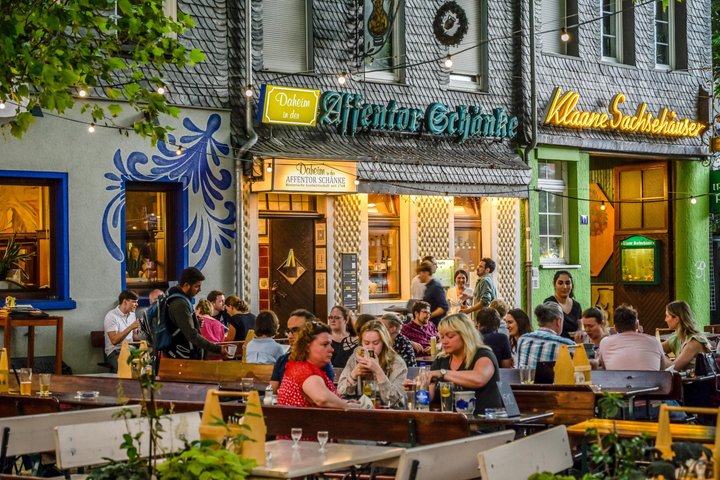
Apfelwein, which locals call Ebbelwoi, is a tart, still, cider-like drink made from apples, served in a ribbed glass called a Gerippte and often poured from a stoneware jug called a Bembel. It is lower in alcohol than most wine, and it is an acquired taste, a little dry and sour, so first-timers sometimes order it mixed with sparkling water, which is called sauer gespritzt, or with sweet lemonade. The traditional place to drink it is a tavern in Sachsenhausen, the district on the south bank of the Main, where the long benches, wood panelling and shared tables are part of the point. Our apple wine entry explains how to approach a first visit.
The dishes to try
The signature plate is Frankfurter Grüne Soße, a cold sauce of seven fresh herbs blended with sour cream or yoghurt, served with boiled potatoes and hard-boiled eggs. It is lighter than it sounds and especially good in spring and summer. Handkäs mit Musik is a sour-milk cheese marinated with onions, vinegar and oil, and it is best treated as a dare with a glass of apple wine. Rippchen mit Kraut is smoked pork rib served with sauerkraut, and Schweinshaxe is a roast pork knuckle that is a meal in itself. Frankfurter Würstchen, the thin pork sausage in a pair, is the city's namesake, served with mustard and a roll. For something sweet, Bethmännchen are small marzipan pastries decorated with almonds, which are especially common in Advent, and the Frankfurter Kranz is a buttercream ring cake.
The Kleinmarkthalle
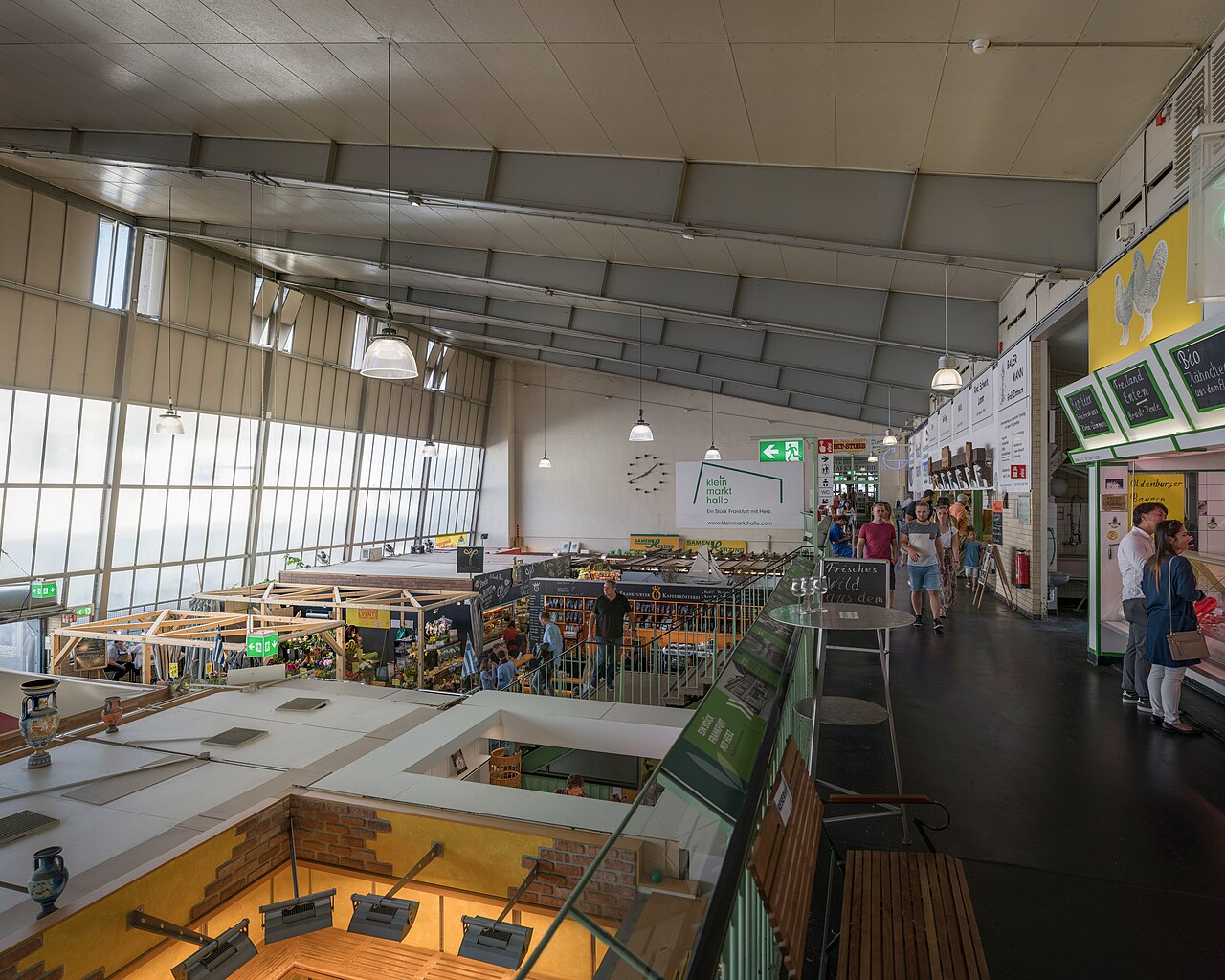
This covered food hall near the Römerberg is where locals and visitors alike shop and snack. Stalls sell sausages, cheese, bread, fruit, flowers and spices, and several counters serve hot food at small standing tables. Go late morning on a weekday for the best atmosphere, or on Saturday morning for the busiest and most colourful visit, and remember that it is closed on Sundays. It is an easy place to build a picnic or a long lunch, and it is also a good way to sample Grüne Soße and regional sausages without committing to a full restaurant meal.
Beyond the classics
Frankfurt is an international city, and the Bahnhofsviertel near the station has become the place for Turkish, Indian, Vietnamese and many other kinds of cooking, much of it excellent and inexpensive. The Bahnhofsviertel also has some of the city's best cocktail bars, though it remains a gritty district at night, so use common sense. Along the riverbank, simple kiosks and cafes sell coffee and pastries, and in the financial district you will find upscale restaurants where business dinners happen.
Christmas market food
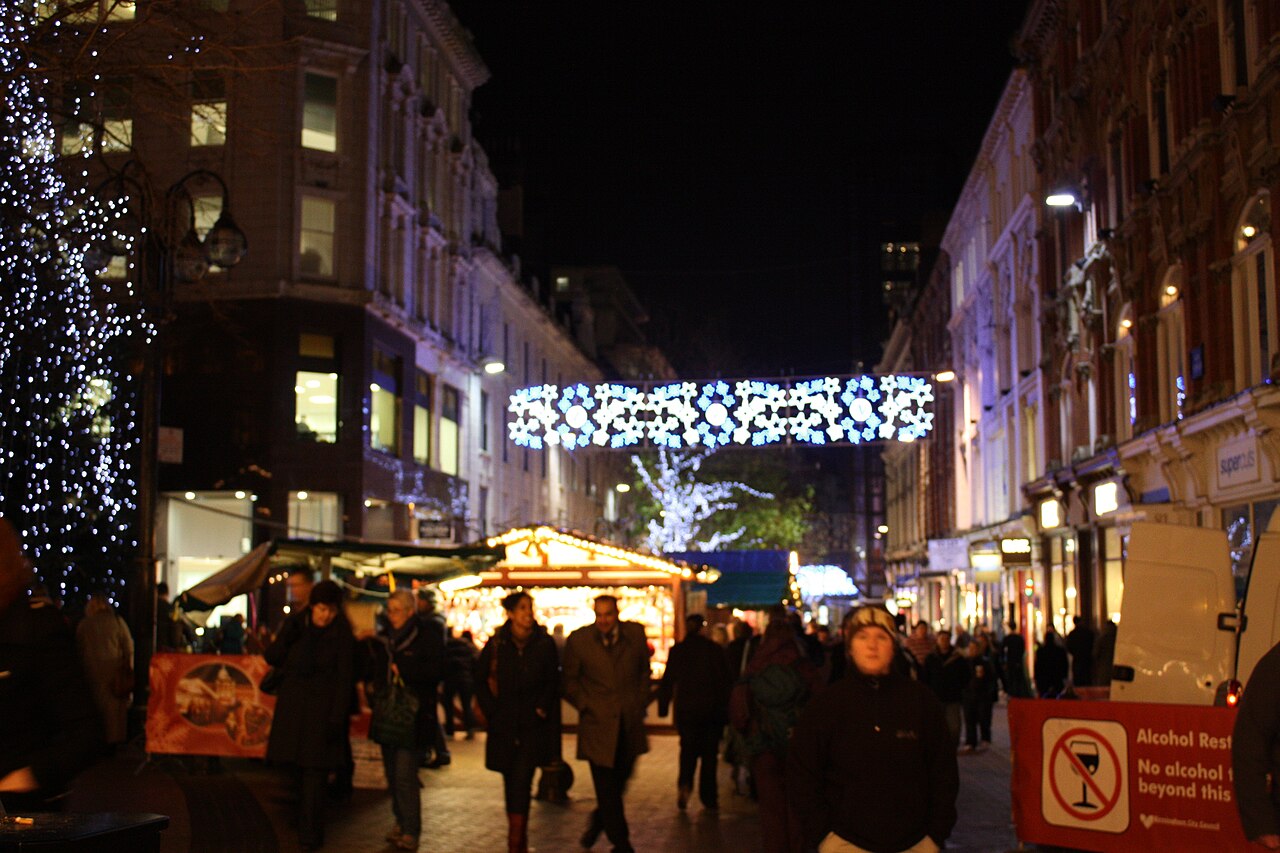
In Advent, the Römerberg and the surrounding lanes fill with stalls selling mulled wine, roasted almonds, grilled sausages, potato pancakes and the local gingerbread. Try the mulled apple wine, which is a Frankfurt variation on Glühwein, and look for Bethmännchen to take home. Expect crowds on weekends and evenings, and go on a weekday afternoon for the calmest visit.
Practical tips
Menus in traditional taverns are in German, but most staff speak English and will help you choose. Many places tell you to find your own seat, and at shared tables a polite greeting is customary. Ask for the bill by saying you would like to pay, and tip by rounding up or adding five to ten percent. Carry some cash, because small taverns and market stalls may not take cards. Lunch specials are generally better value than dinner, and Sunday, when many shops and the Kleinmarkthalle close, is a good day to head to a tavern or a cafe. If you are a vegetarian, Grüne Soße with potatoes and eggs is a ready-made choice, and the Bahnhofsviertel offers plenty of meat-free options.
A simple food plan
For a first visit, spend a morning at the Kleinmarkthalle, take a walk across the Eiserner Steg in the afternoon, and settle into a Sachsenhausen tavern for the evening with Grüne Soße and a jug of apple wine. A guided food tour is a good alternative if you prefer someone to choose the stops and explain the traditions.