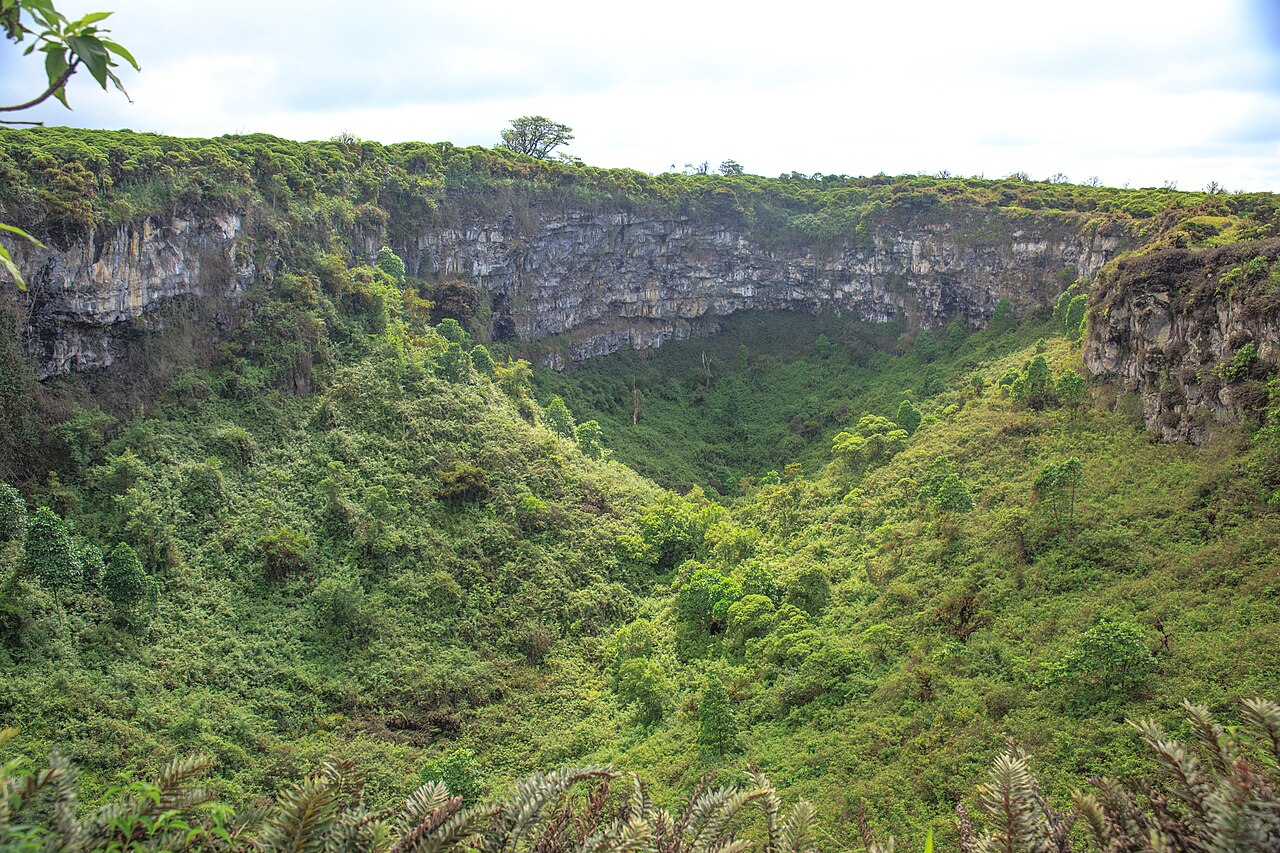
Los Gemelos, the Twins, are a pair of enormous craters on either side of the main road that climbs from Puerto Ayora to the Baltra ferry. They are not volcanic craters in the classic sense but sinkholes, formed when the roof of an empty magma chamber collapsed, and they sit in the cool highland zone where the vegetation is entirely different from the coast. A short, level path leads through forest of Scalesia, a tree-sized relative of the daisy that is found only in the Galápagos, with branches draped in mosses, ferns and bromeliads, and the craters open up suddenly as great green bowls dropping away on both sides of the trail. The highlands are often misty, which adds to the atmosphere and also means the view into the crater can come and go. The birdlife here differs from the coast: with patience you may see the vermilion flycatcher, a flash of red in the trees, along with Darwin finches, short-eared owls and warblers. The site is free to visit with your park entry fee already paid, and it takes about an hour to walk and enjoy. Because it sits right on the road, it is easy to add to a highland day that also includes the giant tortoises and the lava tunnels.
What makes it special
The contrast. After days of black lava, cactus and sea lions, the highlands feel like a different country, cool, green and quiet. The craters themselves are impressive for their depth and the way the forest clings to the rim, and the path is wide and easy, with a couple of viewpoints that give the best views into the bowls. Birdsong replaces surf and the light filters through the Scalesia trees, which makes it particularly pleasing for photographers who like atmosphere over blue skies.
Planning
You can reach Los Gemelos on a highland tour, in a taxi hired for a few hours or on the public bus along the Baltra road. Visitors normally combine it with the tortoise reserve and lava tunnels, a combination in many guided day trips, and the stop adds about an hour. Bring a light rain jacket, since mist and drizzle are common, especially between June and November, and closed shoes for a path that can be damp. Carry a little water and a layer, as the highlands are noticeably cooler than Puerto Ayora.
Good to know
Stay on the marked path and behind any railings, as the crater walls are steep and the edges unstable, and keep children close. Do not pick plants or feed birds. Because there are few services, bring snacks if you are travelling independently. If the cloud sits low, a short wait often brings a clearer view, and the walk is worthwhile even in mist for the forest alone.
This is one of the best free half-hours on Santa Cruz and a good use of an overcast day when the beaches are less appealing. Photographers should bring a lens cloth, because condensation is common, and anyone interested in plants will enjoy the mosses and bromeliads. Allow a little extra time if you want to wait for clouds to lift, since the view into the craters can change completely in the space of a few minutes.
What to expect
The experience
A short, level walk through highland Scalesia forest to viewpoints over two large sinkholes beside the main road.
Best time
Morning, when birds are active and the mist is often lighter; carry a rain layer in any season.
How long
About an hour at the site, plus transport from Puerto Ayora.
Tips
Wear closed shoes, bring a jacket, stay behind the railings and keep children close to the crater edges.
Quick picks
- Best for
- Anyone who wants a change from beaches and boats, and a taste of the green highlands.
- Families
- An easy, short path, but keep a close hold of young children near the crater edges.
- Couples
- A quiet, atmospheric stop on a highland day with the tortoises.
- Pair with
- The El Chato tortoise reserve and lava tunnels, a short drive away.
- Time needed
- One hour at the craters.
Good questions
What are Los Gemelos?+
Two large sinkholes formed when the roofs of empty magma chambers collapsed, set in highland forest on either side of the road from Puerto Ayora to Baltra.
Is there an entry fee?+
There is no separate ticket at the site. Your Galápagos National Park entry fee, paid on arrival at the airport, covers your visit.
How do I get there?+
By taxi, public bus along the Baltra road or as a stop on a highland tour, which usually also includes tortoises and a lava tunnel.
What birds can I see?+
Vermilion flycatchers, Darwin finches and other highland birds are possible, and patience in the trees pays off.
What should I wear?+
Closed shoes and a light waterproof jacket, since the highlands are cooler and often misty.