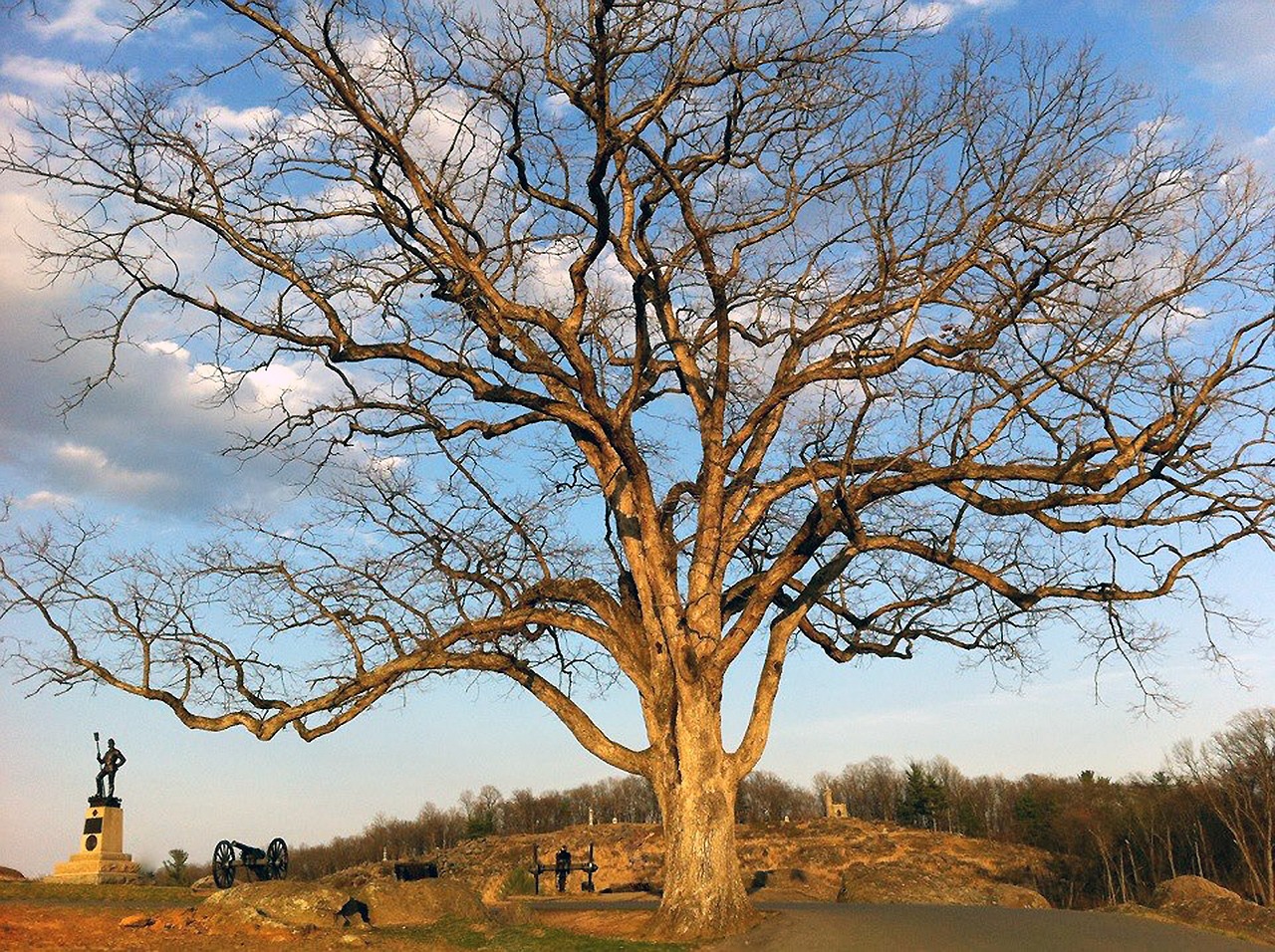
Culp Hill is the part of Gettysburg that most first-time visitors skip. A wooded ridge on the eastern side of the battlefield, it anchored the right end of the Union fishhook line, and on the nights of July 2 and the morning of July 3 it saw some of the most intense fighting of the battle, in forest and among breastworks that survive to this day. A scenic carriage ride here offers a different way to experience the field: slower, quieter and more atmospheric than a bus. A guide narrates from the driver's seat, horses set the pace and the sound of hooves replaces engine noise. You see the trees, the earthworks and the monuments at the speed that soldiers would have moved, and you get a sense of how steep and wooded the ground really is. It is a popular choice for couples, anniversary trips and families who want something memorable that is not a lecture.
What you learn depends on the route and the guide, but the themes are consistent. You hear how the Union commanders chose Culp Hill as a strong defensive position, how soldiers built log-and-earth breastworks overnight and how fighting on the wooded slopes was confused and often hand to hand.
You may pass the observation tower at the summit, the monuments to the regiments that fought here and the creek that runs through the area. Guides often add stories of the farm families who lived nearby, and some describe the weather and the mood of the men. The pace allows photography and questions.
Practical details matter for a carriage ride. Departures are often limited, and the experience is weather dependent: heavy rain, strong winds or extreme heat can cause changes, so check your confirmation. Dress for the season, with layers in cool months, a hat and sunscreen in summer, and sturdy shoes for stepping on and off.
Children are usually welcome, and many enjoy the horses. Seating is on bench seats with a bumpy ride at times, and accessibility may be limited, so ask the operator if anyone in your group has mobility needs. Weekends and October sell out, so book early.
The ride suits a day that includes a faster, more comprehensive overview, such as a bus tour or the Visitor Center, because Culp Hill benefits from context. Once you know the broad story, the carriage ride adds depth and mood. Late afternoon departures are particularly beautiful, with low sun through the trees and cooler air. Pair it with dinner in town, or with an evening walking tour.
The price is higher than a self-guided drive, so think of it as a treat rather than the only battlefield experience. If your group includes a person who is not a history enthusiast, this is often the stop that wins them over, because it is simply a lovely ride through peaceful woods with a good story at every turn.
Bring a camera with a decent zoom for the trees and the earthworks, and a small cushion if you are sensitive to bench seating. The best seats are usually the ones nearest the driver, where the narration is easiest to hear, so board early and ask where the guide recommends sitting. After the ride, take a few minutes to walk to the summit and look at the monuments on foot.
What to expect
The experience
A horse-drawn carriage ride through the Culp Hill area with a narrating guide.
Best time
Late afternoon, and in spring or autumn when the weather is mild.
How long
About one hour.
Tips
Dress for the weather, book early for weekends and October, and ask about accessibility if needed.
Quick picks
- Best for
- Couples and anyone who wants a slower, scenic look at the field.
- Families
- Children usually enjoy the horses.
- Couples
- One of the most romantic ways to see the battlefield.
- Pair with
- A bus tour or the Visitor Center for context, then dinner in town.
- Time needed
- About an hour.
Good questions
Why is Culp Hill important?+
It anchored the right end of the Union line and saw heavy fighting on the night of July 2 and the morning of July 3.
Does the ride run in bad weather?+
Heavy rain, wind or extreme heat can change plans. Check your confirmation.
Is it suitable for children?+
Usually yes. Check any age or seating rules.
Is it accessible?+
Access may be limited. Ask the operator in advance.
Should I do this instead of a bus tour?+
It works best as an addition to a broader overview rather than a replacement.