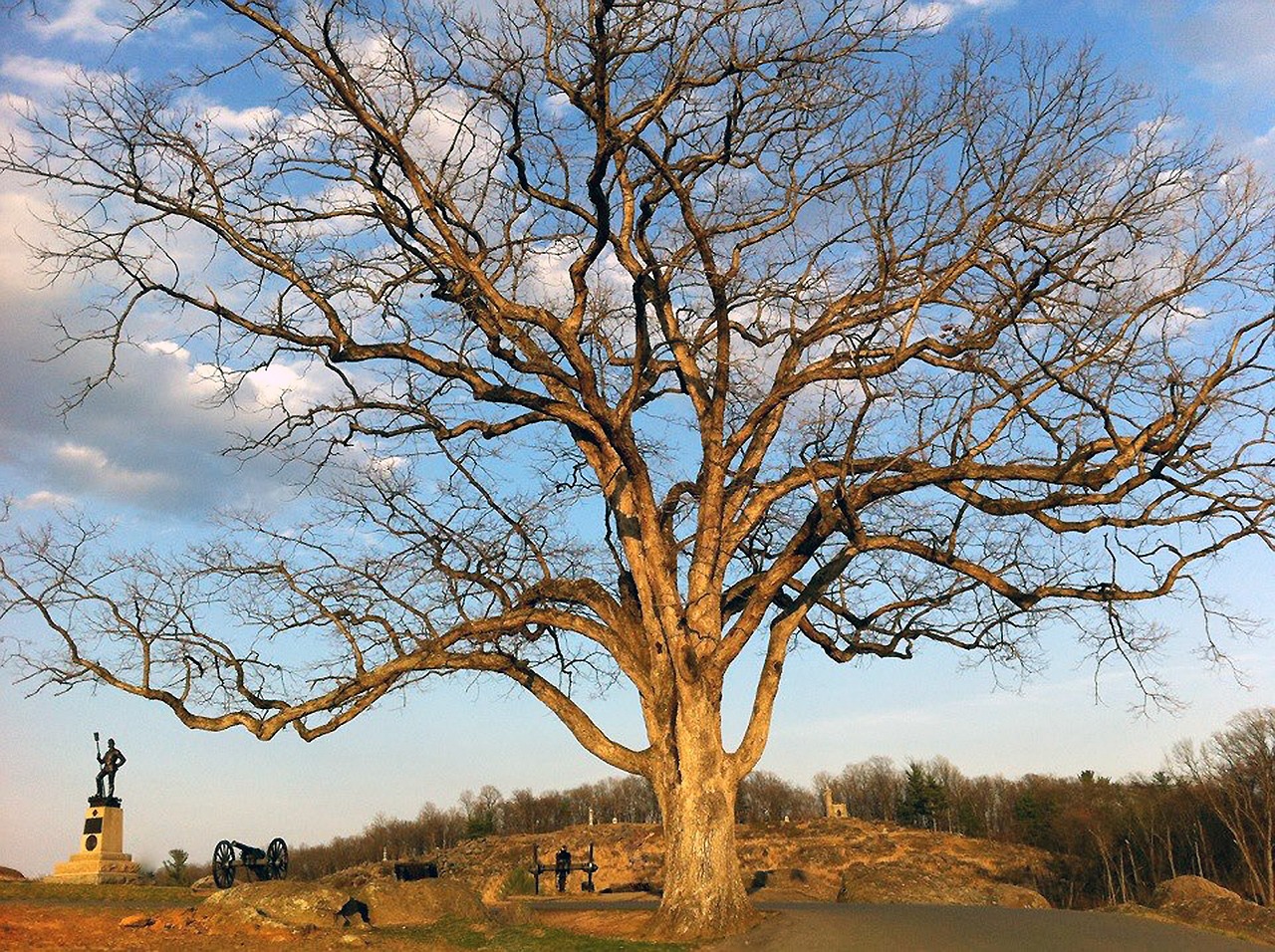
Gettysburg is a battlefield of roughly six thousand acres, and the first problem for any visitor is scale: the fighting spread across ridges, orchards, wheatfields and farm lanes that are several miles apart, and the monuments, which number well over a thousand, mean very little until someone connects them to the movements of the armies. A guided bus tour solves that problem in about two hours. A licensed battlefield guide rides with your group, narrates the three days of fighting from July 1 to July 3, 1863, and stops at the places that matter most: the ridge west of town where the first day's fighting began, the Wheatfield and Peach Orchard, Devil's Den, Little Round Top, Cemetery Ridge and the line that Confederate troops crossed during Pickett's Charge. Because you are seated and moving, you cover far more ground than a family on foot could manage in the same time, and because the guide is a trained historian rather than a recorded voice, you can ask questions and get answers fitted to your own interests.
The licensing matters. Gettysburg's guides pass a demanding exam on the battle, the terrain and the monuments before they are allowed to take visitors around the field, and the best of them are storytellers who turn a map of unit positions into a narrative with people in it. Expect the guide to explain why the high ground decided so much of the fighting, why the Union army's fishhook-shaped line was such a strong defensive position, and why a single hill like Little Round Top could carry so much weight on the second afternoon.
Expect also a fair share of human detail: the regimental farmers and clerks who fought here, the civilians who sheltered in cellars while the battle raged through the town, and the long aftermath when thousands of wounded soldiers were left behind in barns, churches and homes.
Planning is straightforward. The tour is a good first stop for anyone new to Gettysburg because it supplies the framework that every later visit builds on: the museum exhibits, the cemetery, the Little Round Top climb and the evening ghost walks all land better once you know how the pieces fit together. Many visitors take the tour in the morning, then spend the afternoon returning on foot to the spots that caught their attention.
If you have the choice, book an earlier departure in summer, when the afternoon heat and the crowds are at their worst, and choose a window seat on the side of the bus the guide recommends for the first stop. Tours are rain or shine, and the bus keeps you dry, which is a real advantage on the unsettled days that are common in spring and autumn.
A few practical points will help. Bring water, a hat and a light layer, since you will step off the bus at several stops. Wear comfortable shoes, because some of the best views involve short walks on uneven ground. Children who are old enough to sit through two hours of narration, usually eight and up, tend to enjoy it most, particularly if they have done a little reading beforehand.
Photography is encouraged, but remember that the monuments and cannon are protected historic objects, so keep to the paths and never climb on them. Departure points and schedules change by season, so rely on your confirmation for the exact meeting spot and check in a little early. After the tour, you will have a much better idea of where to spend your remaining hours, and the guide will usually offer suggestions that no guidebook can match.
What to expect
The experience
A seated, narrated bus circuit of the main battlefield led by a licensed guide, with stops at the best-known sites.
Best time
Mornings, especially in summer and during the autumn colour season, when afternoons can be hot or crowded.
How long
About two hours from boarding to return.
Tips
Arrive early, bring water and a hat, and choose this tour first so the rest of your visit makes sense.
Quick picks
- Best for
- First-time visitors who want the whole story in one sitting.
- Families
- Good for children who are old enough to listen for two hours, usually eight and up.
- Couples
- A relaxed, shared way to see the field without navigating or parking.
- Pair with
- The Museum and Visitor Center, the National Cemetery and an evening walking tour.
- Time needed
- Two hours, plus time to get to the departure point.
Good questions
Do I need to book ahead?+
Yes in summer, on weekends and in October, when tours sell out. Midweek in spring and late autumn is easier.
Is the guide really licensed?+
Tours of this type are led by licensed battlefield guides, who pass a demanding exam. Check your confirmation for the details of your departure.
How much walking is involved?+
Very little. You step off the bus at a few stops for short walks, and you can stay on board if you prefer.
Is it suitable for young children?+
It suits children who can listen for about two hours. Younger ones usually do better with a self-guided drive where they can stop when they like.
Does the tour go inside the museum?+
No. It is a battlefield circuit. Plan the museum, film and Cyclorama separately, ideally on the same day or the day before.