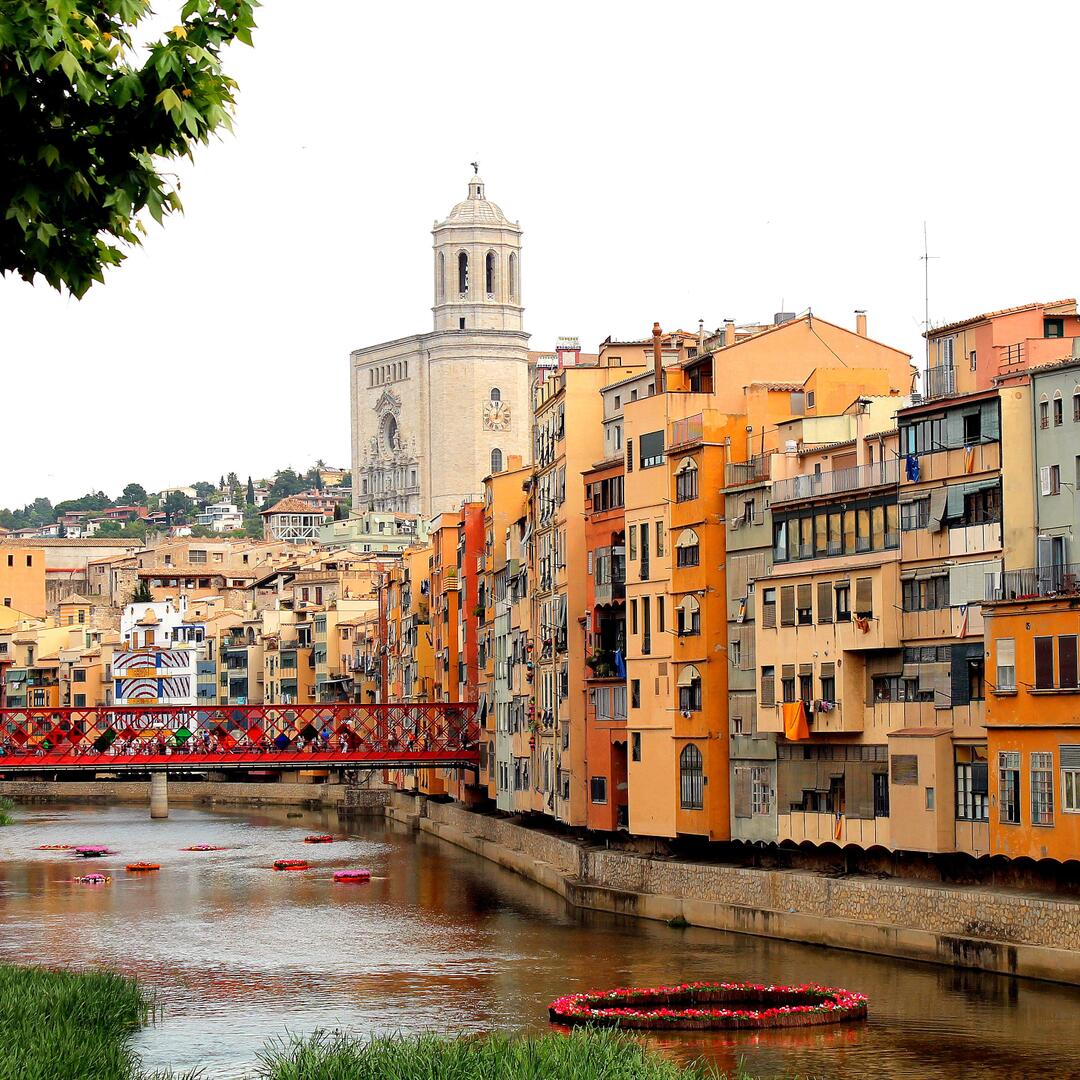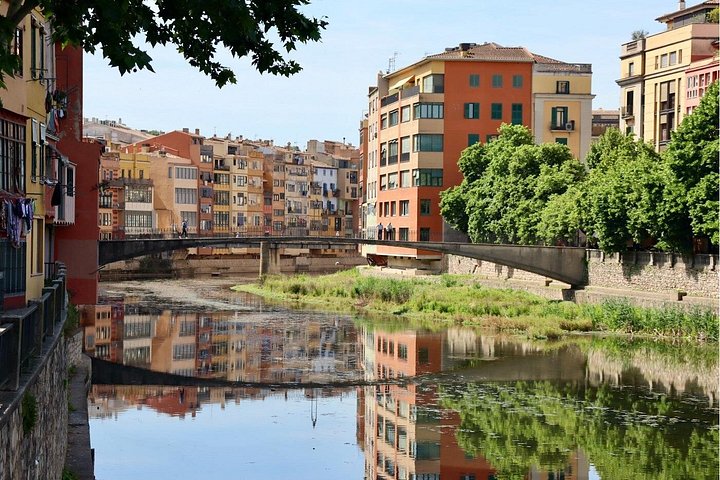
If you have seen a single photograph of Girona, it was probably of the houses on the Onyar. Tall, narrow facades in ochre, rust, cream and faded blue lean over the water, their balconies and shutters mismatched in the way only centuries of improvisation can achieve. Behind them rises the cathedral and the tower of Sant Feliu. Upstream, the red iron footbridge known as the Eiffel Bridge, the Pont de les Peixateries Velles, was designed by the workshop of Gustave Eiffel in 1876, years before the Paris tower. This highlights walk strings the river scene together with the Rambla de la Llibertat, the Plaça de la Independencia, the covered market area and the lanes of the Barri Vell, with a guide supplying the names, dates and local stories that make the sights feel specific.
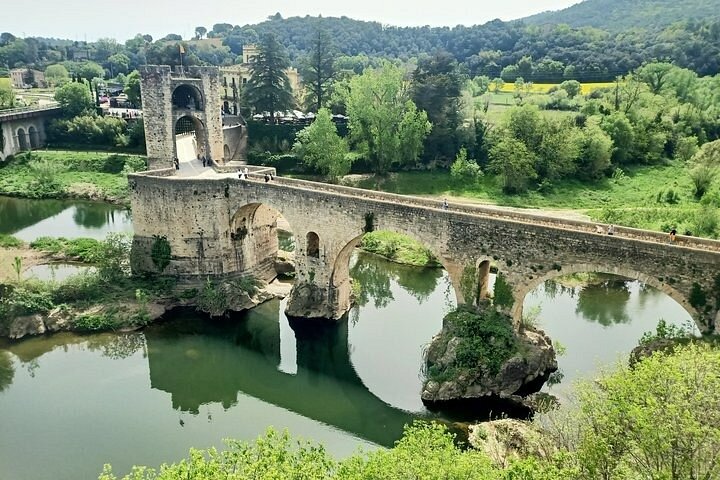
The walk begins at the river because that is where Girona reveals itself. Standing on the stone Pont de Pedra, you look along the line of houses and see how different they are up close: some are painted and shuttered in the Mediterranean way, others are plain, and one, the Casa Masó, is a notable modernist house associated with the architect Rafael Maso.
The guide will explain how the buildings once turned their backs on the river, which carried the city's waste and floods, and how an urban renewal in the late twentieth century restored the facades and made the water a feature rather than a problem. That backstory transforms the postcard from a pretty view into the record of a living city.
Crossing the Eiffel Bridge is the second pleasure. Its slim ironwork is far smaller than the tower the engineer later became famous for, yet the structure carries the same lightness and clarity of design. A short detour takes you along the Rambla, lined with plane trees and cafes, then into Girona's Mercadal district, the nineteenth-century expansion that holds the shops, the theatre and many of the best restaurants.
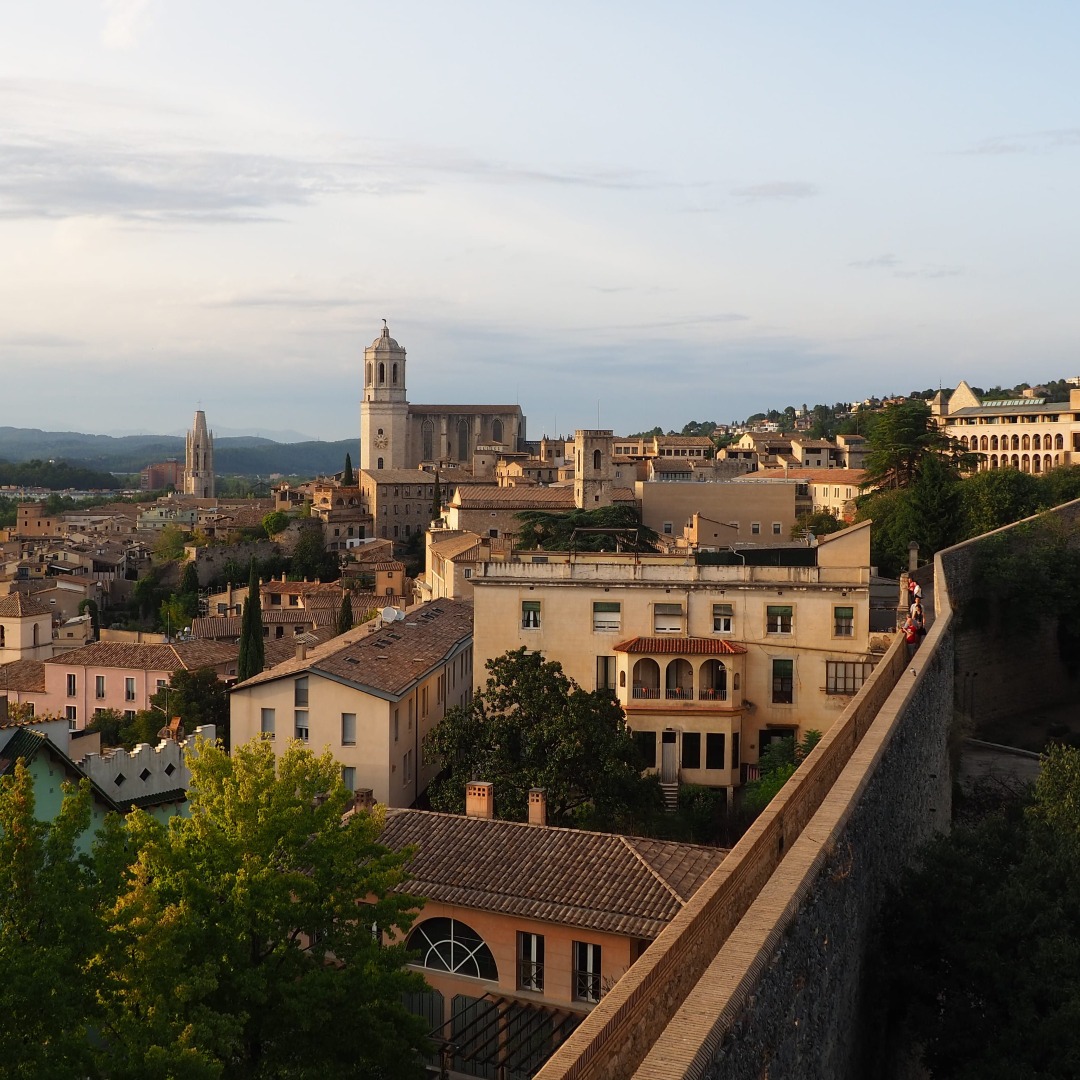
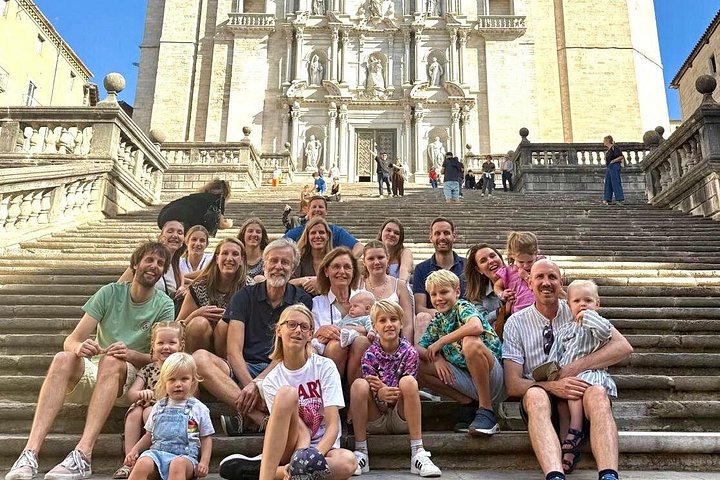
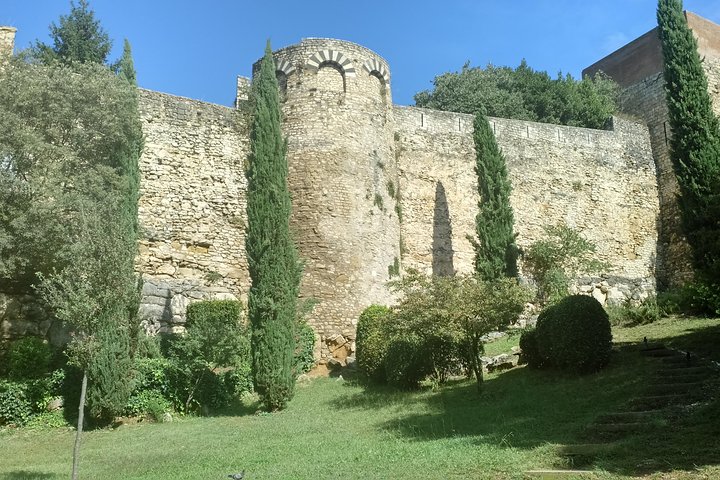
From there you climb into the Barri Vell for orientation, with the guide pointing out the cathedral steps, the Jewish Quarter and the old walls, all of which you can revisit on your own afterward. Along the way you learn how the town was sieged repeatedly and why its people are proud of their toughness.
Photographers should aim for early morning, when the river is calm and the facades reflect in the water, or for the last hour before sunset when the light turns the colours warm. The bridges at the downstream end give the best frame of the whole row. Allow time at the end for a coffee on the Plaça de la Independencia or a lunch of Catalan classics on the Rambla.
The route is mostly flat apart from the old-town climb, so it suits most fitness levels. Wet days make the stone slippery, so bring shoes with grip. Check the departure details when you book, and consider following the walk with the city walls for panoramic views of the same scene from above.
For a second look at the river, return after dark. The facades are lit from below, the water doubles every window, and the crowd of the day has dispersed into the restaurants. Seasonal events change the mood too: spring flower displays fill the old-town courtyards, and autumn brings festival crowds. Whatever the season, bring a small tripod or steady your phone on the bridge rail for low-light shots, and avoid the midday glare, when the facades look flat and the river reflects little.
What to expect
The experience
A guided walk covering the Onyar river houses, the Eiffel Bridge, the Rambla and the old quarter.
Best time
Early morning or the hour before sunset for the best light on the facades.
How long
About two hours at an easy pace; confirm the length when you book.
Tips
Bring a camera and shoes with grip. The river views are best from the stone Pont de Pedra and the bridges downstream.
Quick picks
- Best for
- First-timers and photographers.
- Families
- Easy for families; most of the route is flat.
- Couples
- A romantic stroll that ends naturally in a cafe.
- Pair with
- The cathedral pass, the city walls walk and an evening food tour.
- Time needed
- Two hours, more if you linger over lunch.
Good questions
Did Gustave Eiffel really design the red bridge?+
The Pont de les Peixateries Velles was built in 1876 by the workshop of Gustave Eiffel, before the Paris tower. It is a modest but elegant iron footbridge.
What are the colourful houses called?+
They are the Cases de l'Onyar, the row of facades along the Onyar river that form the city's best-known view.
Where is the best photo spot?+
Stand on the Pont de Pedra or the downstream bridges in the early morning for a clear view of the whole line of houses.
Is the route accessible?+
The riverside is mostly flat, but the climb into the old quarter includes steps and slopes.
Can I do the walk on my own?+
Yes, all of it is on public streets, but a guide adds the stories and dates.