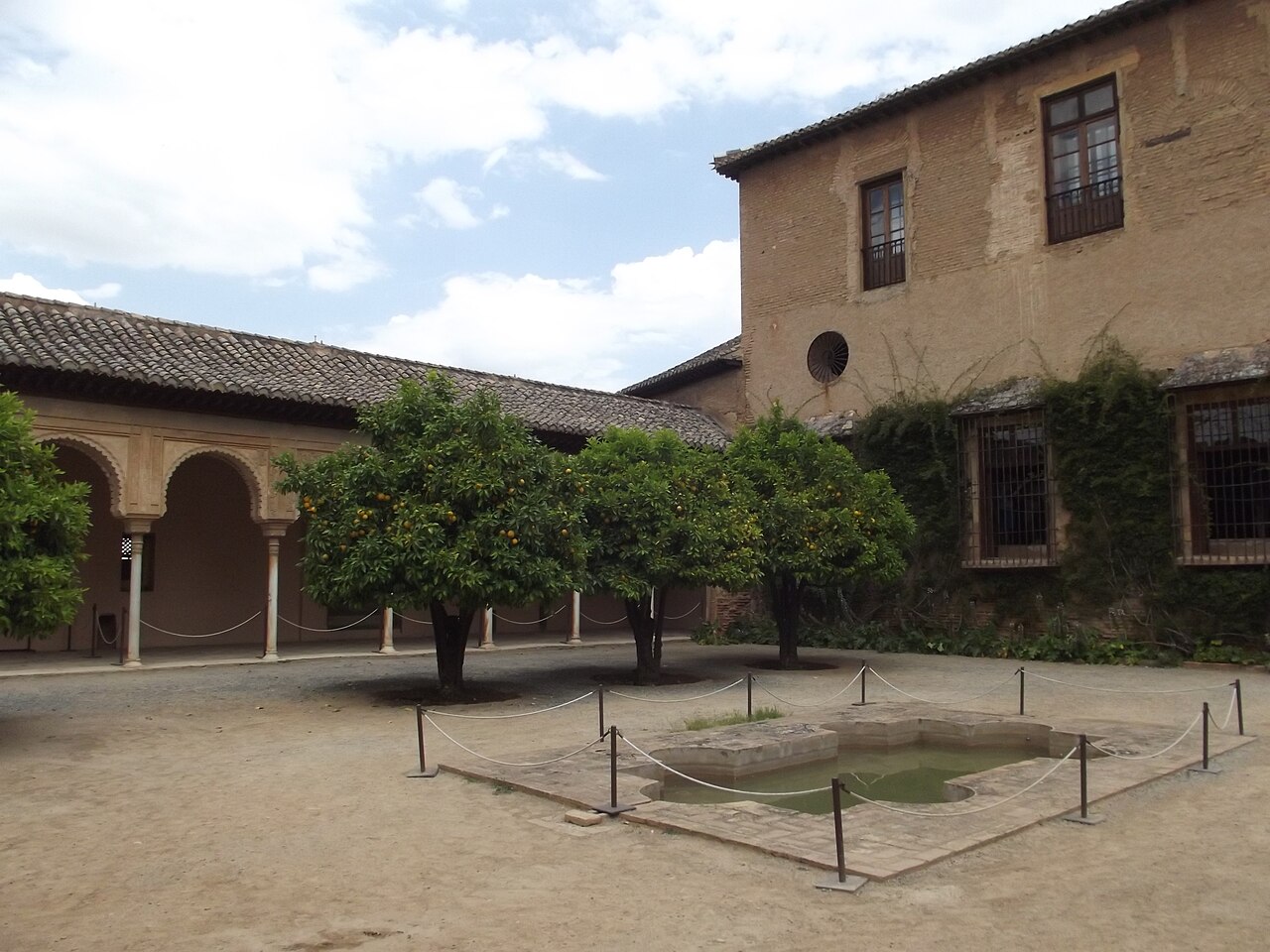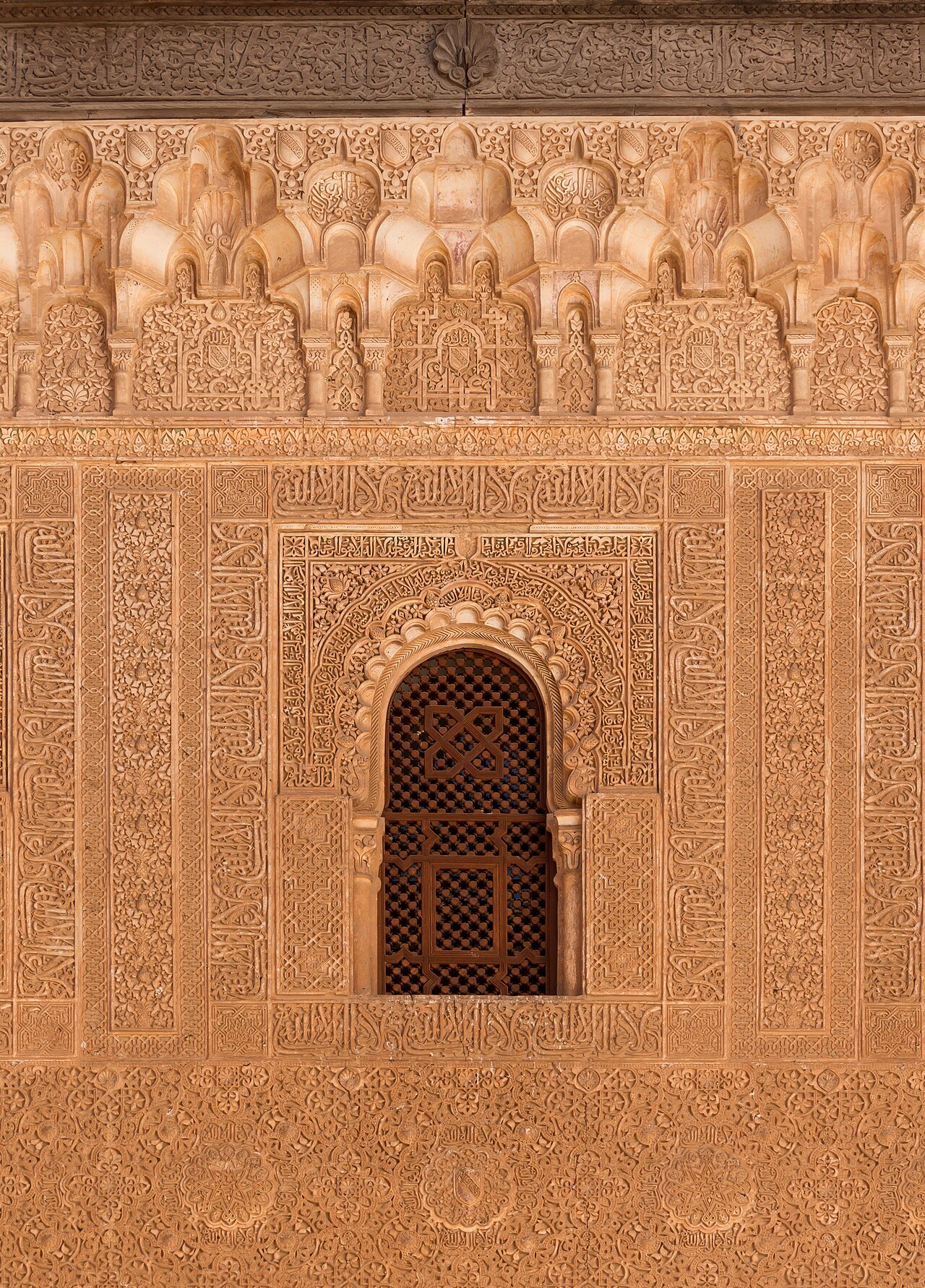
The Cartuja is a Carthusian monastery founded in the early sixteenth century on land given by Gonzalo Fernández de Córdoba, the Gran Capitán, a hero of the Spanish campaigns in Italy. The monks built slowly over three centuries, and the result is a complex in which Renaissance cloisters give way to some of the richest Baroque decoration in Andalusia. The cloister, with its orange trees and quiet galleries, shows the severe side of the order, whose members lived in silence and solitude. The refectory and the chapter house hold paintings by Juan Sánchez Cotán, a painter who became a Carthusian lay brother and is remembered for the stark, luminous still lifes that helped found the Spanish tradition. Then the church opens into a different world. The nave and the sanctuary are covered in plaster, marble and painted ornament, and the Sacristy, completed in the eighteenth century, is the star: walls and ceilings of white stucco carved into curling, repeating forms, framed by marbled inlays and wooden doors inlaid with ivory, tortoiseshell and silver. It is often described as one of the high points of Spanish Baroque, and the effect is overwhelming and theatrical, a deliberate contrast with the silence the monks kept elsewhere.
Getting there
The Cartuja stands in the north of the city, a little over a kilometre and a half from the cathedral area. It is a pleasant half hour on foot through the university district, or a short ride by city bus or taxi. The site is large and flat, so it is easy to visit, and the surrounding neighbourhood has bars and cafés where you can eat after the visit. Because it sits outside the main tourist routes, it is one of the quietest major sights in Granada.
How to visit
The monastery is a self-paced visit with a route that takes in the cloister, the refectory, the church and the Sacristy. A private guided tour for groups is also sold, which is helpful if you want the symbolism explained, since the Baroque iconography is dense and the history of the order is easy to miss without a guide. Opening days and hours can differ by season and often include a break in the middle of the day, so check before you set out and avoid arriving just before closing.
What to look for
In the cloister, the small cells and the symbolism of silence. In the refectory, the Last Supper painted for the monks' dining hall. In the church, the layered altars, the choir with its inlaid wood and the sense of the Baroque taking over the earlier building. In the Sacristy, look up and let your eyes adjust, because the detail is almost impossible to take in at once. Dress respectfully, as this is a religious site, and keep your voice low. Photography rules vary by room, so follow the signs.
Fitting it into a trip
The Cartuja pairs naturally with the Monastery of San Jerónimo and the Royal Chapel for a day of Granada's Christian monuments after the Moorish ones, and with the cathedral if you want a full picture of how the city was remade after 1492. It also makes a calm counterweight to a morning at the Alhambra. Allow about an hour and a half, more with a guide, and consider going on a day when the Alhambra is not already filling your schedule.
What to expect
The experience
A visit to the cloister, refectory, church and Baroque Sacristy of a former Carthusian monastery, on your own or with a private guide.
Best time
Morning, when the light enters the church well and the site is at its calmest.
How long
About an hour and a half, a little longer with a guide.
Tips
Check the opening days for your dates, dress respectfully and allow time to let your eyes adjust to the Sacristy.
Quick picks
- Best for
- Art and architecture lovers and visitors who want a sight without the crowds.
- Families
- Older children who like ornate interiors will enjoy it, but it is a quiet, religious site and not a playground.
- Couples
- A calm, atmospheric half morning, followed by lunch in the nearby streets.
- Pair with
- The Monastery of San Jerónimo, the Royal Chapel and the cathedral.
- Time needed
- Two hours including the trip there and back.
Good questions
Why is the Cartuja Sacristy famous?+
It is one of the most extravagant Baroque rooms in Spain, with carved white stucco, marble and inlaid wood covering walls, ceiling and doors. It is often called a high point of the style.
How do I get to the Cartuja from the centre?+
It is about half an hour on foot from the cathedral area, or a short bus or taxi ride. The route runs through the university district.
Do I need a guide at the Cartuja?+
Not necessarily, but a guide helps with the symbolism and the history of the Carthusian order. A private guided tour for groups is available.
How long does a visit take?+
About an hour and a half is enough for the cloister, refectory, church and Sacristy at a comfortable pace.
Is the Cartuja crowded?+
No, it is much quieter than the Alhambra and the cathedral. Mornings are the most peaceful.