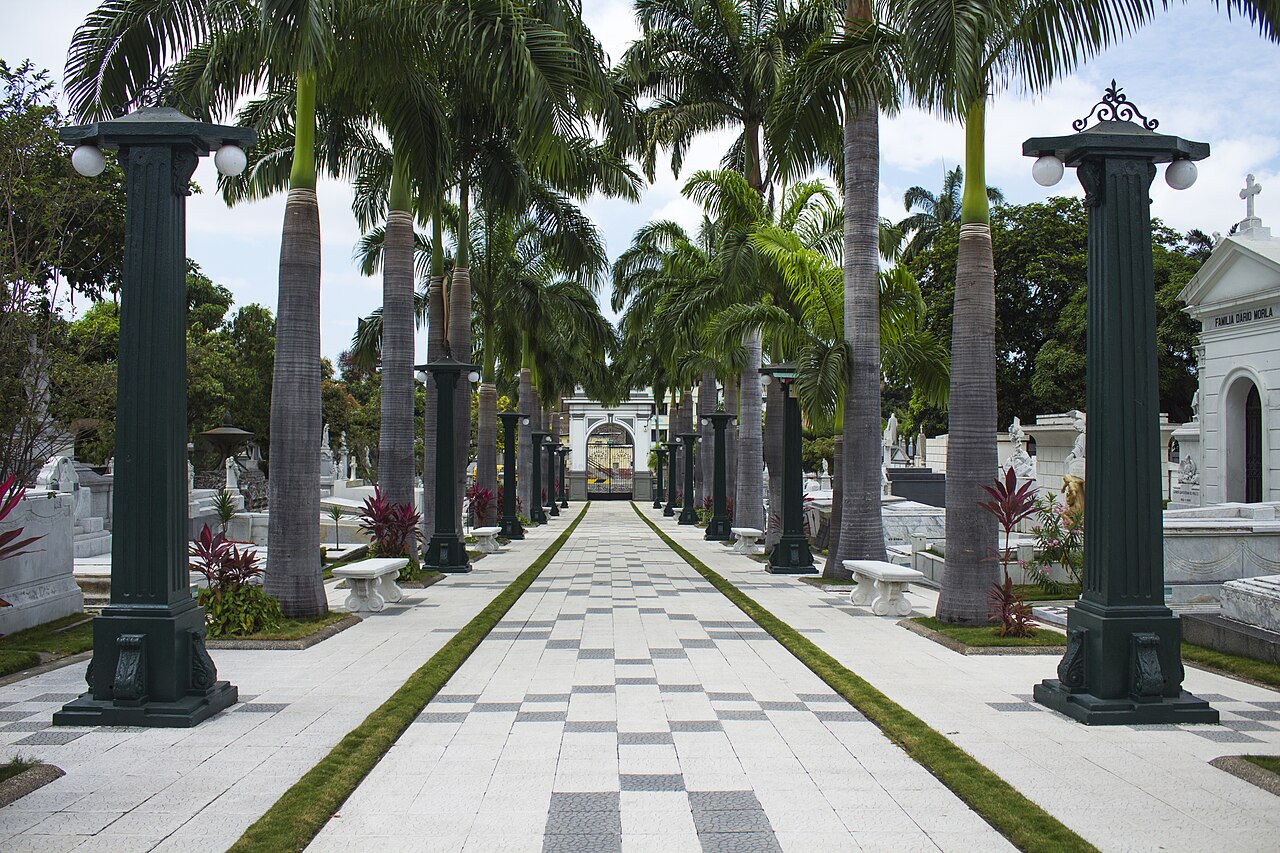
The Cementerio General, also known as the Cemetery of Guayaquil, is one of the city's most striking and least expected historic sites. Founded in the nineteenth century and expanded over time, it is laid out like a small town, with wide avenues lined by tombs, chapels and mausoleums in white and pastel marble. Many are monumental, with Italian-style sculptures of angels, mourning figures and portraits, built for the families who grew rich on the cacao trade. Famous people from Ecuadorian history rest here, including presidents, writers and heroes of independence. The tone is quiet and contemplative, and the architecture, ironwork and carved inscriptions reward slow walking. For visitors interested in history, art or photography, it offers a different view of the city, and for locals it remains an important place of remembrance, especially around the Day of the Dead in early November, when families visit in large numbers. Entry is typically free, though you should respect that this is an active place of mourning. Guided heritage walks provide context and help locate the most notable monuments, and they are a good way to learn who is buried where.
What strikes first-time visitors is the scale. Wide alleys stretch between rows of mausoleums, and large monuments mark the resting places of prominent families, while simpler walls of niches hold the graves of ordinary citizens. The contrast speaks to the city's social history, from the cacao barons to the workers who built the port.
Sculptors from Europe and Ecuador contributed to many of the pieces, and details such as marble drapery, wrought-iron gates and stained glass show a high level of craftsmanship. A tall central monument and the tomb of an independence hero draw particular attention, and the sense of a public art gallery under the open sky is hard to miss.
A respectful visit takes planning. Dress modestly, speak quietly and avoid disturbing mourners or ceremonies. Ask before photographing people or family groups, and do not touch or climb on monuments. The cemetery lies on the northern side of the downtown area, at the foot of a hill, so take a taxi or a ride-hailing car and agree on the return trip, as public transport can be confusing.
Go in the morning when it is cooler, and wear a hat, comfortable shoes and sun protection, since there is limited shade. Keep valuables out of sight and stay on main avenues, and consider joining a guided walk to feel comfortable and learn the stories. Opening hours are generally daytime, but check locally for the current schedule.
Around the first days of November, the cemetery is especially busy, with vendors selling flowers and food, and it can be an affecting cultural experience if approached with sensitivity. Pair the visit with a city tour or the museums for a thoughtful half day. Allow about an hour for an unhurried walk, or two if you wish to read inscriptions and photograph architecture.
Though it is a place of grief, it is also a place of beauty and civic memory, and many visitors remember it as the most unusual thing they saw in Guayaquil. Photographers should bring a lens that handles bright white marble and deep shade, and shoot early or late in the day for softer light; the combination of statues, trees and sky makes strong images when approached respectfully.
What to expect
The experience
A self-guided walk through the avenues of a historic cemetery with monumental tombs and sculpture, or a guided heritage walk.
Best time
Morning, when it is cooler and quiet.
How long
One to two hours.
Tips
Dress modestly, be respectful of mourners, ask before photographing people and take a taxi both ways.
Quick picks
- Best for
- History, architecture and photography fans.
- Families
- Best for older children who understand the setting.
- Couples
- A quiet, thoughtful cultural stop.
- Pair with
- The museums tour or a downtown city tour.
- Time needed
- One to two hours.
Good questions
Is the cemetery free?+
Entry is generally free. Guided walks cost extra.
Is it suitable for visitors?+
Yes, with respect. It is an active place of remembrance, so dress modestly and keep quiet.
Who is buried here?+
Presidents, writers and independence heroes, along with generations of Guayaquil families.
When is it busiest?+
Around the Day of the Dead in early November, when families visit in large numbers.
How do I get there?+
Take a taxi or ride-hailing car from downtown and arrange the return in advance.