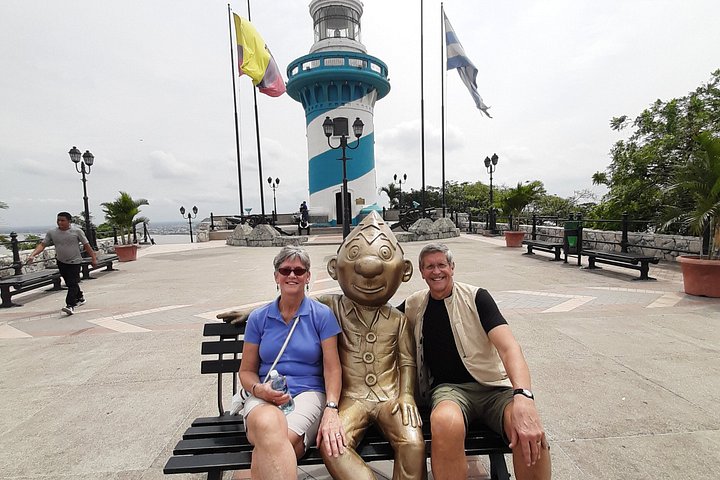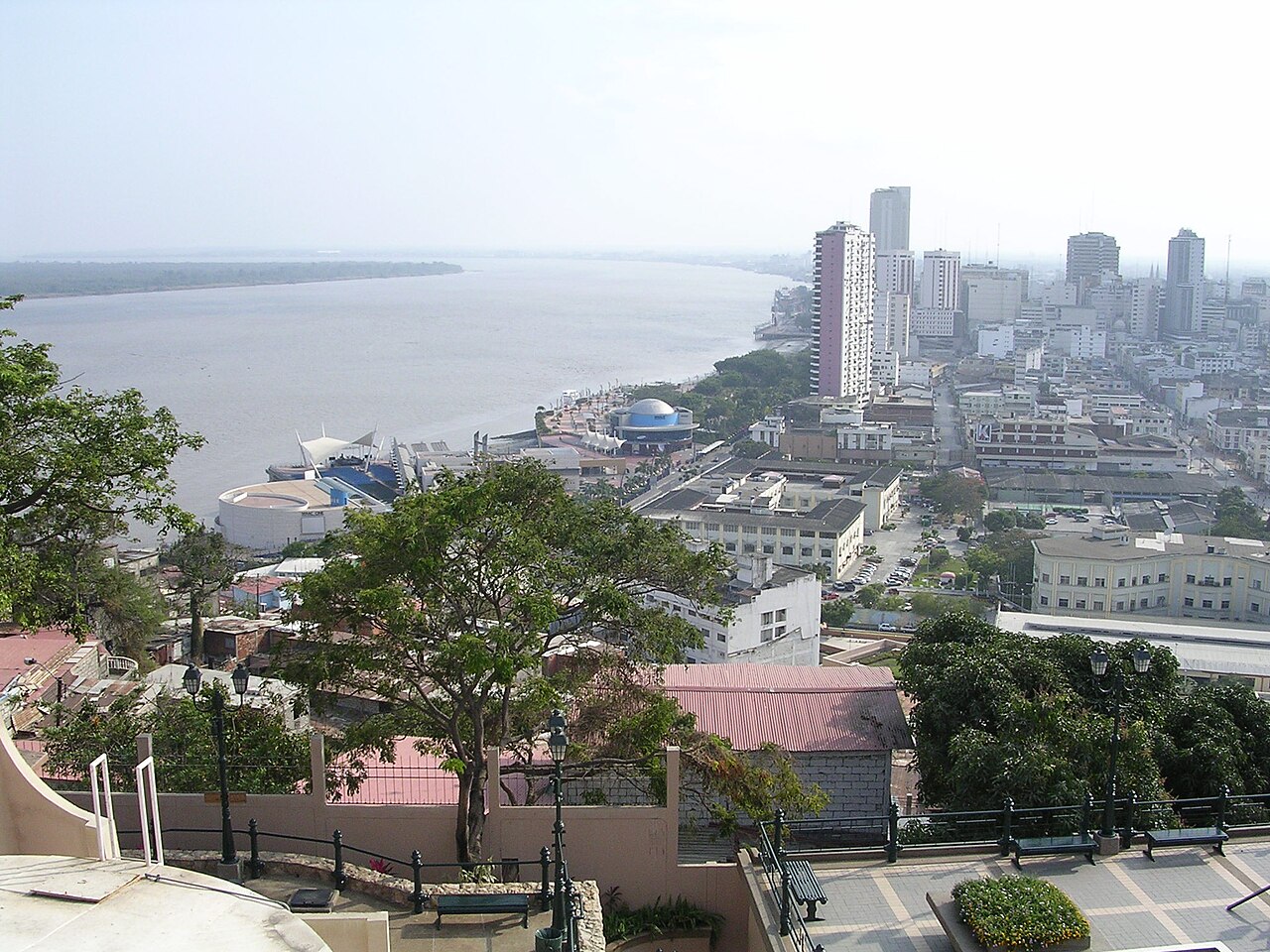
Las Peñas is where Guayaquil began, a cobbled hillside quarter at the northern end of the Malecón that survived fires, floods and rebuilding to become the city's most photogenic corner. A single steep street, Numa Pompilio Llona, winds between narrow wooden houses painted in sherbet colors, many with balconies, flower pots and small galleries where local artists sell paintings and crafts. Above it rises Cerro Santa Ana, reached by a staircase of 444 steps numbered one by one, with cafes, shops and little museums on the landings so that the climb can be broken into short stretches. At the summit sit a small chapel, a lighthouse and a viewing platform with a sweeping panorama over the Guayas River, the bridges, the Malecón and the city's grid. The climb is manageable for most people if taken slowly and with water, and the reward is a clear sense of how the city is laid out between river and estuary. The walk is free, although some of the small museums and the lighthouse viewpoint may ask a modest fee or donation. Early morning and late afternoon offer the coolest and most flattering light.
For many travelers the most memorable part of Las Peñas is not the view but the texture of the place. Houses lean toward each other along Numa Pompilio Llona, each with its own number, color and story, and the street is long associated with painters, poets and musicians who lived or worked here. Several studios open their doors to visitors, and it is common to find an artist at work on a canvas who will happily explain a technique or tell the story behind a piece.
The old church of Santo Domingo marks the entrance of the quarter and is considered one of the oldest religious sites in the city. At night the district changes character: the lower streets and the nearby Puerto Santa Ana development fill with bars, restaurants and live music, and the lit-up steps and lighthouse become a backdrop for photographs.
A few tips make the visit smoother. Start at the bottom of the stairs when the weather is cooler and take the steps slowly, stopping at the numbered landings that interest you; the 444 count is part of the fun, and many visitors proudly announce the number when they reach the top. Wear shoes with good grip because the stone can be slippery after rain, and bring water in any season.
The summit has restrooms and refreshments, and a small chapel that is quiet in the morning. Photography is welcome, but ask before photographing residents or artists at work. If you prefer a guided approach, many half-day city tours include a stop at Las Peñas, and some add the lighthouse and stories of the neighborhood's pirate-raid past.
Allow around two hours for an unhurried visit, or half a day if you plan to combine it with the Malecón and a meal at Puerto Santa Ana. Evenings are lively, so plan transport back to your hotel in advance rather than walking the surrounding streets late. If you enjoy history, read the plaques as you climb: the hill was a lookout and a defensive position in the colonial era, and the neighborhood's survival of the fires that swept the old wooden city is part of its pride.
What to expect
The experience
A self-guided walk through a colorful old quarter and up 444 numbered steps to a chapel, a lighthouse and a city-wide panorama.
Best time
Early morning or late afternoon for cooler air and softer light; evenings for lively bars and lit-up steps.
How long
One and a half to three hours including the climb and a coffee stop.
Tips
Take the steps slowly, carry water, wear shoes with grip, and bring a little cash for small museum donations and artists' crafts.
Quick picks
- Best for
- Photographers, art lovers and anyone who wants the city's best view.
- Families
- Fine for children who can handle stairs; the numbered steps make a good counting game.
- Couples
- Climb for sunset, then dine at Puerto Santa Ana below.
- Pair with
- The northern end of the Malecón 2000 and a riverside dinner.
- Time needed
- About two hours, or half a day with the Malecón.
Good questions
How many steps are there to the top?+
The staircase has 444 numbered steps, with cafes and small shops on the landings so you can pause.
Is it free to visit Las Peñas?+
Walking the streets and steps is free. A few small museums and viewpoints may ask for a small fee or donation.
What is at the top of Cerro Santa Ana?+
A small chapel, a lighthouse and a viewing platform with views over the river, the Malecón and the city.
When is the best time to climb?+
Early morning or late afternoon, when it is cooler and the light is flattering. Avoid the hottest midday hours.
Is the area lively at night?+
Yes, the lower streets and Puerto Santa Ana fill with restaurants, bars and music in the evening. Arrange transport back to your hotel in advance.