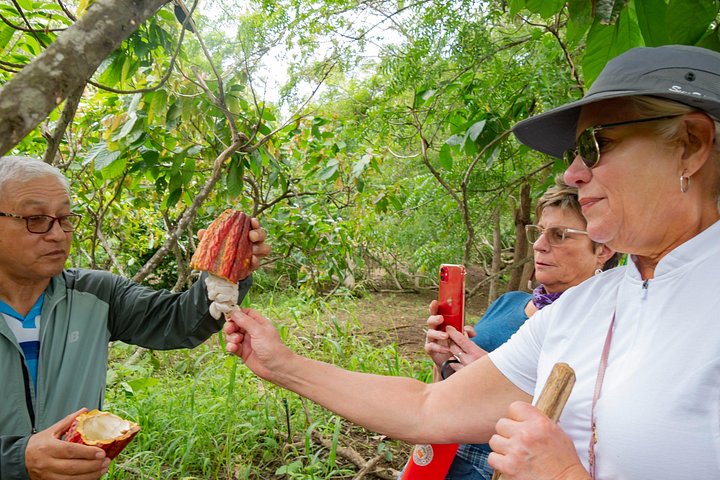
Ecuador is one of the world's great cacao producers, and Guayaquil grew rich on it. In the late nineteenth and early twentieth centuries the port shipped so much cacao that Ecuador became known as the world's chocolate supplier, and the wealth paid for the city's grand houses and boulevards. A cacao farm excursion takes you out of the city and into the countryside where the trees still grow, giving you a direct look at the crop behind the legend. The day usually includes a transfer from Guayaquil, a walk through the plantation to see pods in different colors, a demonstration of how the pods are opened and the sweet white pulp surrounding the beans is eaten, and an explanation of fermentation, drying and roasting. Most farms add tastings of the end products and of tropical fruit, and some add a simple lunch. The specific farm, route and included meals differ between operators, so read the details when you book. It is a relaxed, sensory outing that suits families, couples and anyone who wants a taste of rural coastal Ecuador away from the traffic and heat of the city.
The experience is memorable because it connects something many people eat every week with the place it comes from. Ecuador is known for its Nacional variety, often described as fine-aroma cacao, with floral and fruity notes that make it prized by chocolate makers around the world. On the farm, a guide will often cut open a ripe pod and let you taste the pulp, which is sweet, slightly acidic and nothing like chocolate.
You then learn that the beans are scooped out, fermented for several days under banana leaves or in wooden boxes, dried in the sun, roasted and ground. Seeing each step makes you appreciate why good chocolate costs what it does, and some farms offer a chance to grind beans on a stone or make a small bar yourself.
To get the most from the day, wear light clothing, closed shoes you do not mind getting dusty and a hat, and bring insect repellent and sunscreen. The countryside is hot and humid for much of the year, with rain more common between December and May, when paths can be muddy; the dry months are more comfortable but the trees are still productive.
Ask whether lunch is included and mention food allergies when you book, since chocolate and fruit tastings can involve nuts or dairy. If you are traveling with children, check the minimum age and whether the walk is suitable for strollers. A day trip generally takes between four and eight hours with transfers, so plan to return to the city in the afternoon.
For chocolate enthusiasts, pair this with the cacao museum tour in the city or buy locally made bars at the end of the visit as gifts. Because many farms are owned by families, a small tip for the guide and cash for souvenirs are always appreciated, and you will leave with a very concrete sense of how cacao shaped this part of the country. Ask your guide about the difference between Nacional and other cacao varieties, and about what happens to the beans after they leave the farm; the answers explain why Ecuadorian chocolate has a growing reputation and why small growers are proud of their work.
What to expect
The experience
A guided visit to a working cacao farm with plantation walk, pod opening, fermentation and drying explanations and tastings.
Best time
Go in the morning for cooler weather; the dry months are the most comfortable.
How long
Roughly a day trip including transfers.
Tips
Wear closed shoes and light clothing, bring repellent and sunscreen, and mention food allergies when you book.
Quick picks
- Best for
- Chocolate lovers and curious travelers who like hands-on food experiences.
- Families
- Great for children who enjoy walking outdoors and tasting new fruit.
- Couples
- A quiet countryside day with a sweet finish.
- Pair with
- The cacao museum city tour or the Churute mangrove reserve.
- Time needed
- Most of a day with transfers.
Good questions
What will I learn at a cacao farm?+
How cacao pods grow, how beans are fermented, dried and roasted, and how they become chocolate, usually followed by tastings.
Is lunch included?+
It depends on the operator. Check the description when you book and mention allergies in advance.
When is the best time to go?+
The drier months are more comfortable. Rain is more common from December to May, which can make paths muddy.
Is it suitable for children?+
Usually yes, if they can walk outdoors in the heat. Check any minimum age when booking.
Can I buy chocolate there?+
Most farms sell bars or cacao products at the end, which makes good gifts.