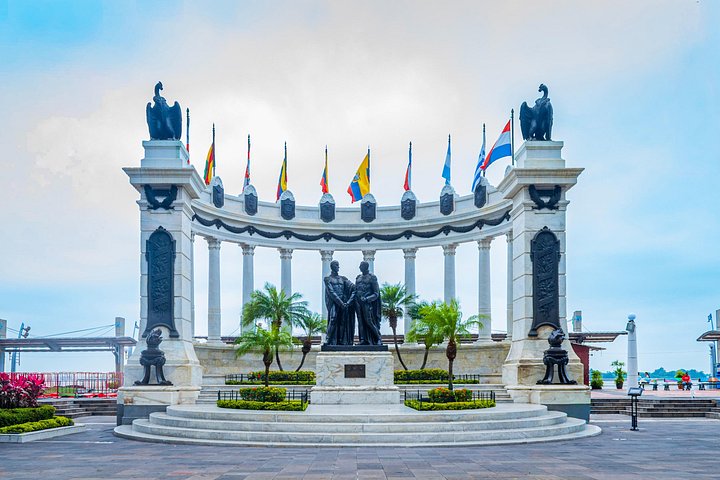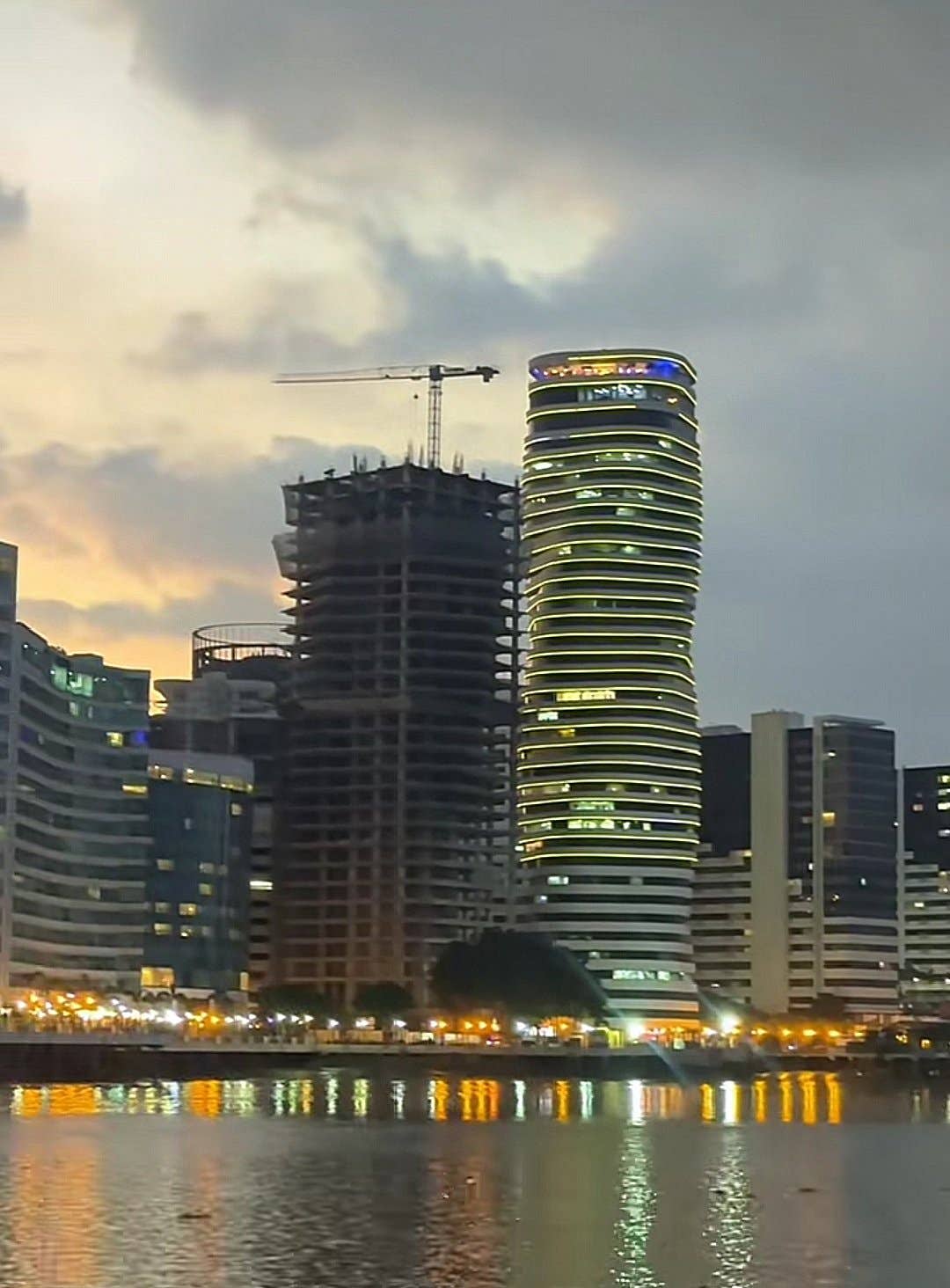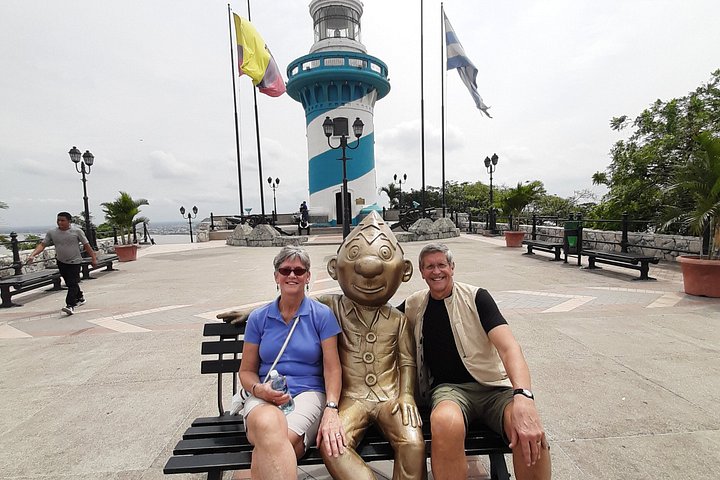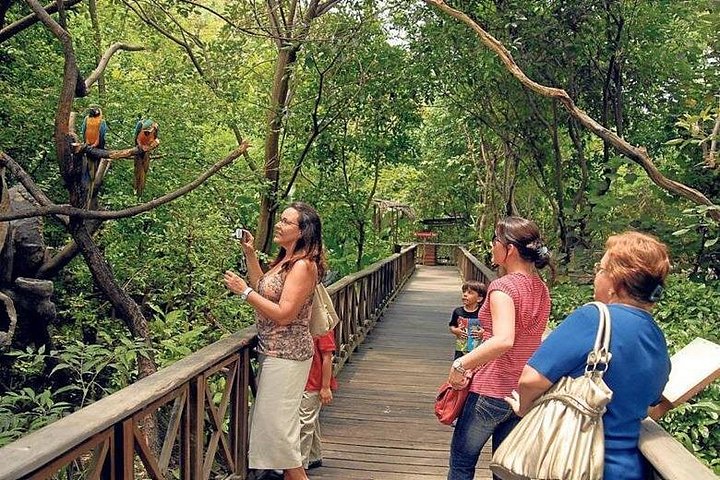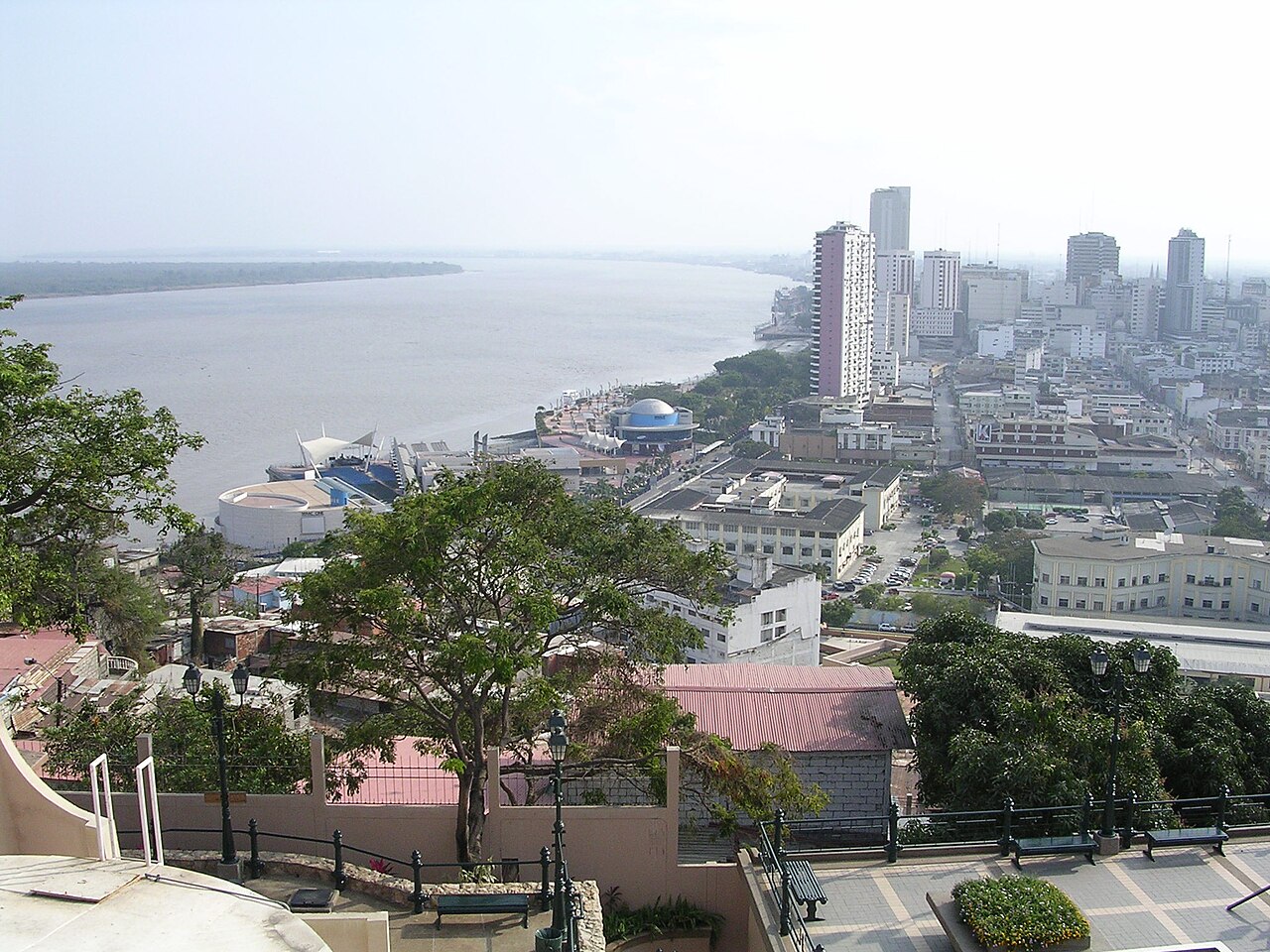
The Malecón 2000, formally the Malecón Simón Bolívar, is the front porch of Guayaquil and the first place most visitors head. A long, landscaped promenade runs along the western bank of the Guayas River for roughly two and a half kilometers, linking the southern Mercado Sur at one end with the foot of the Cerro Santa Ana and the Las Peñas neighborhood at the other. It replaced a neglected, run-down waterfront around the turn of the millennium and, in doing so, changed how the city sees itself: today families, joggers, couples and school groups share a clean, gated, well-lit esplanade with fountains, shade trees and benches facing the brown, busy river. Highlights along the route include the Moorish Clock Tower with its distinctive Torre Morisca silhouette, the Hemiciclo de la Rotonda, a monument that remembers the 1822 meeting between Simón Bolívar and José de San Martín, the Jardines del Malecón botanical gardens, a children's play area, a food court and restaurants, the Museo Antropológico y de Arte Contemporáneo and, usually, a giant Ferris wheel that gives wide river views. Walking the entire length takes an hour or two without stops, but most people dip in and out between the museums, snacks and photos. Entry to the promenade is free, and that makes it the easiest, most budget-friendly start to any Guayaquil itinerary.
The best way to understand the Malecón is to treat it as the city's living room rather than a sight with a checklist. Arrive in the late afternoon, when the heat eases and the light turns golden over the water, and walk north from the clock tower toward the hill. Vendors sell fresh coconut water, cones of fried plantain chips and bags of cotton candy, while pairs of teenagers pose for photographs in front of the monuments. Street performers, small brass bands and guitar duos appear on weekends.
The northern stretch is the more atmospheric: you pass the Plaza de la Integración, the colorful sculptures that line the path and the Puerto Santa Ana district, where cafes and bars spill out toward the stairs of Las Peñas. Many visitors plan a loop that follows the river on the way out and returns by Avenida 9 de Octubre, the main downtown avenue, which meets the Malecón near the Rotonda. That makes a neat self-guided half day that also passes Parque Seminario and the Cathedral, without needing a car.
Practical details help. The promenade is open throughout the day and into the evening, with the most pleasant hours early in the morning and after about four in the afternoon. Midday is hot and humid for much of the year, so carry water, a hat and sunscreen. Individual attractions inside the area, such as the Ferris wheel, the cinema or the museum, have their own opening hours and entry rules, so check with them directly rather than assuming they match the promenade.
Public restrooms are available along the route, and there is no need to pay anyone to enter. As in any busy riverside area, keep phones and cameras in sight and carry only what you need.
For families, the playground and fountains make this the easiest place in the city to let children run; for couples, a sunset stroll followed by dinner at a riverside restaurant is a classic Guayaquil evening. Photographers should aim for the clock tower in the morning and the river skyline at dusk, and anyone interested in the city's history can add a short stop at the Hemiciclo to read the story of the Guayaquil Conference. Combine it with a visit to Cerro Santa Ana for the best view back over the whole waterfront.
What to expect
The experience
A self-guided stroll along a landscaped riverside promenade with monuments, gardens, a museum, restaurants and a clock tower.
Best time
Early morning for cool air and joggers, or late afternoon through sunset for the best light and atmosphere.
How long
Allow one to three hours depending on how many stops you make.
Tips
Bring water and sun protection, walk north toward Las Peñas for the quieter, more atmospheric end, and check individual attractions for their own hours.
Quick picks
- Best for
- Everyone on a first visit; it is the easiest orientation to the city.
- Families
- Excellent: open space, a playground, fountains and plenty of snacks.
- Couples
- A sunset walk followed by dinner at a riverside restaurant.
- Pair with
- Las Peñas and Cerro Santa Ana at the northern end, and Parque Seminario nearby.
- Time needed
- Half a day for an unhurried loop with a meal.
Good questions
Is the Malecón 2000 free?+
Yes, walking the promenade is free. Some attractions inside it, such as the Ferris wheel or the cinema, charge their own fees.
How long is the Malecón?+
Roughly two and a half kilometers along the Guayas River, between Mercado Sur and the foot of Cerro Santa Ana.
When is the best time to go?+
Early morning or late afternoon. Midday is hot and humid for much of the year, and sunset is the favorite hour for photographs.
Is it suitable for children?+
Yes. There is open space, a play area, fountains and food stalls, which makes it the easiest stop in the city for families.
Can I walk from the Malecón to Las Peñas?+
Yes. The northern end of the promenade leads to the Las Peñas neighborhood and the stairs up Cerro Santa Ana in a few minutes on foot.