The food of Guilin and Yangshuo is a distinctive corner of Guangxi cooking: fresh, sour, spicy and built on rice, river fish, local vegetables and a very good chilli sauce. You do not need to be an adventurous eater to enjoy it, but a little curiosity pays off. This guide covers the dishes to try, the places to find them and a few ways to learn more about the cuisine while you are here.
Guilin rice noodles
The signature dish of the city is mifen, soft rice noodles served in a savoury broth or dry with a spoonful of marinated meat, pickles, peanuts and a dollop of chilli sauce. Locals eat it for breakfast, lunch or as a late snack, and there are noodle shops on nearly every street. Order a bowl and add the chilli sauce to taste, since it can be very hot. Vegetarians can ask for versions without meat, though the broth is often made from bones, so confirm before ordering.
Beer fish
In Yangshuo, the classic is pijiu yu, a river fish cooked in a pot with beer, tomatoes, chillies and ginger. The result is rich, a little sweet and best shared among a group with rice. It is on nearly every restaurant menu along West Street, but quality varies, so look for places that are busy with locals and ask how fresh the fish is. A good version is more about balance than heat.
Stuffed snails and other local dishes
Another Yangshuo favourite is stuffed river snails, in which minced pork is packed back into the shell and braised in a spicy, aromatic sauce. They are fiddly to eat but fun to share. Look also for taro dishes from the Lipu area, which turn up as crispy fried slices or in a savoury braise, and for dishes with local pickles and fresh herbs. Seasonal vegetables are excellent, and a plate of stir-fried greens with garlic is a welcome counterweight to the richer plates.
Sauces, tea and wine
Guilin is famous for its chilli sauce, made with fermented soybeans and garlic, and a jar makes a good souvenir. In the hills and villages you may be offered oil tea, a hearty bowl of tea, roasted rice and herbs that is a local staple among the Yao and Dong communities. It is an acquired taste, but a warming one on a cool morning. Rice wine and osmanthus-flavoured sweets are widely sold, and the region also produces good green tea, which you can try on a plantation visit near Xianggong Hill.
Where to eat
West Street has the widest choice, from simple noodle counters to restaurants with menus in English and a menu of international dishes. For more local flavour, walk a few streets away from the main strip, where prices drop and the clientele changes. In Guilin, the area around the lakes and the walking streets is good for noodles, hotpot and snacks. In villages along the Yulong River, small farmhouse restaurants serve whatever is in season, often with the produce coming from the fields next door. Menus can be pointed at, and a translation app helps with allergies.
Learn to cook it
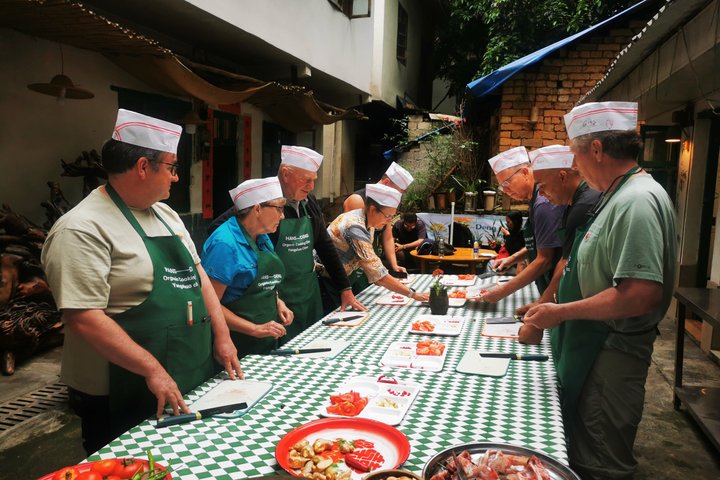
A market visit and cooking class is one of the best ways to understand the cuisine. You walk through a local market to pick out ingredients, then cook several dishes with a teacher and eat the results for lunch. It is also a good option on a wet day. Book ahead in the busy autumn weeks, and tell the school about dietary needs in advance.
Breakfast and snacks
Mornings start early, and a bowl of rice noodles, a steamed bun or a soy milk and fried dough stick from a street stall costs very little and sets you up for a day of walking. In the afternoon, look for roasted chestnuts, sugar-coated fruit skewers and glutinous rice cakes, which make good fuel for a bike ride. Fresh fruit is excellent in season, especially pomelo, persimmon and oranges, and fruit stalls will peel and cut it for you.
Tips for eating well
Carry small change for street snacks and learn a few basic phrases for chilli levels. Drink bottled or boiled water, and choose busy stalls where the turnover is high. Evenings are lively, with many places open late. Tipping is not expected. If you are travelling with children, plain rice, steamed fish and stir-fried vegetables are easy fall-backs. If you want to taste as much as possible, order several small dishes to share rather than one large plate each.