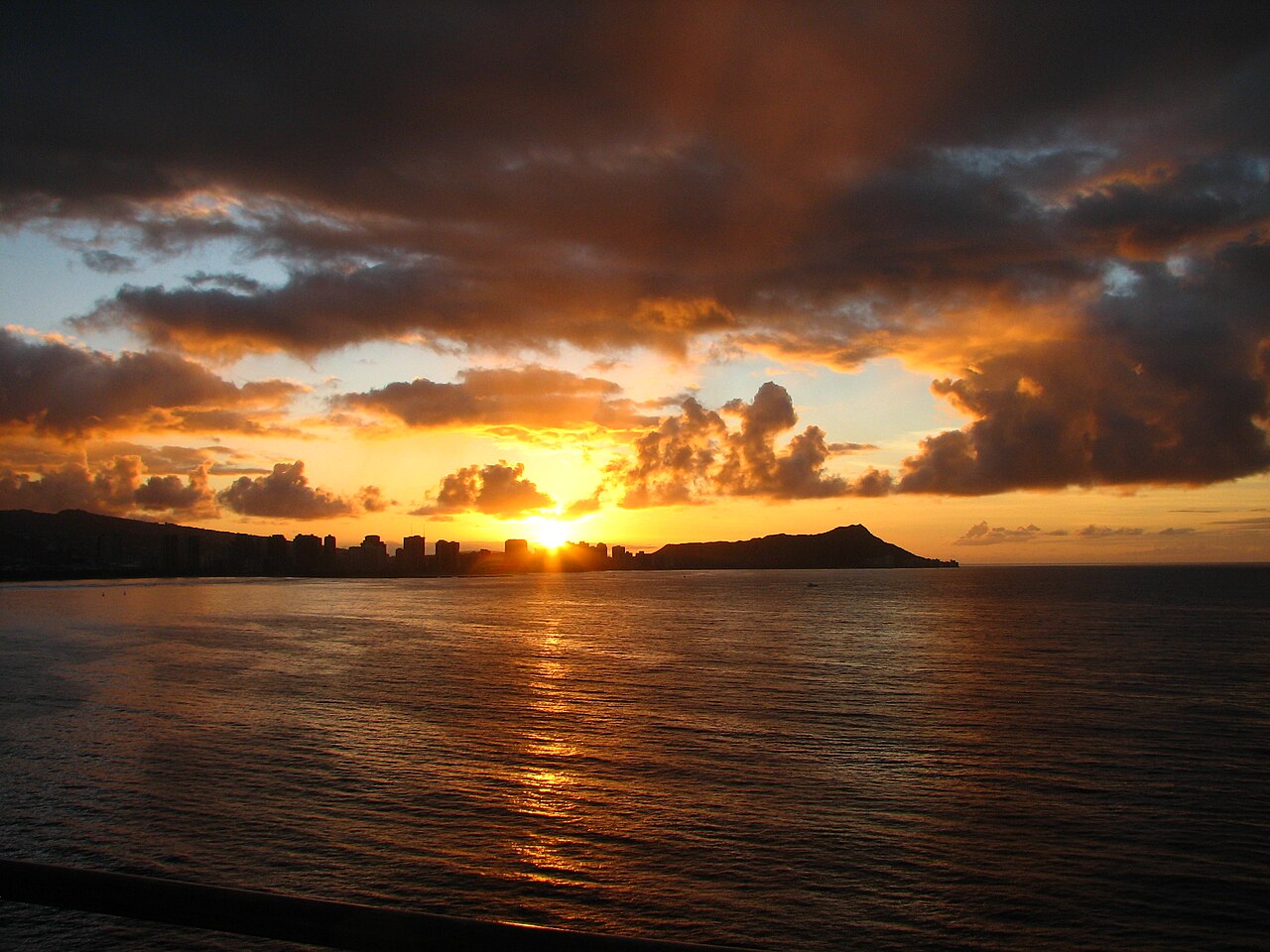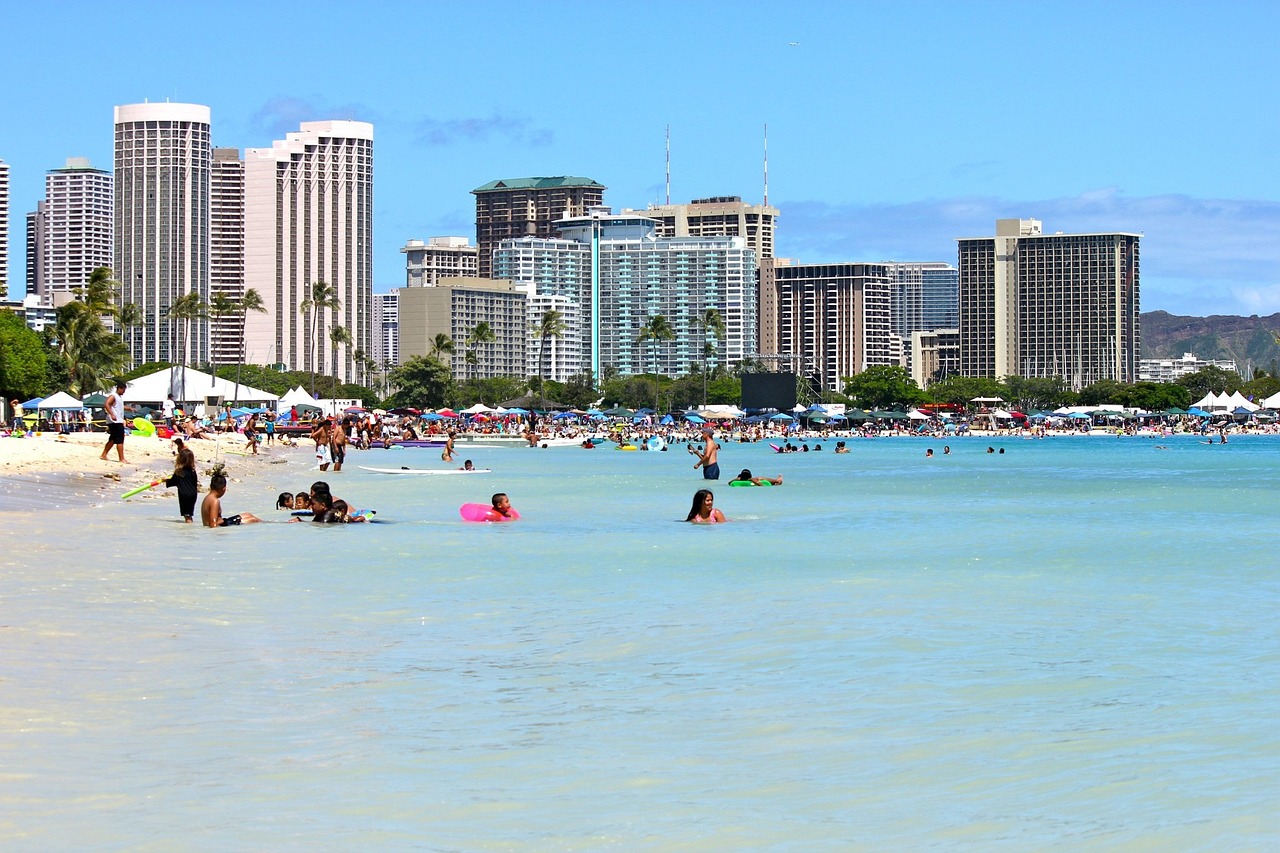
Waikīkī Beach is the shoreline the whole idea of a Hawaii vacation was drawn from, and the pleasant surprise is how well it still earns that status: a two-mile arc of sand on Oʻahu's south shore, broken into named sections that each behave differently, all of it public, all of it free, and all of it framed by Lēʻahi (Diamond Head) at the eastern end. The history is the backbone: this was a royal playground long before it was a resort strip (Hawaiian aliʻi surfed and kept residences here), modern surfing was carried to the world from this sand by Duke Kahanamoku (his bronze statue on Kūhiō Beach, lei-draped daily, is the beach's unofficial front door), and the two grand dames that defined Hawaii tourism (the Moana Surfrider, Waikīkī's first hotel, and the pink Royal Hawaiian) still sit right on the sand. The practical genius of Waikīkī is its water: long, slow, forgiving rollers break far offshore over reef, which is why beach-boy surf lessons here are the best first-surf experience in the islands — the boards are big, the waves are gentle, and the instructors have been doing this for generations. The sections matter: Kūhiō Beach's seawall-sheltered pools are the calmest water on the strip for small kids; the stretch in front of the Royal Hawaiian and Moana is the classic postcard; Queen's and the Kapahulu groin draw bodyboarders and turtle-spotters; and Kaimana Beach beyond Kapiʻolani Park is where locals swim laps with a quieter crowd. The beach is the city's living room: outrigger canoe rides launch from the sand, the sunset gathers everyone onto the same line facing the same direction, and the Kūhiō Beach hula mound hosts free performances on scheduled evenings. Fit: every first trip (it is the base camp and the reason), families (calm sections, lifeguards, everything within walking distance), couples (the sunset walk from the Duke to the Moana's veranda), and anyone who wants their first wave.
The deeper story makes the beach better: Waikīkī was once a wetland of fishponds and taro fed by streams (the name means spouting fresh water), the Ala Wai Canal drained it in the 1920s and made the resort district possible, and much of today's sand is maintained by periodic replenishment — the beach is both a natural wonder and a carefully tended civic asset. Duke Kahanamoku, Olympic swimming champion and the man who introduced surfing to Australia and the American mainland, is the presiding spirit; the beach-boy tradition he embodied (surf instruction, canoe rides, music and hospitality on the sand) still runs from the concession stands near his statue.
How to do it well
Take a surf lesson early in the trip (the instructors know where the gentlest breaks are for the day's swell, and standing up on a Waikīkī roller is the islands' great small triumph), ride an outrigger canoe once (catching a wave in a six-person canoe is pure joy and suits non-surfers), swim at Kūhiō's walled pools with young children, and walk the full length from the Hilton Lagoon end to Kapiʻolani Park at least once to feel the beach's variety. Bring reef-safe sunscreen (Hawaii law restricts some chemical sunscreens), watch for turtles near the groins and give them space, and treat the sunset as an appointment: the whole beach turns west together.
Practicals and fit
Public access along the entire strip (beach-access paths between hotels), lifeguard towers along the main sections, board and umbrella rentals at stands near the Duke statue, and everything walkable from Waikīkī hotels. Pair it with Diamond Head for a morning hike and beach afternoon. Fit: first trips, families, couples and first-time surfers — the most famous beach in the Pacific, still delivering.
What to expect
The experience
A two-mile public beach in named sections — calm walled pools at Kūhiō, the postcard stretch at the Royal Hawaiian and Moana, surf lessons and outrigger canoe rides launching from the sand.
Best time
Early for glassy water and a surf lesson before the crowds; sunset for the beach's shared ritual. Summer brings the most consistent small south swells for learners.
How long
A half day for a lesson and a swim; most visitors return daily.
Tips
Book the surf lesson for your first full day so you can go again. Use reef-safe sunscreen, give resting turtles space, and walk the whole arc to Kapiʻolani Park once.
Quick picks
- Best for
- A first surf lesson and the most famous sunset in the islands, free.
- Families
- Kūhiō Beach's seawall pools are the calmest water on the strip, with lifeguards close by.
- Couples
- The sunset walk from the Duke statue to the Moana Surfrider's banyan veranda.
- Pair with
- Diamond Head's summit hike first, then the beach; Iolani Palace adds the history behind the resort.
- Time needed
- A half day, repeated as often as the trip allows.
Good questions
Is Waikiki Beach free?+
Yes — the entire beach is public with access paths between hotels. You pay only for rentals, surf lessons and canoe rides from the beach concessions.
Is Waikiki good for learning to surf?+
It is the best place in Hawaii to learn — long, slow rollers break gently over the reef offshore, boards are big and stable, and the beach-boy instructors have taught generations of first-timers.
Where is the calmest water for kids?+
Kūhiō Beach, where a low seawall creates sheltered pools near the Duke Kahanamoku statue; lifeguard towers watch the main sections.
Will I see sea turtles?+
Often, especially around the groins and reef edges. Honu are protected — watch from a respectful distance and never touch or chase them.
How does Waikiki Beach fit a first trip?+
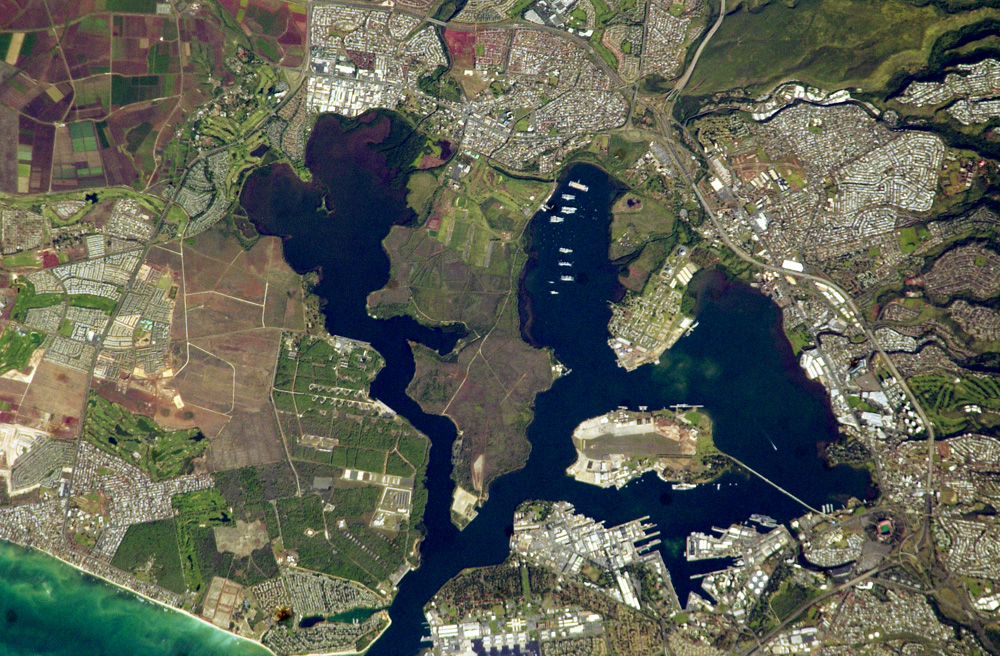
It is the natural base: stay nearby, take a lesson early, hike Diamond Head one morning, and let the beach fill the gaps between Pearl Harbor, the palace and the island drives.