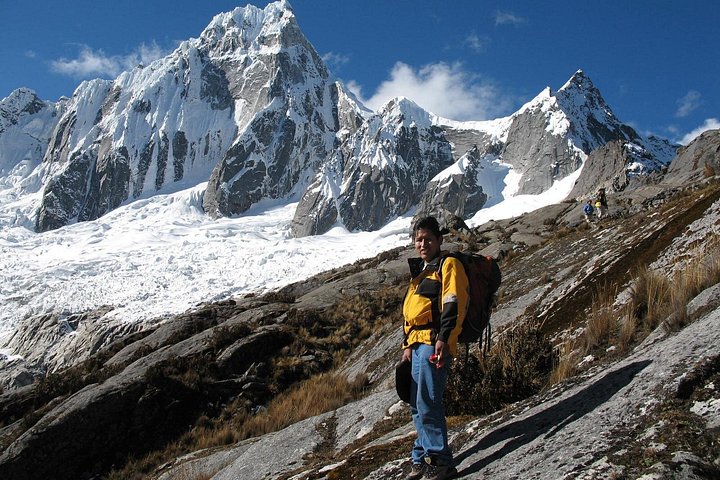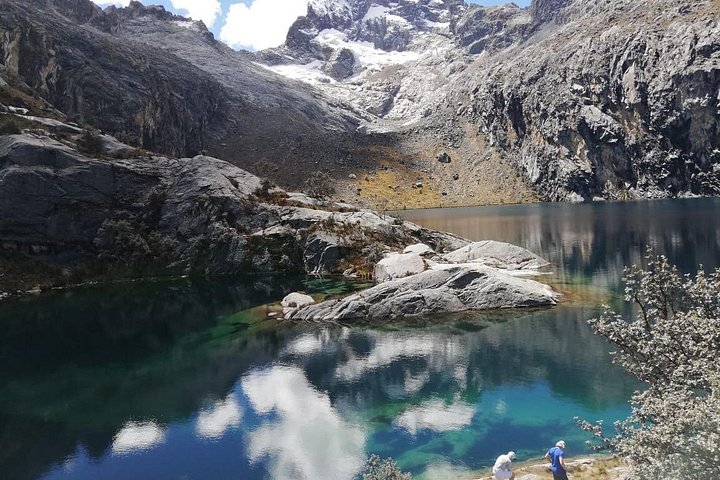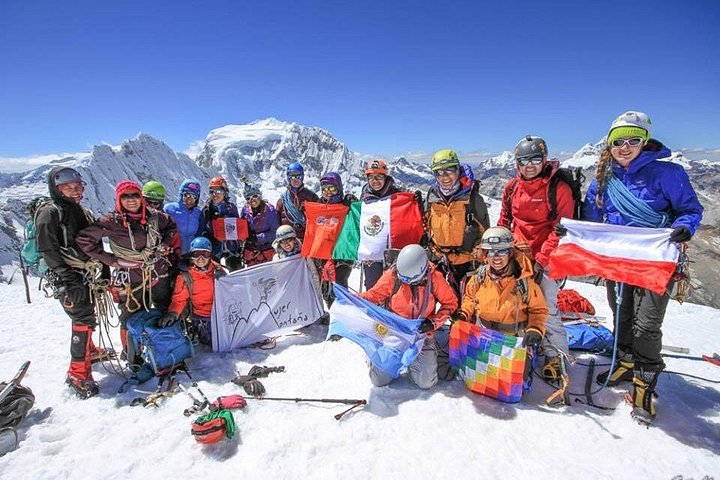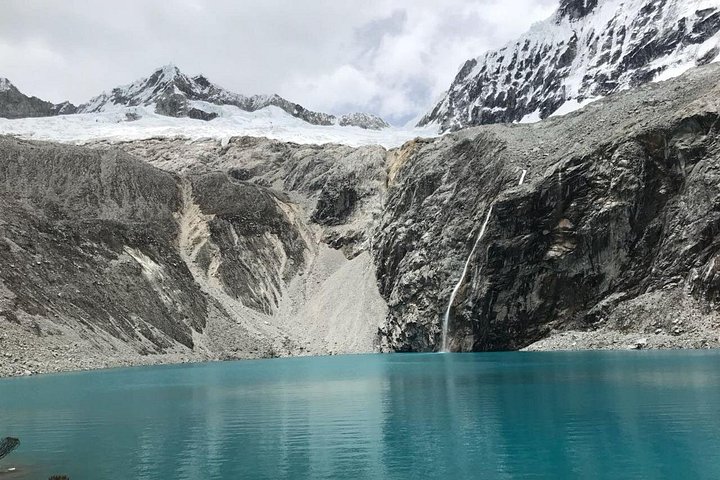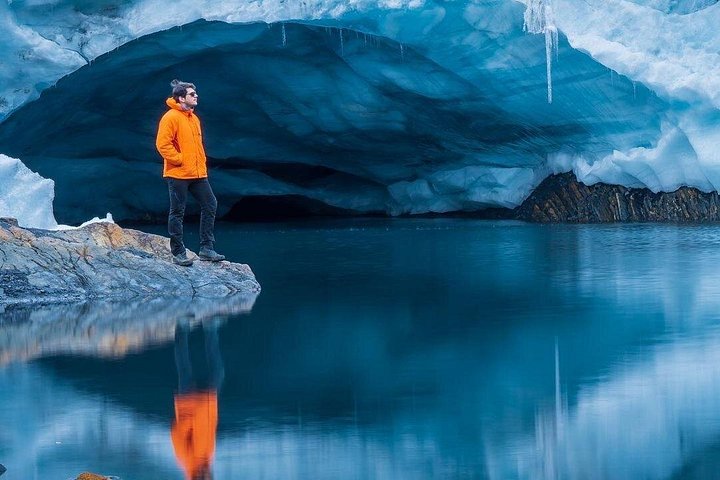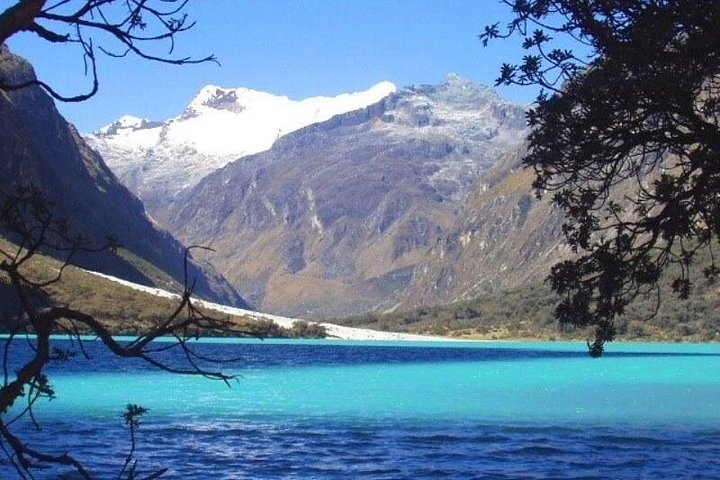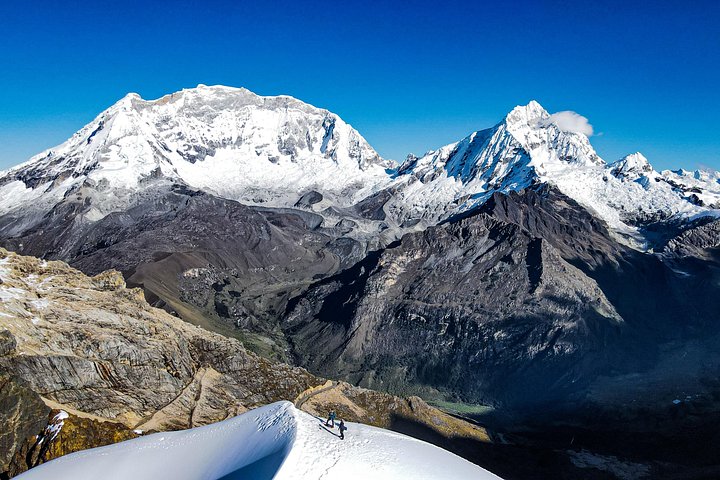
Nevado Mateo is one of the most accessible snow summits in the Cordillera Blanca, and a favourite for travellers who want to try mountaineering without committing to a multi-day expedition. The peak rises to around 5,150 metres near Huaraz, and a guided climb typically starts at dawn with a short drive to the trailhead, followed by a walk to the glacier, a briefing on crampons and ice axe use, and a roped ascent to the summit. The route is short but demanding: the altitude is above 5,000 metres, the snow slopes are steep, and a fast pace is not an option. Most climbers return to Huaraz the same afternoon, tired and sunburnt but proud. The experience suits fit travellers who have already spent several days acclimatising in the region, and the guides provide technical gear, instruction and safety support. From the summit you see sweeping views across the Cordillera Blanca, including Huascaran, Copa and Churup, and down toward the city, a perspective that makes the mountains feel less distant than they do from the road.
A normal day starts early, with pickup in Huaraz around three or four in the morning. After a drive of an hour or so you begin the walk to the glacier, which takes a couple of hours. At the snowline the guide checks equipment, fits harnesses and crampons and explains the basics: how to walk with an ice axe, how to rope up and how to rest. The climb itself follows a gentle to moderate glacier slope, with some steeper pitches near the top, and the summit is reached after another two to three hours.
Descent is often quicker, and most groups are back in the city by mid-afternoon. The total time is around ten to twelve hours, so expect a long day on your feet.Fitness and acclimatisation matter more than experience. Climbers should spend at least three to four nights in Huaraz or other high places and complete easier hikes before attempting Mateo. Pre-existing medical conditions, especially heart and lung problems, should be discussed with a doctor, and anyone feeling unwell at altitude should say so.
Bring waterproof outer layers, a warm hat and gloves, glacier sunglasses, sunscreen, a headlamp and enough food and water. Operators usually supply boots, crampons, ice axes and helmets, but check what is included. Climbing safely depends on weather and snow conditions, and guides will turn back if conditions are not suitable.
Why choose Mateo? For many people it is the best taste of mountaineering available near Huaraz, offering real glacier travel in a day. It also works as preparation for bigger objectives such as Pisco or Vallunaraju, because it teaches the skills and shows how your body reacts at altitude.
Small groups and experienced local guides add safety and make the day more enjoyable. The dry season from May to September offers the best conditions, with firm snow and clear skies. Outside this period, storms, soft snow and avalanche risk can limit access. Before booking, ask about guide ratios, the grading of the route, equipment, and the operator's safety record, and make sure you are comfortable with the cost and the expectations. Done well, it is a short, vivid introduction to the high Andes.
What to expect
The experience
A guided pre-dawn departure, walk to the glacier, crampon and ice-axe briefing and a roped climb to a summit of roughly 5,150 metres, returning to Huaraz in the afternoon.
Best time
Dry season, May to September, for firm snow and clear conditions.
How long
Ten to twelve hours including transport.
Tips
Acclimatise for several days first. Bring glacier glasses, sunscreen, warm layers, snacks and a headlamp. Confirm gear is included.
Quick picks
- Best for
- Fit travellers who want a first taste of glacier climbing.
- Families
- Not suitable for young children.
- Couples
- A big shared accomplishment with a sunrise summit view.
- Pair with
- Pisco or Vallunaraju as a next step.
- Time needed
- One long day.
Good questions
Do I need climbing experience?+
No. Guides teach the basic skills at the glacier edge, but you need good fitness and prior acclimatisation.
How high is Nevado Mateo?+
Around 5,150 metres, which is high enough to be challenging for people who have not adapted to altitude.
What equipment is provided?+
Operators typically provide technical gear such as crampons, ice axes and helmets. Confirm details when you book.
How long is the climb?+
The whole outing takes roughly ten to twelve hours, with several hours of walking and climbing.
When is the best season?+
The dry months from May to September, when snow conditions and weather are most reliable.