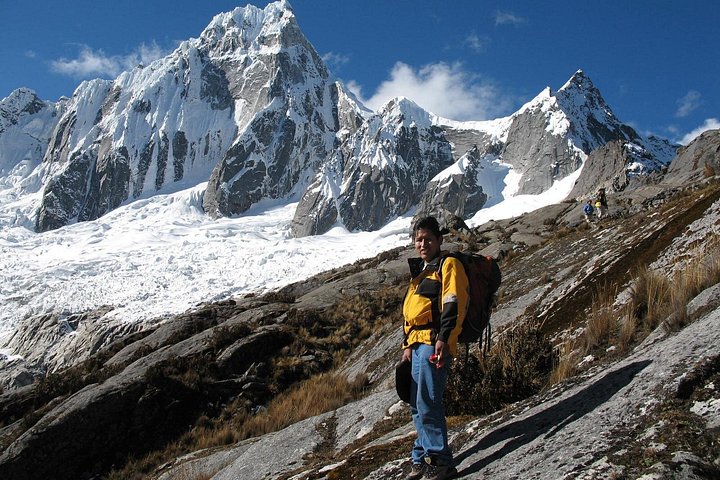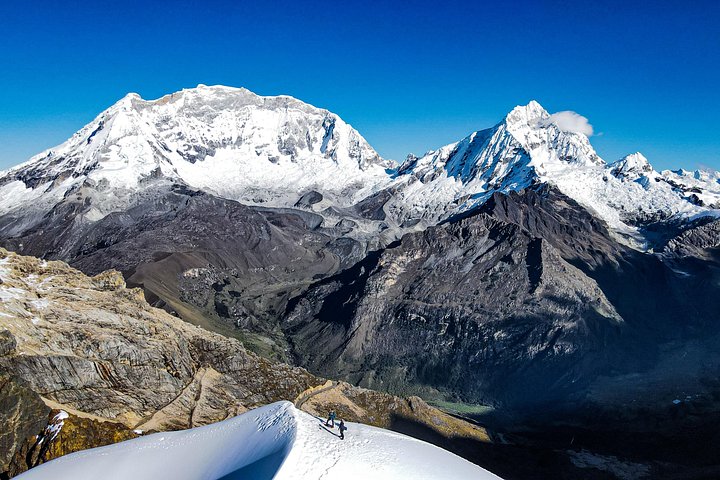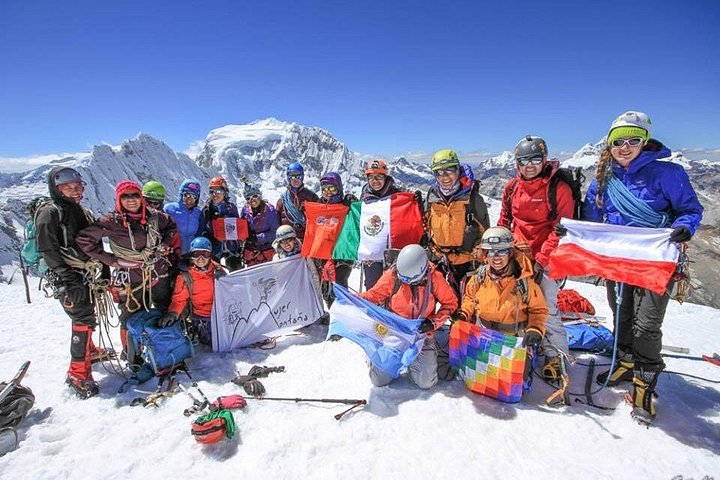
Vallunaraju is the next rung on the mountaineering ladder after Mateo. The peak rises to roughly 5,686 metres above the Ancash valley, and the standard two-day program starts with a drive to Ishinca or Llaca, a walk to a refuge or camp, a skills session on the glacier and an alpine start the next morning. The ascent crosses crevassed terrain, steep snow slopes and a final ridge, and takes around six to eight hours up and down from the camp. It is a technical day that demands fitness, acclimatisation and basic experience, and a shared program with other climbers gives a safer team and a lower cost. The summit view is sweeping: Huascaran, Chopicalqui and Copa rise in the north, the Quebrada Ishinca lies below, and on a clear day you can see far across the Cordillera Blanca. Many mountaineers choose Vallunaraju as a first serious Andean summit because the grade is moderate, the logistics are simple and the guides are experienced. For people who enjoyed Mateo and want to continue, it provides a real expedition feel in a short time.
Day one is a gentle start. After pickup in Huaraz, you drive to the trailhead and hike to a base camp or refuge at around 4,500 metres. The afternoon is spent practising crampon technique, ice axe arrest, rope handling and crevasse rescue basics, so that everyone knows the plan for summit day.
Dinner and early bed follow, because you will rise around midnight or one in the morning. The climb starts in darkness by headlamp, crossing a moraine and then the glacier. As the sky lightens, the guide leads a steady pace to the summit ridge.
After photographs, you descend to camp, pack up and return to Huaraz by late afternoon.Prepare carefully. Spend at least four to five nights at altitude beforehand, including a successful climb or hike above 4,500 metres. Bring a warm sleeping bag, down jacket, waterproof shell, insulated gloves, a hat, glacier glasses, sunscreen and sturdy boots. Operators usually provide technical equipment, tents and food, but confirm. Participants should be in good health, and anyone with heart, lung or blood pressure problems should consult a doctor.
Guides will decide whether to continue based on weather, snow conditions and group strength, and a turnaround is a normal part of mountaineering rather than a failure.The dry season from May to September gives the best chance of a clear summit day, with cold nights and firm snow. In the wet season avalanche danger and poor visibility limit access. Choose a reputable operator with certified guides, a sensible group size and a clear safety plan. Ask about rescue arrangements, insurance and equipment standards, and whether the program includes a rest day.
Vallunaraju is also a good step on the way to bigger objectives like Pisco or Ishinca, giving you a feel for high-altitude sleeping and early starts. If you are not ready for a snow peak, consider Mateo first or choose a trek such as Santa Cruz instead. Whatever your choice, take your time and listen to your body, and remember that the best summit day is the one you complete safely and enjoy, with enough energy left to smile at the top.
What to expect
The experience
A two-day shared mountaineering program with a glacier skills session, a night in a camp or refuge and a pre-dawn summit climb at roughly 5,686 metres.
Best time
Dry season, May to September, for stable weather and firm snow.
How long
Two days and one night.
Tips
Acclimatise well, pack for freezing nights and confirm the guide ratio and equipment included.
Quick picks
- Best for
- Fit travellers with some mountain experience who want a serious but accessible Andean summit.
- Families
- Not suitable for children.
- Couples
- A shared challenge that ends with an extraordinary view.
- Pair with
- Nevado Mateo as preparation, or Pisco as a next goal.
- Time needed
- Two days plus acclimatisation.
Good questions
How high is Vallunaraju?+
About 5,686 metres, high enough to need proper acclimatisation.
Is it suitable for beginners?+
It suits fit people with some basic mountain experience or those who have completed an easier climb such as Mateo.
What equipment is needed?+
Operators generally provide technical gear and tents. You bring clothing, a sleeping bag and personal items.
How long is summit day?+
Roughly six to eight hours up and down from the camp, starting in the early hours.
When is the best time?+
May to September offers the most stable conditions.