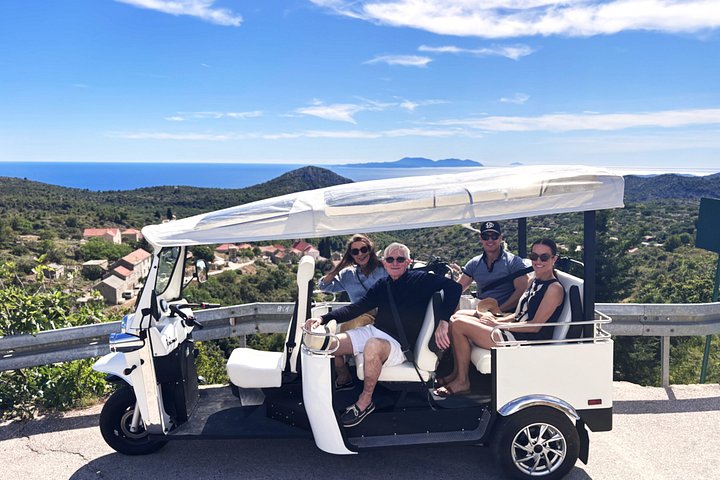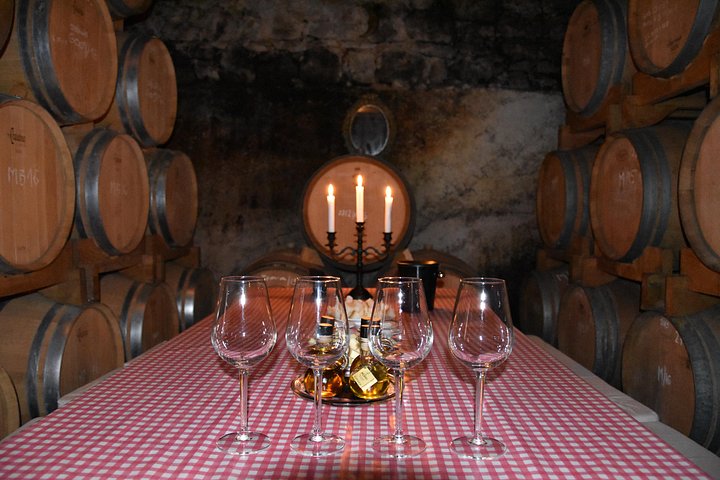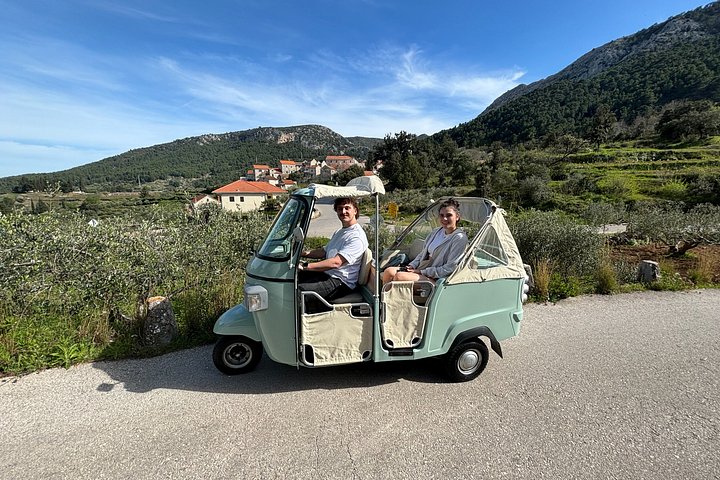
Stari Grad is the oldest town on the island and one of the oldest in Europe, founded in 384 BC by Greek settlers from Paros who called it Pharos. They did not only build a town; they surveyed the surrounding plain into a grid of rectangular plots, bounded by dry-stone walls, and planted vines and olives. That landscape, the Stari Grad Plain, survives almost intact and is inscribed on the UNESCO World Heritage List as an outstanding example of ancient Greek land division still in use. A private tuk tuk tour brings it to life. The driver takes you through the town's quiet lanes and then out into the plain, stopping at small stone huts called trims, walking between walls older than Rome, and visiting a family winery to taste local wines such as Plavac Mali and the white Bogdanusa, a grape grown almost nowhere else. It is a gentle, thoughtful ride with a real sense of continuity.
The plain is flat, fertile and surprisingly large, about eight kilometers in length, and viewed from a hilltop the grid of walls is visible as a pattern in the fields. The Greeks divided it into equal parcels called chorai, and the system survived Roman, medieval and later land use with only modest changes.
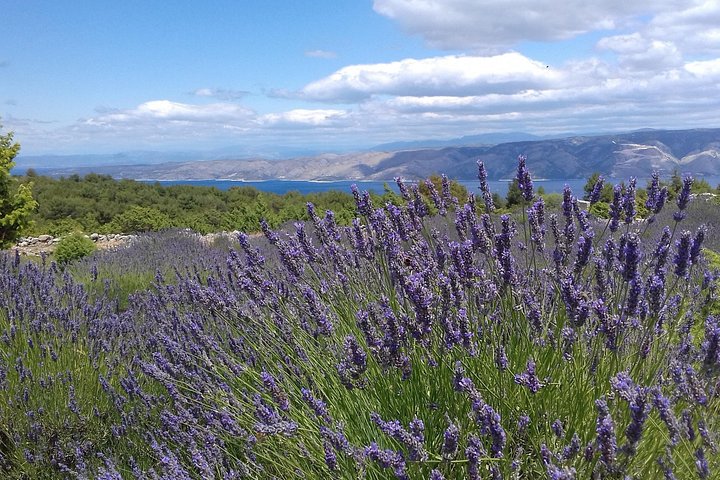
Today olive groves, vineyards and lavender dot the plain, and farmers still work the plots, many of them descended from families who have done so for generations. A good guide explains how to read the walls and the trims, the little rounded huts that sheltered farmers during the day, and why the arrangement has lasted so long.
Stari Grad itself repays a short stop. The old quarter has narrow stone lanes, small squares and a harbour with a quiet, local atmosphere, in contrast with the sparkle of Hvar Town. The Tvrdalj, the fortified home of the sixteenth-century poet Petar Hektorovic, is one of the town's best-known sights, with a fish pond and a garden of inscriptions.
The ferry port connecting the island to Split is at the head of a long inlet, so you will pass boats and commuters. The pace is slower, and many visitors find it a refreshing counterpoint to the nightlife of Hvar Town.
What to know
This is a private tour, so you can usually adjust the pace and stops to your interests. Confirm pickup arrangements, because tours may start in Stari Grad or collect from Hvar Town, and ask about the winery stop and how many wines you taste. Drivers are happy to mention dietary requirements and to arrange non-alcoholic options.
Bring sun protection, water and comfortable shoes, and expect some uneven ground. The tour runs year round, though summer is hot and the plain is at its greenest in spring. Pair it with the lavender and wine tours for a full countryside day, or add the Tvrdalj to your own walking itinerary.
Because the tour is private, you can ask your driver to focus on what interests you, whether that is archaeology, agriculture, wine or photography. Many travelers enjoy ending the afternoon with a walk along the Stari Grad waterfront, so ask whether the driver can drop you in town rather than returning to your starting point. If you are traveling with a non-drinker, mention it in advance, since a good host will offer juices, olive oil or local snacks in place of wine, and the experience remains rewarding.
What to expect
The experience
A private tuk tuk tour of Stari Grad and the ancient Greek plain, with a winery tasting.
Best time
Spring for green fields; summer mornings before the heat; autumn for harvest.
How long
Three to four hours.
Tips
Confirm the pickup point and the winery stop when you reserve. Bring sun protection and comfortable shoes.
Quick picks
- Best for
- History lovers and wine fans who want the island's oldest landscape.
- Families
- Good for families who enjoy history; tastings are for adults.
- Couples
- A private afternoon among walls and vines.
- Pair with
- A stroll through Stari Grad and the Tvrdalj.
- Time needed
- Half a day.
Good questions
Why is the Stari Grad Plain special?+
It is an ancient Greek land division from the fourth century BC, still farmed and inscribed as a World Heritage site.
Is the tour private?+
Yes, so you can adjust pace and stops.
What wines will I taste?+
Local wines such as Plavac Mali and the white Bogdanusa are common.
Can non-drinkers join?+
Yes. Ask for non-alcoholic options when you reserve.
Where does it start?+
It may begin in Stari Grad or collect from Hvar Town, so confirm.