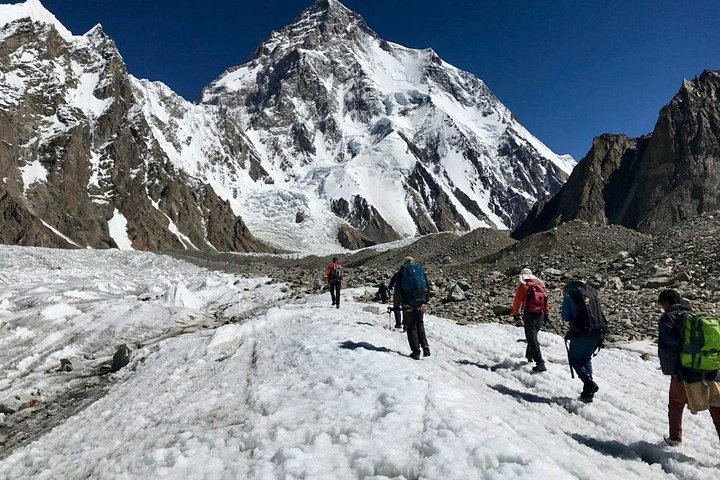
The trek to K2 Base Camp is one of the great walks of the world, a multi-week journey through the heart of the Karakoram. K2, at roughly 8,611 metres, is the second-highest peak on earth and one of the most demanding to climb, and the route to its base crosses the Baltoro Glacier, one of the longest glaciers outside the polar regions. The expedition linked here begins from Islamabad, travels to Skardu and continues to Askole, the last village, before the trek begins. Each day brings more dramatic scenery: granite spires such as the Trango Towers, the Cathedral and Paiju peaks, the Gasherbrum group, Broad Peak and finally the pyramid of K2 itself, seen from Concordia, where several glaciers meet. Porters and cooks support the team, and the days follow a steady rhythm of walking, camp, tea and rest. This is a serious undertaking, with high altitude, river crossings, rough ground and unpredictable weather, and it requires preparation, good fitness and an experienced operator. In return, you get an experience few places can match: huge scale, silence broken only by the sound of ice, and a camaraderie among trekkers and crew. Most departures run in the short summer window when conditions allow.
Preparation should start months ahead. Train for sustained hiking with a loaded pack, check medical fitness, understand the symptoms of altitude sickness and get insurance that covers high-altitude trekking and evacuation. Ask the operator about permits, group size, guides, safety equipment, emergency plans and what happens if weather delays flights or roads. Pack for cold nights and strong sun, with a good sleeping bag, boots that are broken in and layers.
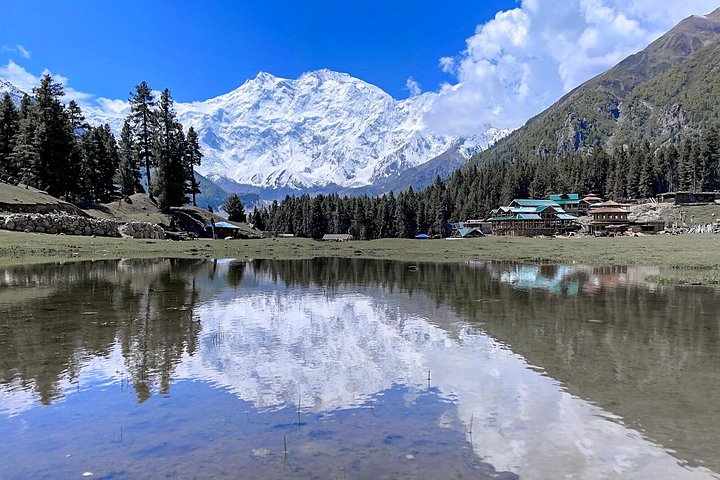
Shorter alternatives exist for those who want a taste of the Karakoram without three weeks, such as Fairy Meadows or shorter treks near Hunza and Skardu. Some trekkers combine K2 with the Gondogoro La pass for an even bigger challenge. Whatever you choose, give yourself spare days at either end for delays. Check your government's current travel advice and local guidance before you travel, and ask the operator about route conditions, permits and the plan if weather or roads change.
The practical shape of the trip is worth understanding before you commit. After arriving in Islamabad, groups usually fly or drive to Skardu, then take jeeps to Askole, where porters are hired and loads are weighed. The first days follow the Braldu River, with sand, scrub and river crossings, before the route climbs onto the Baltoro Glacier, a moving highway of rock and ice. Camp spots such as Paiju, Urdukas and Goro II have names that become familiar.
Rest days help with altitude, and good operators monitor health, carry oxygen and first-aid supplies and have evacuation plans. The route ends at Concordia, where K2, Broad Peak and the Gasherbrum peaks are visible together, and many groups continue to K2 Base Camp itself. The return is by the same route, with time to reflect on a very big journey. Expect to feel humbled by the scale, and to be proud of every step.
Ask how many guides and porters accompany each group, how they are paid and equipped, and whether the operator follows fair-treatment standards. Responsible operators are open about this, and your choice supports the people who make the trek possible.
What to expect
The experience
A guided multi-week trek from Islamabad via Skardu and Askole across the Baltoro Glacier to the foot of K2.
Best time
The summer trekking window, when weather and river levels allow.
How long
About three weeks including travel.
Tips
Train early, check insurance for altitude and evacuation and confirm permits and emergency plans.
Quick picks
- Best for
- Experienced, fit trekkers seeking a major mountain journey.
- Families
- Not suited to young children; this is a demanding expedition.
- Couples
- A sunset on K2 from Concordia after weeks of walking.
- Pair with
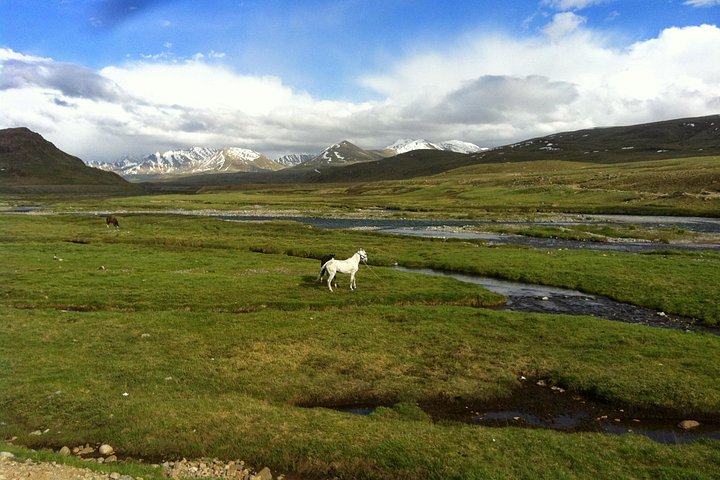
- Skardu and Deosai before or after the trek.
- Time needed
- Three weeks.
Good questions
How high is K2?+
About 8,611 metres, the second-highest mountain in the world.
Is the trek technical?+
It is not technical climbing but it is demanding, with altitude, glaciers and rough ground.
When is the season?+
Mainly the summer months when conditions allow.
Do I need insurance?+
Yes, insurance that covers high-altitude trekking and evacuation.
Can beginners do it?+
It is best for fit, experienced trekkers.