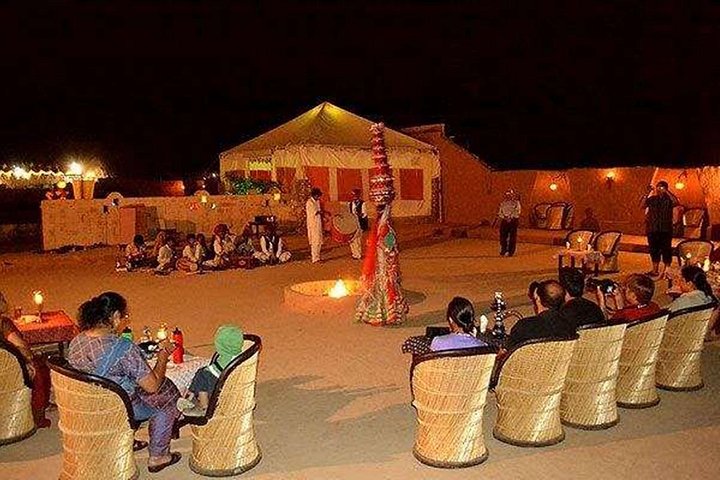
The Thar Desert is one of the best places in India to look at the night sky. Away from city lights, in dry air, stars appear in extraordinary numbers, and on clear moonless nights the Milky Way stretches across the heavens. A stargazing experience takes you to a camp in the dunes, where you settle in with tea, dinner and a campfire as darkness falls. Guides may point out constellations and planets, and some camps provide telescopes or sky apps. You can sleep in a tent or on a cot under the open sky, and wake to a cool, golden dawn.
Planning around the moon is the most important step. A full moon washes out the sky, while a new moon gives the darkest nights. Check the lunar calendar when choosing your date and ask the operator about conditions. Winter has the clearest air, with cold nights and little haze, while summer brings dust and heat, and the monsoon months have clouds. Even so, a clear night in any season can be impressive.
The setting adds to the experience. Camps used for stargazing tend to be farther out, in quiet areas with little artificial light. Once your eyes adjust, which takes around twenty minutes, you will see far more stars than you thought possible. Satellites and shooting stars cross the sky, and in certain periods meteor showers add to the show. Bring a red torch or use the red setting on your phone to preserve your night vision.
Dress warmly. Nights in the open desert can be very cold from late autumn to early spring, and the temperature drops quickly after sunset. Layers, a hat, gloves and a blanket are not optional. Many camps provide thick quilts, but check before you go. A hot drink helps, and the campfire provides a focus while you wait for the sky to darken.
Photography is possible with the right gear. A camera that can take long exposures, a tripod and a wide lens will capture the Milky Way, and a phone with a night mode can do a respectable job. Practise before you go, and be patient. Try to include a foreground, such as a camel silhouette or a tent, to give scale to your shots.
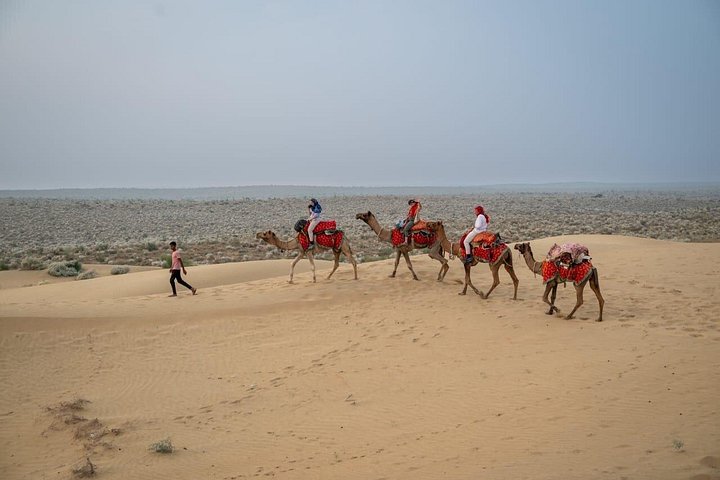
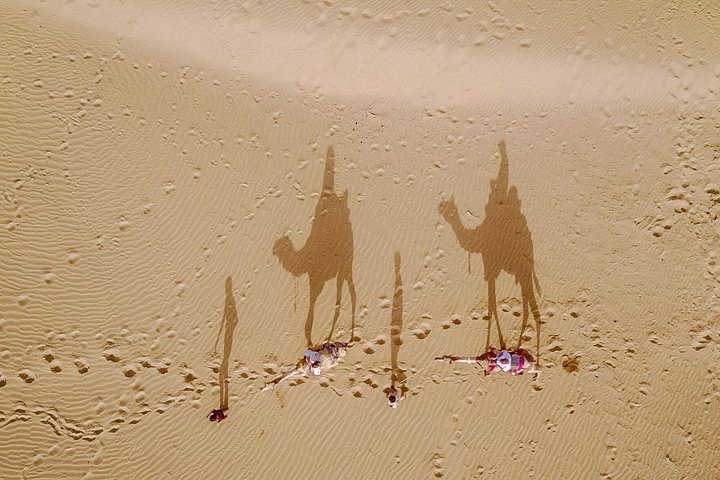
Combine stargazing with a short camel ride at sunset, a simple dinner and some folk music if you like, though loud music is at odds with the quiet of the sky. Ask the camp to keep lights low. Sleep in a tent or on a cot, and wake early for sunrise. It is a calm, restorative experience, and for many travellers the night sky is the most memorable part of a trip to Jaisalmer.
You can deepen the experience with a little preparation. Download a free sky map to your phone before you leave, because signal is poor in the dunes, and learn a few constellations such as Orion in winter. Ask your host about local names for stars, since desert communities have their own traditions of navigation and storytelling. Lie back on a mat for at least twenty minutes, put away screens and let your eyes adjust. Silence is part of the show, so encourage your group to keep voices low.
What to expect
The experience
A night at a dune camp with dinner, a campfire and dark skies for stargazing, with sleep in a tent or under the stars.
Best time
Moonless, clear nights between October and March.
How long
Overnight.
Tips
Check the moon phase, dress warmly, use a red torch and keep camp lights low.
Quick picks
- Best for
- Couples, photographers and stargazers.
- Families
- Older children who enjoy the sky and sleeping outdoors.
- Couples
- A quiet, romantic night away from town.
- Pair with
- A sunrise camel ride or Khuri dunes.
- Time needed
- One night.
Good questions
When is the best time for stargazing?+
Clear, moonless nights between October and March offer the darkest skies.
Can I see the Milky Way?+
On a clear moonless night away from lights, often yes.
How cold does it get?+
Winter nights can be very cold, so bring warm layers.
Do I need special equipment?+
No, but a red torch, a blanket and, for photos, a tripod help.
Is it suitable for children?+
Often yes for older children, as long as they are warmly dressed.