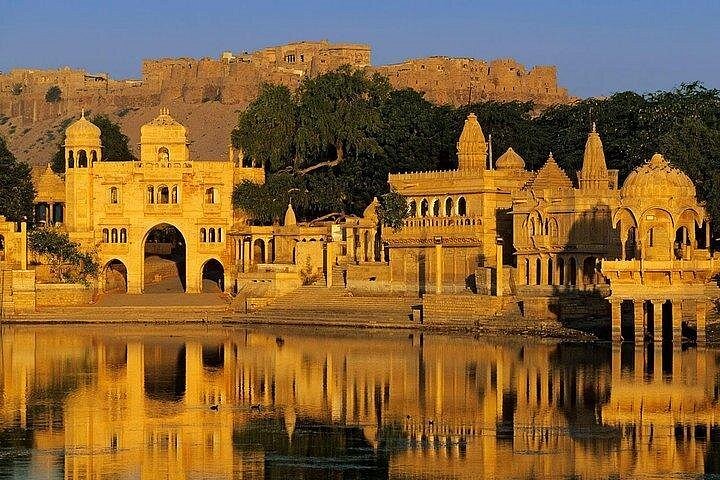
Jaisalmer Fort, known in Hindi as Sonar Qila, the Golden Fort, is the reason most travellers come to this corner of Rajasthan. Raised on Trikuta Hill in the twelfth century by the Bhati ruler Rawal Jaisal, it is one of the few forts in India where people still live inside the walls, so the lanes are full of washing lines, shopkeepers, schoolchildren and cows rather than silent ruins. The yellow sandstone glows gold in low sun, which is how the fort earned its name, and its bastions and gateways rise above a sea of flat roofs and open desert. It forms part of the Hill Forts of Rajasthan World Heritage inscription, and a walk through its gateways, courtyards, palace museum and temples is the essential first day in Jaisalmer.
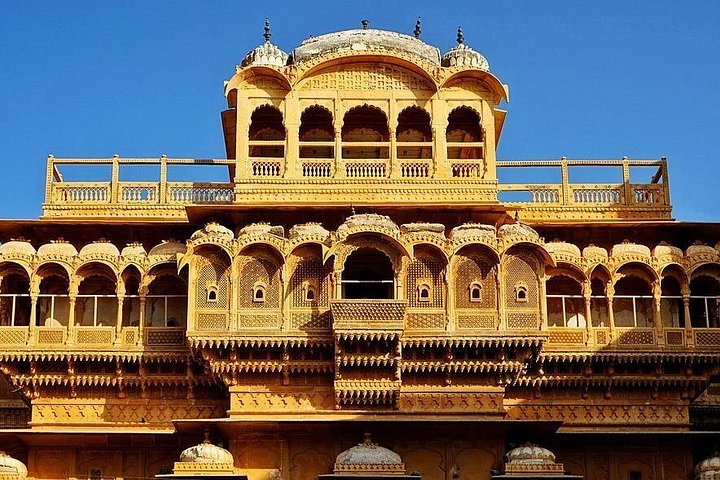
You enter through a zigzag of massive gates, each built to slow an attacking army, and arrive at Dussehra Chowk, the open square that serves as the fort's public heart. On one side stands the old royal palace, now a museum with carved balconies, painted rooms, weapons, musical instruments and portraits of the Bhati rulers. The rooftop of the palace gives a wide view across the fort roofs to the new town and the surrounding scrub, and it is the best place to understand how the city grew outward from this single hill.
Allow a good hour for the museum if you enjoy detail, and use the audio guide if it is offered, since the labels are brief.
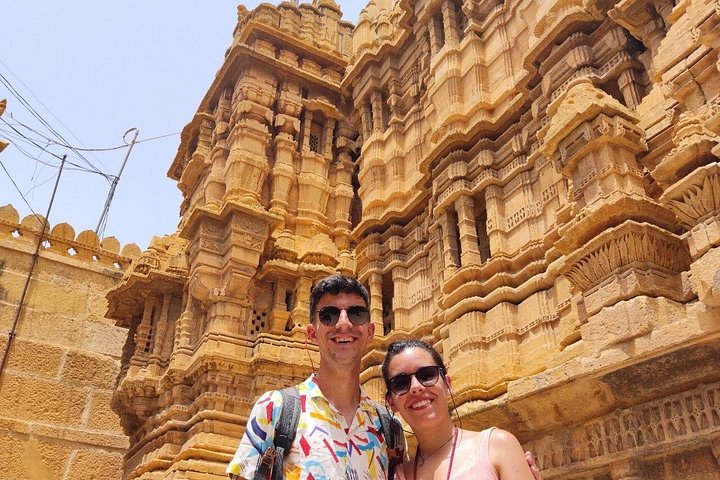
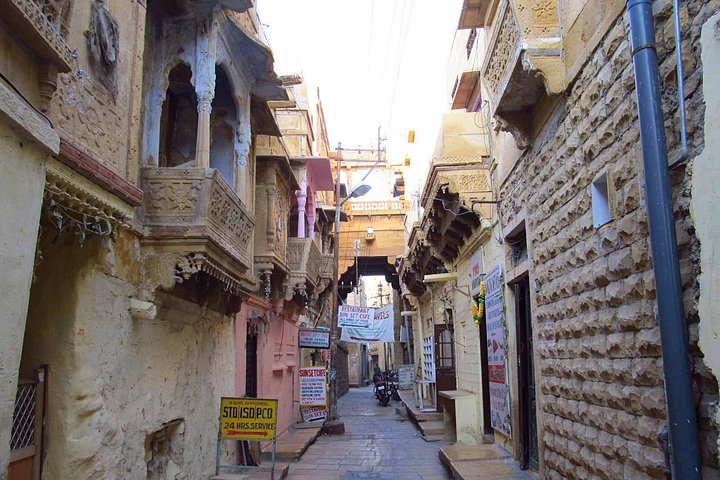
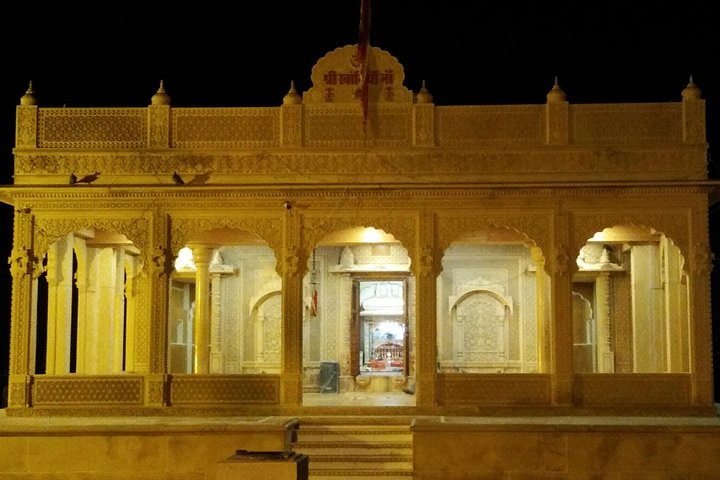
Beyond the square the fort becomes a maze. Lanes lined with carved havelis lead to small shops selling textiles, silver, puppets and camel leather, to rooftop cafes with views over the bastions, and to a cluster of Jain temples whose interiors are carved in extraordinary detail. Some of the buildings are very old, and the fort has struggled with drainage and water use as guesthouses and restaurants have multiplied, so many visitors choose to stay outside the walls or to pick a property that handles waste responsibly.
Walking the ramparts at the edge, you can see the fort's defensive layout, with rows of bastions and stone cannonballs once stacked ready for use.
Timing matters. Early morning is cool and quiet, with soft light and fewer groups, and the shops are only just opening. Late afternoon is the other great moment, when the stone turns amber and then deep gold, and the rooftops fill with people waiting for sunset. At midday the heat reflects off the walls and the narrow lanes can feel airless in summer, so plan a long lunch in the shade.
Wear shoes with grip, since the stone is worn smooth in places, and carry water. Modest dress is appreciated near the temples and in the residential parts of the fort.
A guided walk adds a great deal, because the fort's history is told through its details: the carved brackets, the family stories behind the havelis, the legends of siege and jauhar, and the trade routes that once brought silk, spices and opium caravans through the desert city. A small-group heritage walk is an inexpensive way to get that context, and it also helps you avoid the pushy touts who gather near the main gate. Keep a little time free to wander without a plan, because some of the best moments here are small ones, a doorway, a courtyard shrine or a view between two bastions.
Most visitors spend half a day inside the fort and come back for a sunset drink or dinner on a rooftop. Pair the visit with the neighbouring havelis, the market streets at the base of the hill and Gadisar Lake, and you have a complete first day in the Golden City. Buy any souvenirs after you have seen several shops, ask the price politely and keep your sense of humour; bargaining is part of the rhythm here.
What to expect
The experience
A hilltop fort-town of gateways, a palace museum, Jain temples, shops, guesthouses and rooftop cafes, explored on foot through narrow lanes.
Best time
Early morning for quiet lanes and soft light; late afternoon for golden stone and sunset from the ramparts or a rooftop.
How long
Three to five hours for the palace, temples and lanes, plus time for a rooftop meal.
Tips
Wear grippy shoes, carry water, dress modestly near temples, and consider a guided walk to avoid touts and learn the stories.
Quick picks
- Best for
- First-time visitors, photographers and history lovers.
- Families
- Children enjoy the gates, cannon and rooftops, but the lanes are uneven and busy.
- Couples
- Sunset on a rooftop with the bastions glowing is the classic couple moment.
- Pair with
- The havelis, Gadisar Lake and a Jain temple visit.
- Time needed
- Half a day, with a return at sunset.
Good questions
Why is it called the Golden Fort?+
The yellow sandstone of its walls turns gold in low sun, especially at sunrise and sunset, which gave the fort the name Sonar Qila.
Do people really live inside the fort?+
Yes. Families, shopkeepers and guesthouse owners live and work within the walls, which makes it one of the last living forts in India.
How long should I spend there?+
Plan half a day to see the palace museum, temples and lanes properly, and return for a rooftop sunset if you can.
Is a guide worth it?+
A guide helps with the history and the layout of the lanes, and a small-group walk is an affordable way to see the main sights without hassle.
Is it better to stay inside or outside the fort?+
Staying inside is atmospheric and walkable, but the old buildings are under strain, so many travellers prefer a nearby haveli or hotel outside the walls.