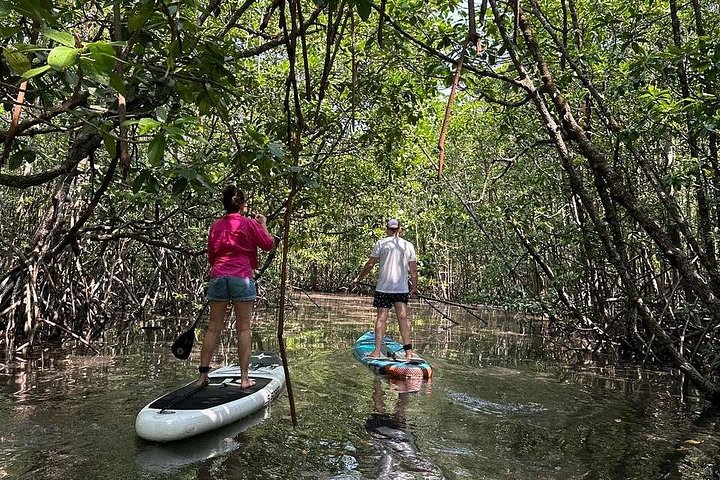
Koh Rong Sanloem is best known for its beaches, but the island also has quiet mangrove channels where tidal water winds between roots and low trees. A stand-up paddleboard tour is one of the most peaceful ways to explore them. The water is shallow and sheltered, so conditions are forgiving for beginners, and the slow pace lets you notice birds, crabs and fish among the roots. Mangroves also protect the coast and act as nurseries for marine life, which makes the trip both pretty and educational. A guide leads the group, explains how mangroves work and helps newcomers find their balance. The mood is relaxed, with plenty of time to stop and look around or float in silence. The tour suits people who like gentle activity and nature, and it makes a worthwhile complement to diving and beach time. Because it takes place away from the main bays, you often have the water almost to yourself.
How it works
The tour begins with a briefing on paddling technique and safety, then the group sets out along the channels with a guide. Boards, paddles and leashes are provided. Confirm the meeting point, the tide-dependent timing, the duration and whether lunch or transfers are included when you book. Free cancellation terms and availability appear at checkout.
What to expect
Expect to start on your knees if you are new, and stand when you feel steady. Falling in is part of the fun, and the water is warm and shallow. Mangroves can be buggy, so apply repellent and wear light long sleeves. The route may depend on the tide, since water depth in the channels changes through the day. Sunscreen and a hat are essential on the open sections.
Making the most of it
Bring a camera in a waterproof pouch, a water bottle and a change of clothes. Move quietly, because you are more likely to see wildlife if you avoid splashing. Ask the guide about the island’s ecosystem and how local communities use the mangroves. If you are staying on the island, an early-morning departure has calmer wind and cooler light.
Good to know
Wind and weather can affect SUP conditions, and in the wet season from roughly May to October trips may be rescheduled. Wear a leash and, if offered, a life jacket. Non-swimmers should say so in advance. Keep valuables in a dry bag and avoid taking phones unless they are protected. Children can often join if they are comfortable on a board, but check with the operator.
Practical note
There are few facilities in the mangroves, so use the toilet beforehand. Respect the environment by not pulling roots, leaving rubbish or disturbing nests.
Why mangroves
These coastal forests filter water, shelter young fish and protect shorelines from storms, and they are disappearing across Southeast Asia. A paddleboard tour is a low-impact way to see one, because there is no engine noise and no wake. The guide may point out how the roots trap sediment, how crabs and mudskippers move at low tide and which birds feed along the edges.
Visitors who spend a few minutes sitting quietly on the board often notice more life than they expected. It is an excellent counterpoint to the beach and a good rainy-season alternative when the sea is rough but the channels stay sheltered.
What to expect
The experience
A guided stand-up paddleboard tour through sheltered mangrove channels on Koh Rong Sanloem.
Best time
Go in the dry season, in the morning when wind is lightest.
How long
Two to three hours; confirm with the operator.
Tips
Use repellent, wear sun protection and keep valuables in a dry bag.
Quick picks
- Best for
- Nature lovers and beginners who want a gentle, quiet paddle.
- Families
- Children may join if they are comfortable on a board; ask first.
- Couples
- The silence and calm water suit couples.
- Pair with
- A beach afternoon or snorkeling.
- Time needed
- Half day.
Good questions
Do I need paddleboard experience?+
No, a guide helps beginners.
Will I fall in?+
Possibly, and the water is warm and shallow.
What wildlife might I see?+
Birds, crabs and small fish are common among the roots.
What should I bring?+
Repellent, sun protection, water and a change of clothes.
Does the tide matter?+
Yes, depth in the channels changes, so timing can vary.