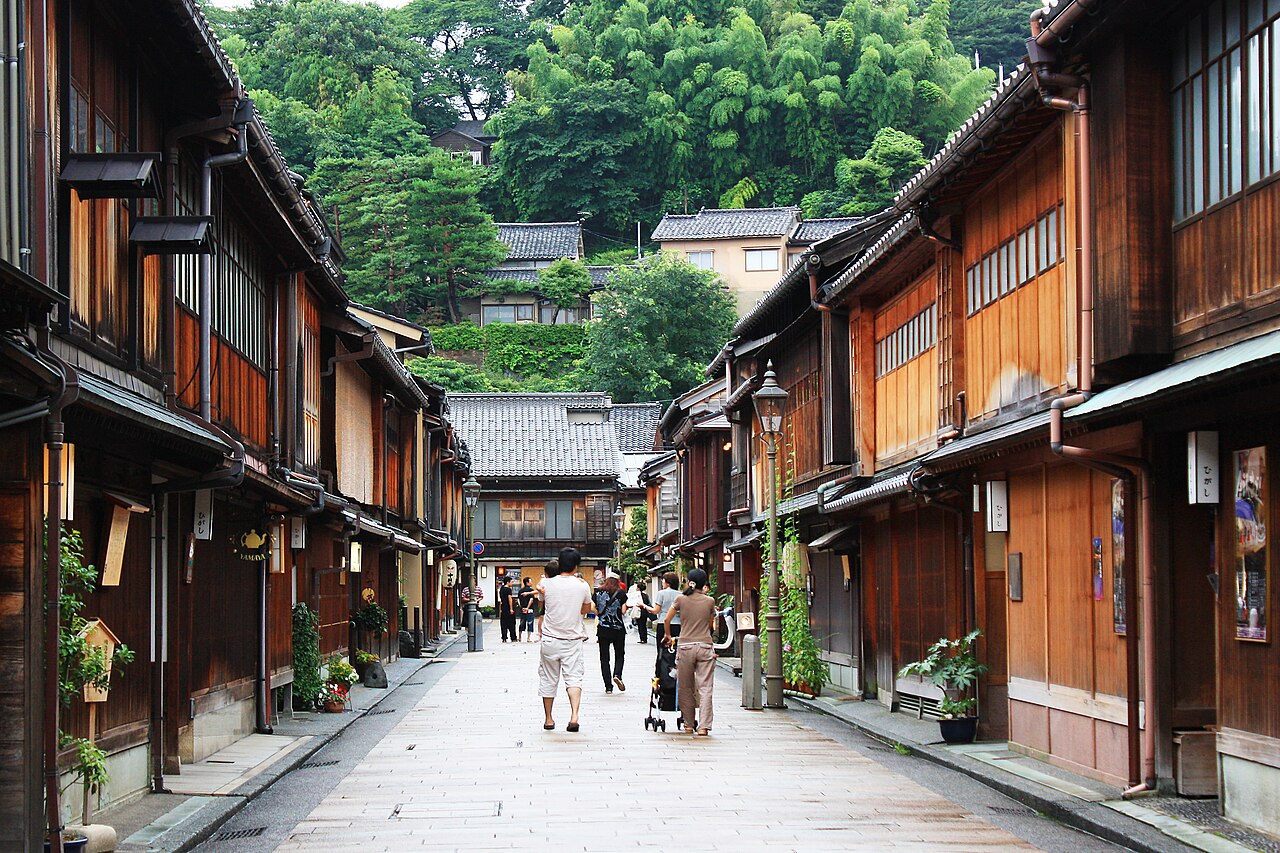
Higashi Chaya is the most photogenic corner of Kanazawa. The Maeda government moved the city's pleasure quarters here in 1820, and the wooden teahouses still line the main street with their distinctive first-floor lattice, called kimusuko, and the upstairs guest rooms that were once illegal for ordinary houses because two-storey buildings were banned in the Edo period. Along with Kyoto's Gion and Kanazawa's own Kazue-machi, the district is protected as a cultural asset, and some of its geisha houses still host evenings of music and dance. For visitors, the practical delights are the teahouses that open to the public. Shima is a preserved teahouse turned museum, with its performance rooms, kitchen and the instruments and belongings of geisha on display. Kaikaro is still a working teahouse that welcomes visitors by day, and entry includes tea and a sweet served in a gilded, lacquered room. Between them, the street is crowded with cafes and shops, and Kanazawa's gold leaf is everywhere, from the Hakuza shop with its gold-covered tearoom to ice cream topped with a sheet of leaf.
The district is small, so the way to enjoy it is to slow down. The central street can be walked end to end in a few minutes, but you will want an hour or two to step inside a teahouse, browse the craft shops, have a sweet at a cafe and wander the side lanes toward the Asano River, three minutes away, where the mood is quieter and the old wooden facades face a willow-lined bank. Evenings are especially atmospheric, when the lanterns come on and the crowds thin, though the teahouses that open to the public close in the afternoon.
Practical detail
Hours vary by building. Shima keeps long daytime hours with a slightly shorter day from December to February, and Kaikaro closes one day a week, so check the day you plan to go. Admission to each teahouse is modest, with Kaikaro including tea. Geisha performances are held by the city tourism association on designated Saturdays in the three geisha districts, and private evenings with geisha usually require an introduction or a tour, so plan ahead if that interests you. Dress modestly, remove shoes where asked and ask before photographing people.
Reaching it and pairing it
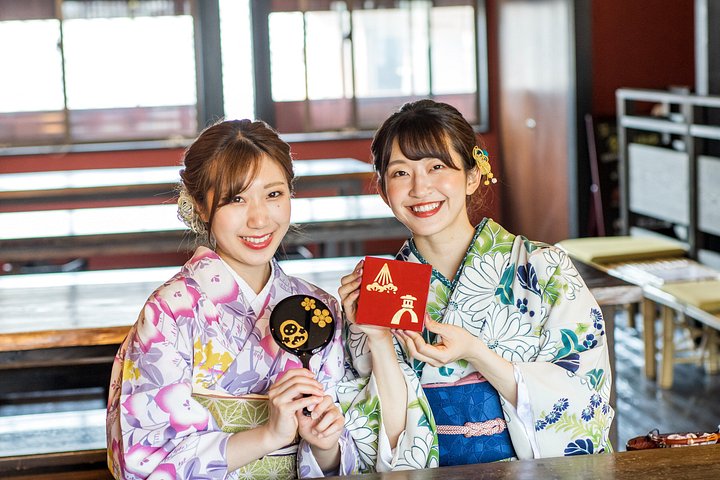
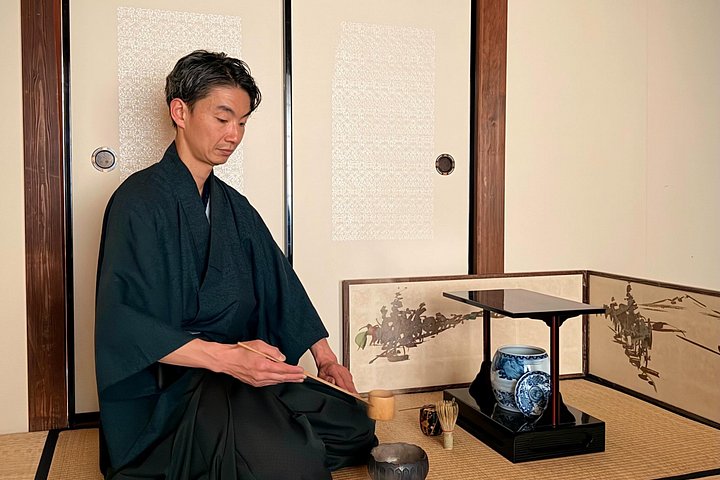
The district is a short ride from Kanazawa Station on the Right Loop bus, with a five-minute walk from the Hashibacho stop, or about a twenty-minute walk from Kenroku-en. Pair it with the gold leaf workshop in the district, a private tea ceremony, or a sunset stroll along the river. Weekday mornings are calm, and weekends and holidays fill with visitors in rented kimono, which is part of the show.
What to expect
The experience
A stroll along stone-paved lanes of wooden teahouses, with optional paid visits inside Shima and Kaikaro and plenty of cafes and craft shops.
Best time
Weekday morning for quiet lanes, or late afternoon into evening when the lanterns glow, remembering that the teahouses close earlier.
How long
One hour for the main street, two with a teahouse and a cafe.
Tips
Check Kaikaro's weekly closing day, carry cash, remove shoes inside teahouses and ask before photographing geisha or staff.
Quick picks
- Best for
- First-timers who want the Kanazawa of old Japan postcards, plus anyone curious about geisha culture.
- Families
- Fine for children who like wandering and sweets, though teahouse rooms ask for quiet and no running.
- Couples
- Take tea at Kaikaro, then walk the lanes at dusk and the river bank.
- Pair with
- The gold leaf workshop, a private tea ceremony and Kenroku-en, a twenty-minute walk away.
- Time needed
- Two hours is comfortable, three with a workshop.
Good questions
Can I see geisha in Higashi Chaya?+
Geisha performances are held on designated Saturdays by the city tourism association, and private teahouse evenings usually need an introduction or tour. Walking the district by day mainly shows you the architecture.
Which teahouses can I enter?+
Shima, a preserved teahouse museum, and Kaikaro, a working teahouse that opens by day with tea included in the entry fee. Both charge a modest admission.
How do I get there from the station?+
Take the Right Loop bus from Kanazawa Station to the Hashibacho stop and walk about five minutes. A taxi takes about ten minutes.
Is it open in the evening?+
The lanes are open and lovely at dusk, but the public teahouses and most shops close in the late afternoon. Some restaurants stay open later.
Is it worth wearing a kimono?+
Many visitors rent one for photos on the lanes, and the setting suits it. Check the cancellation and return rules and bring comfortable footwear.