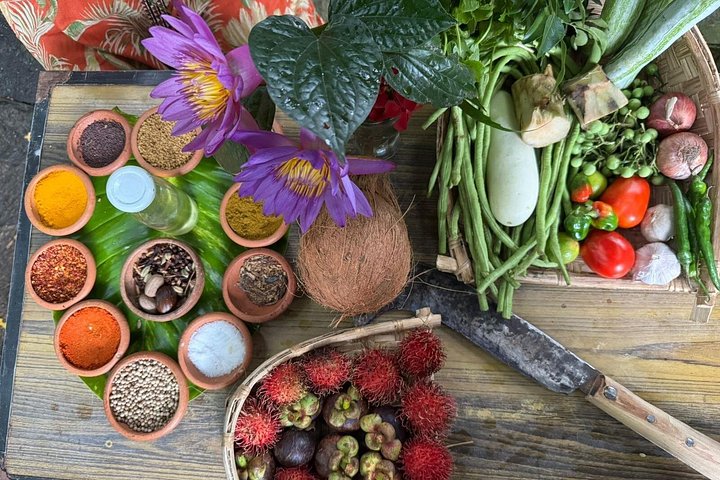
Sri Lankan food is built on rice and curry, but the phrase hides an abundance. A real meal means a dozen small dishes: dhal, a fish or chicken curry, a vegetable curry or two, a coconut sambol, a mallum of shredded greens, papadams and pickles. A cooking class in Kandy puts you in a home or garden kitchen to learn how it all fits together. Most classes start with a short walk or market stop for ingredients, then move into preparation: grating coconut, grinding a spice blend, tempering curry leaves and mustard seeds, and simmering each dish in turn. The result is a lunch that you cooked and eat together.
The setting matters. Classes in gardens or family homes give you a sense of the local rhythm, with chickens pecking around and spices drying in the sun, while others run in a purpose-built kitchen. Either way, the pace is relaxed and the instructors are used to beginners. You will usually learn how to extract coconut milk, how to balance chili, turmeric and curry powder, how to make a quick pol sambol with lime and onion, and why curry leaves and pandan are the signature aromatics of the cuisine.
Vegetarian and vegan options are common, and many hosts adapt to allergies if asked in advance.
Knowing the basics changes how you eat for the rest of the trip. You start to recognize the dishes on a buffet, understand why the same curry tastes different in the hills and on the coast, and know what to order at a local rice-and-curry shop. Recipes are often shared afterward, and some hosts send them by message. For families, a class is a good rainy-day plan, and for couples it is an easy shared project that ends with a lunch you earned. Most classes last three to four hours including eating.
Book for lunchtime or the afternoon, tell the host about dietary needs and wear clothes that can handle a few spills. Bring a small amount of cash in case you want to buy spices at the end, and ask whether the class includes a market visit. If you are staying in Kandy for several nights, schedule the class early in your stay so that you can apply what you learn at the street stalls and restaurants.
Pair it with a walk around Kandy Lake in the cooler afternoon, or follow it with an evening dance show for a day of food and culture. Cooking with your hands, tasting as you go and sitting down to eat together is one of the warmest ways to meet a place.
The spice tour and herbal garden visits offered by some hosts add a welcome layer of context, showing the plants behind the flavors.
Ask in advance whether you will prepare fish, because some hosts offer it as an option, and request spicy or mild versions depending on your tolerance. A few hosts also teach how to make hoppers, string hoppers or the classic coconut roti, which are lovely additions if you have time. Most importantly, take notes and photographs of the measurements, so that you can recreate the meal at home and share a taste of Kandy with friends.
What to expect
The experience
A hands-on class in a home or garden kitchen near Kandy, cooking a spread of Sri Lankan curries, dhal and sambol, then eating them together.
Best time
Late morning or afternoon, so the meal lands at lunch or early dinner.
How long
Three to four hours including the meal.
Tips
Tell the host about dietary needs, wear clothes that can handle spills and ask for the recipes.
Quick picks
- Best for
- Food lovers and anyone who wants to understand Sri Lankan cooking.
- Families
- Great for kids who like to help, and a good rainy-day option.
- Couples
- A relaxed shared project that ends with a lovely meal.
- Pair with
- The Kandy Lake walk and the evening dance show.
- Time needed
- Half a day.
Good questions
What will I cook?+
Usually a spread of rice and curry: dhal, vegetable curries, a coconut sambol and a mallum, with fish or chicken in some classes.
Are vegetarian options available?+
Yes. Many classes are vegetarian by default and can adapt to vegan or allergy needs with notice.
Do I need experience?+
No. Classes are designed for beginners.
Do I eat what I cook?+
Yes. The class ends with a shared meal.
Can children join?+
Usually yes, and they often enjoy grating coconut and stirring pots.