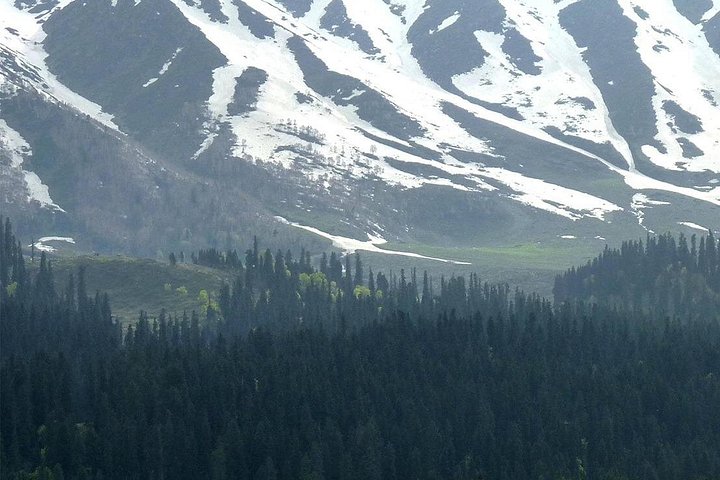
The Shankaracharya Temple crowns a hill in the Zabarwan range overlooking Srinagar, also called Takht-e-Sulaiman, and it is among the oldest temples in the Kashmir Valley. A Shiva temple stands on an octagonal stone base reached by a flight of steps, built of massive grey stone blocks in an austere style that reflects early Kashmiri temple architecture. Tradition connects the site with the philosopher Adi Shankaracharya, who is said to have visited Kashmir, and the hill is the most prominent natural viewpoint above the city. The temple building itself is small and plain, with a circular sanctum holding a lingam, but the setting is the point. From the terrace you look down across Dal Lake, the houseboats, the islands of the lake and the whole sweep of the valley with its rivers, roofs and orchards. On a clear day the Pir Panjal range closes the view to the south and west, and the outline of the Mughal gardens can be traced along the lake shore.
Getting there involves a short drive up a road from the Dal Lake side to a parking area, followed by a climb on steps to the temple. The climb takes some effort, particularly in warm weather or at altitude, so go at a steady pace and carry water. Visits are usually best in the morning, when the air is clear and the light across the lake is soft, though late afternoon is also rewarding.
In spring and autumn the hill is green or golden, and in winter the temple can be dusted with snow, which makes the view starkly beautiful. The private full-day Srinagar tour linked here includes the temple among the major city sights, so you can see it with a driver and guide.
Visitors should expect security checks at the base and restrictions on what you can carry or photograph, and the rules can change from time to time, so ask your guide or hotel for current arrangements. Phones, cameras and bags may need to be left or screened, so travel light. Dress modestly because this is a place of worship, remove shoes at the temple and be quiet inside. The site is used by local devotees, particularly on days of religious observance, and can be busy then.
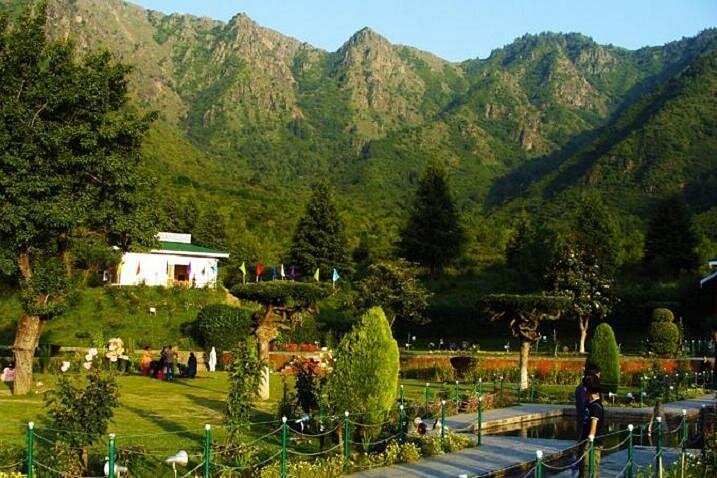
Combine the temple with Chashme Shahi and Pari Mahal on the same hillside road for a coherent half-day of gardens and viewpoints, and with a shikara ride later to see the hill from the water. Wear sturdy shoes with grip, bring a hat for sun and a layer for wind at the top, and allow time to rest on the terrace and take in the view rather than rushing back down. For many travellers this is the single best place to understand how the lake, the city and the mountains fit together.
For photographers, the best frames are the temple steps leading up against the sky, the lake from the terrace with the houseboat rows in the foreground, and the evening light on the Pir Panjal. If you are interested in architecture, look closely at the huge stone blocks, laid without mortar in the old style, and the inscriptions and later additions that show the temple's long history. The nearby Botanical Garden and the Zabarwan road make this a good half-day with the gardens, and a quiet sit on the terrace is a fine way to end a busy day of sightseeing.
What to expect
The experience
A stepped climb to an ancient stone Shiva temple on a hill, with a wide panorama of Dal Lake and the valley from the terrace.
Best time
Morning for clear air and soft light, or late afternoon; spring and autumn are most comfortable.
How long
One to two hours including the climb and the view.
Tips
Travel light because of screening, wear grippy shoes, carry water, dress modestly and check current access.
Quick picks
- Best for
- Viewpoint seekers and history lovers.
- Families
- Older children can manage the steps; younger ones may tire.
- Couples
- A sunrise or late afternoon view over the lake is memorable.
- Pair with
- Chashme Shahi, Pari Mahal and a shikara ride.
- Time needed
- Two hours.
Good questions
What is the Shankaracharya Temple?+
It is an ancient Shiva temple on a hill above Srinagar, also called Takht-e-Sulaiman, built on an octagonal stone base.
How hard is the climb?+
It is a stepped climb that takes some effort, especially in warm weather, so go slowly and bring water.
What is the best time to visit?+
Morning gives the clearest air, and late afternoon has soft light; spring and autumn are most comfortable.
Are there restrictions?+
Screening is usual at the base and items like bags or cameras may be limited, so travel light and ask for current arrangements.
What can I see from the top?+
Dal Lake, the houseboats, the Mughal gardens, the city and the Pir Panjal range on a clear day.