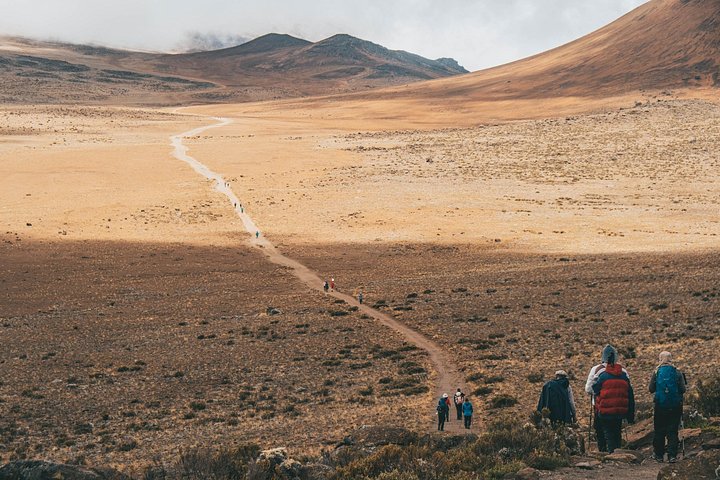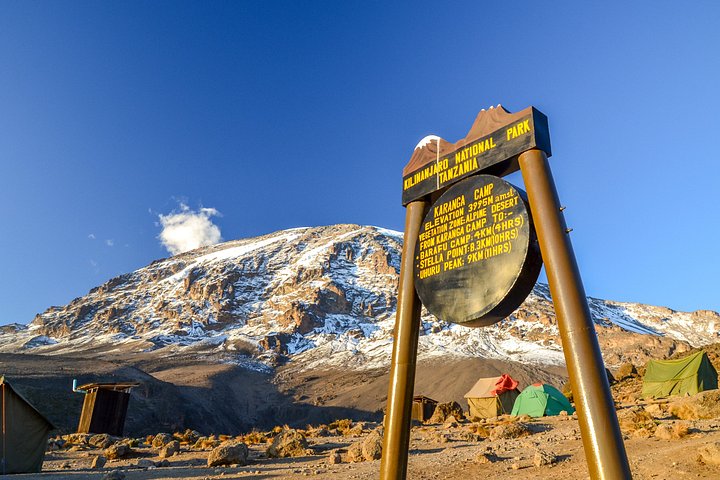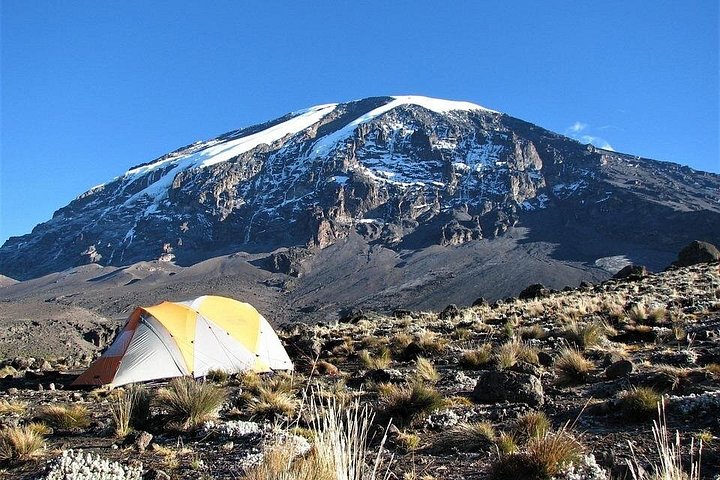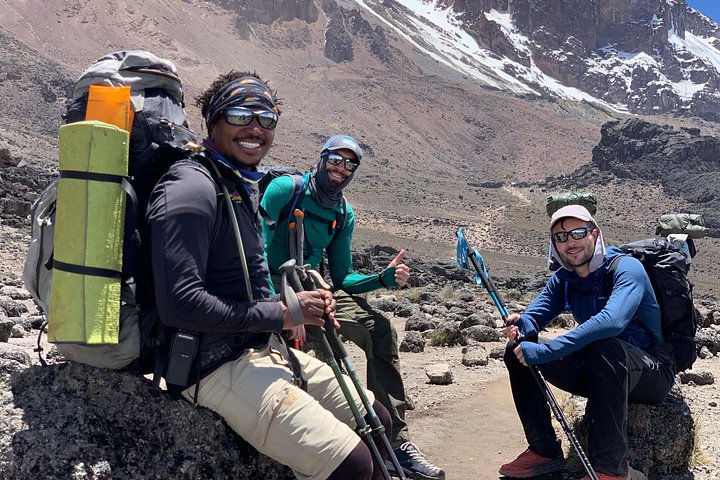
The Marangu route is the only way up Kilimanjaro that uses huts rather than tents. It is often called the Coca-Cola route, because it was the first and best-established path and was once marketed as the easy option, although the mountain is never truly easy. The trail starts at Marangu Gate on the southeast side, a short drive from Moshi, and climbs steadily through forest to Mandara Hut, then through moorland to Horombo Hut, across the saddle between Kibo and Mawenzi to Kibo Hut, and finally up the steep scree to Gilman's Point and Uhuru Peak. For many walkers the main appeal is that you sleep in a bunk with a mattress under a solid roof. Mandara and Horombo have A-frame huts with shared dorm rooms and a communal dining area, and Kibo Hut is a stone building near the foot of the final slope. Meals are prepared by your cook and served in the dining hut. There are basic toilets at each stop, and in some places you can buy snacks or bottled drinks. The comfort is real, but it also means beds fill up on busy dates, so ask your operator to confirm bookings. Marangu is the only route where you ascend and descend by the same path. That makes it shorter and a little less varied than Machame or Lemosho, and a lot of people find the trail busy with day walkers near the bottom. But the gradient is gentle for most of the climb, the forest is beautiful and the route has long been popular with first-time trekkers.
Standard itineraries are five days or six days. The five-day version goes: Mandara Hut on the first night, Horombo on the second, Kibo on the third, then the summit attempt from midnight and a long descent to Horombo and Marangu Gate on day four and five. It has the lowest cost but also the lowest summit success rate, because you gain altitude quickly and have no spare day.
The six-day version adds an acclimatization night at Horombo, with a day hike toward Zebra Rocks or the foot of Mawenzi, and is the better choice if you can afford the extra night.
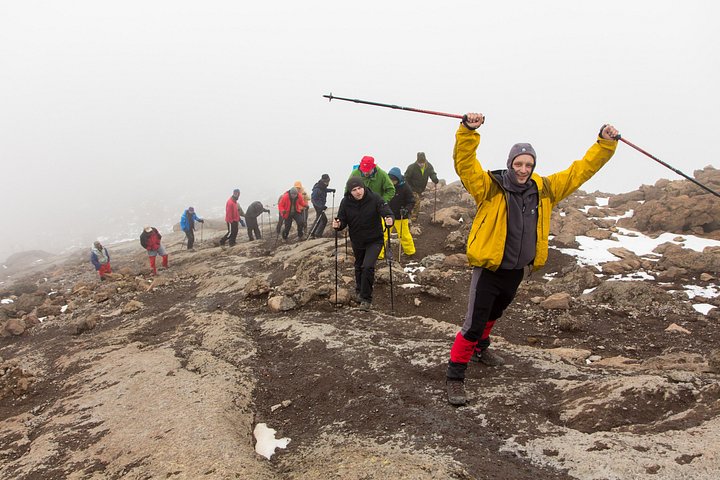
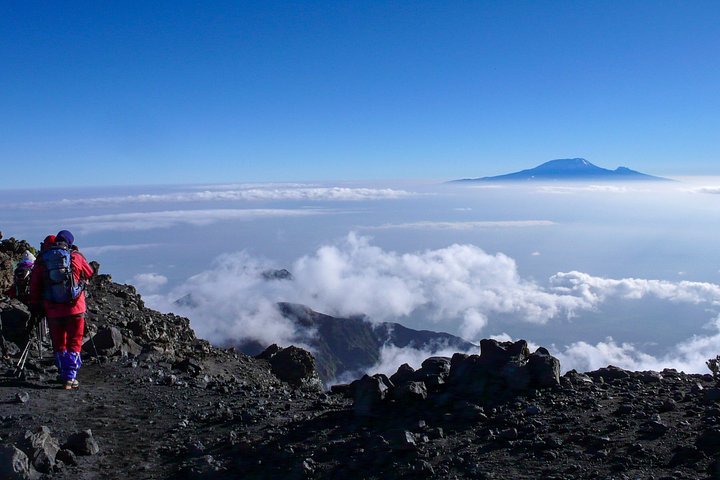
Summit night follows the same pattern as the other routes. You leave Kibo Hut around midnight, climb the steep scree toward Gilman's Point on the crater rim and then continue along the rim to Uhuru Peak. Gilman's Point is already a significant achievement and earns a certificate from the park, but Uhuru Peak is the true top. The temperature is below freezing for most of the night, and the first hours are the hardest.
Check the details of what is included. Hut fees are different from camping fees and are charged to the operator, and some low-cost offers do not include park fees, so compare quotes carefully. Ask whether the hut stay is guaranteed, whether you need your own sleeping bag and how many porters and guides will go with your group. Guides must be licensed, and porter welfare matters on every route.
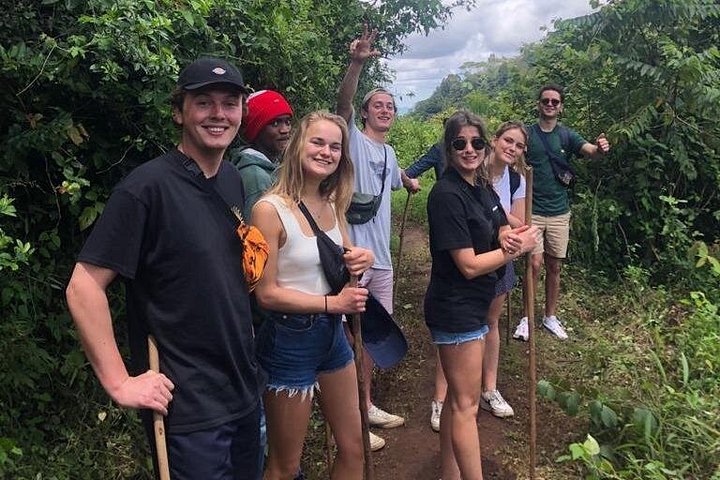
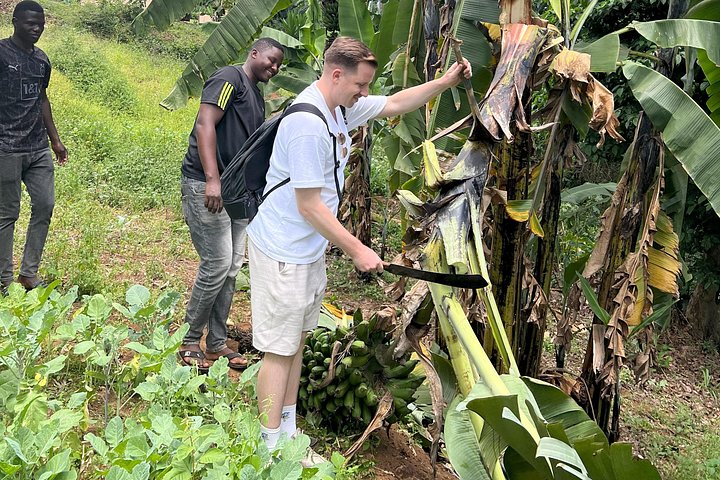
The Marangu side also gives you easy access to local culture. The nearby villages are home to Chagga farms and waterfalls, which you can visit before or after the climb, and our Arusha pages covers the Mandara Hut day hike if you want to start gently.
What to expect
The experience
A guided trek from Marangu Gate with overnight stays in mountain huts and meals from a trekking cook, returning by the same route.
Best time
January to early March and June to October for drier trails and clearer views.
How long
Five days is the quickest; six days adds an acclimatization night and improves your odds.
Tips
Pick the six-day schedule, confirm hut reservations and bring a warm sleeping bag for the colder upper huts.
Quick picks
- Best for
- Trekkers who prefer a bunk and a roof to a tent, and a steady gradient.
- Families
- Fit older children and teenagers may manage it, but the summit night remains long and cold.
- Couples
- Huts make it comfortable, and the shared dining rooms are sociable.
- Pair with
- A Chagga village walk on the Marangu side before the climb.
- Time needed
- Seven to eight days including arrival and recovery.
Good questions
Is Marangu the easiest route?+
It has the gentlest gradient and uses huts, but the five-day version gives little time to adapt. The six-day plan is a much better choice.
Do I need a tent?+
No. You sleep in dormitory huts. Bring a warm sleeping bag, because the upper huts get cold at night.
Is the route crowded?+
It can be, especially in the dry seasons and in the lower sections near the gate.
Why do some people turn back at Gilman's Point?+
It is a fine milestone on the crater rim, but Uhuru Peak is still more than an hour further. Altitude and fatigue make that last stretch hard.
Are meals included?+
Operators usually provide meals cooked by a trekking cook. Confirm this and any dietary needs when you book.