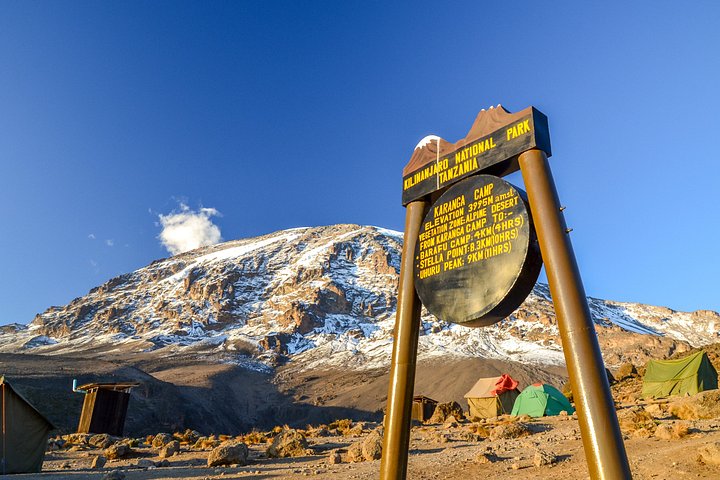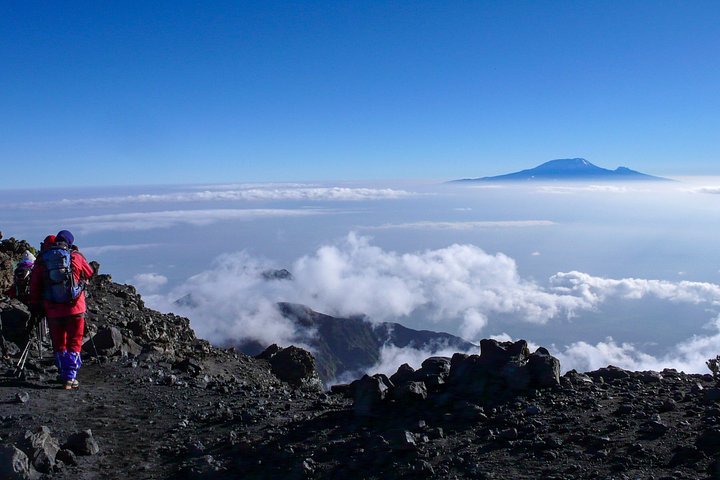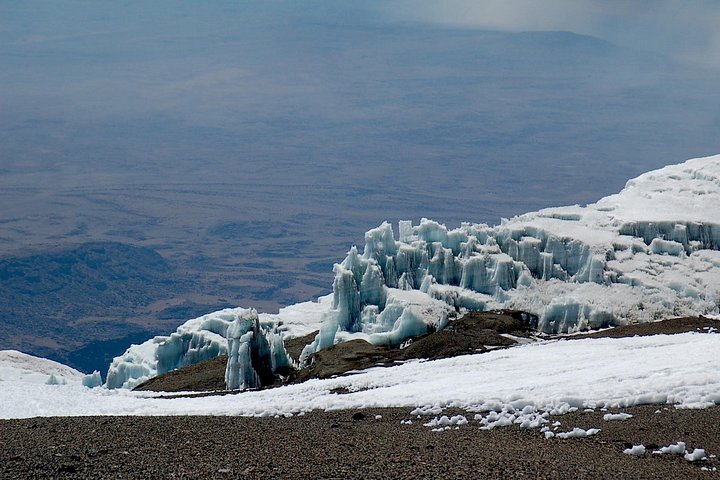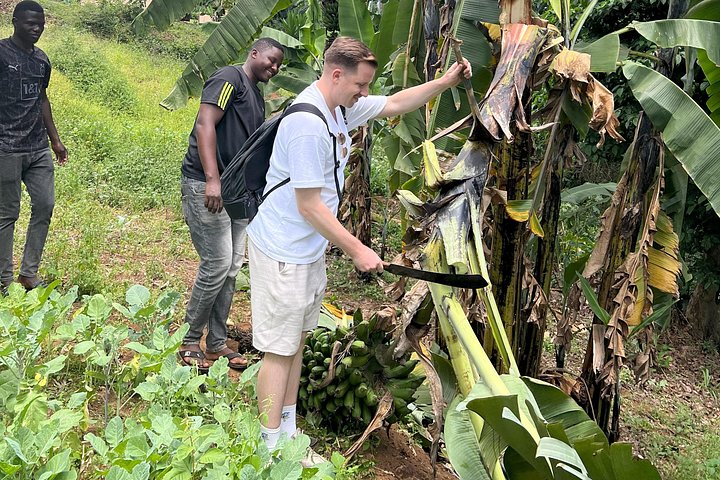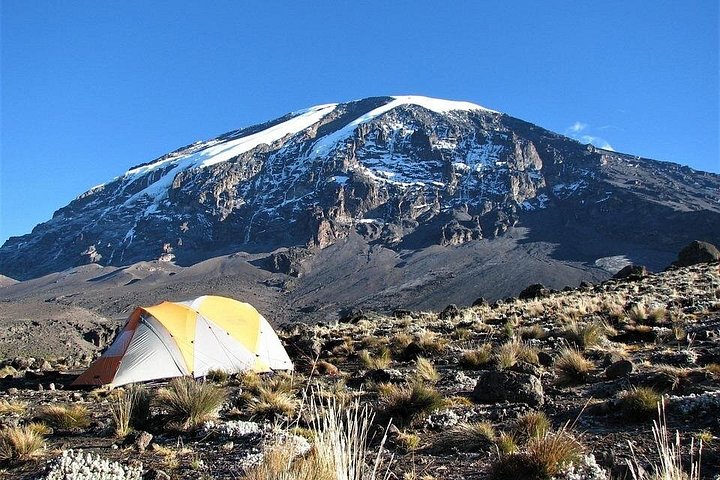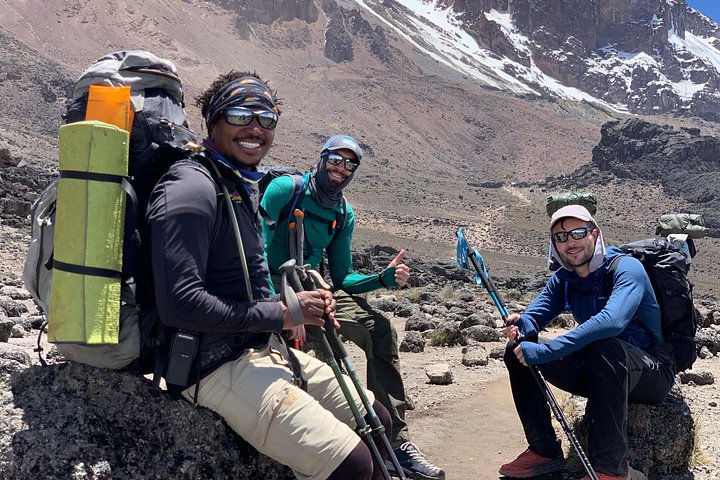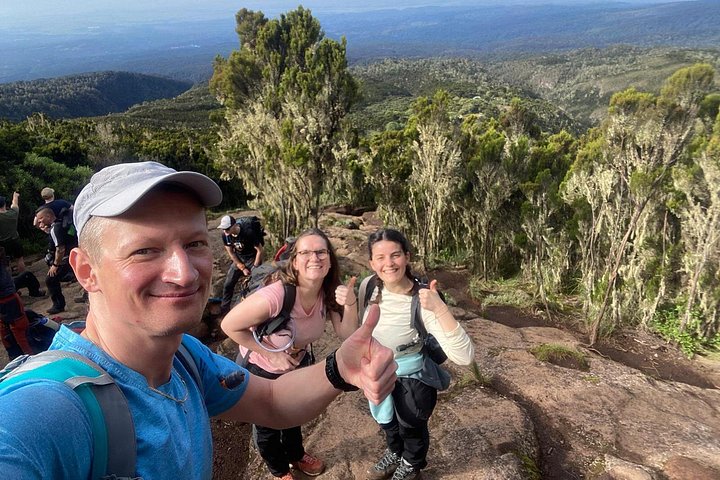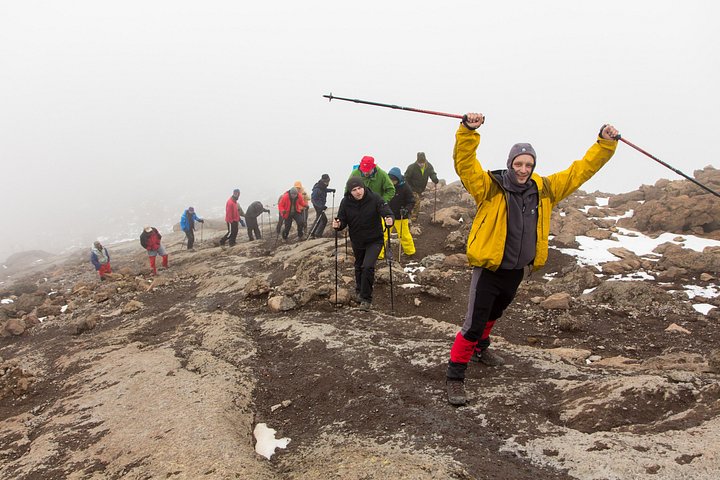
The Machame route, nicknamed the Whiskey route, is the most popular way to climb Kilimanjaro, and for good reason. It starts at Machame Gate on the mountain's southwestern side, climbs through dripping montane rainforest, crosses the heather and moorland of the Shira Plateau and then swings around the southern flank of the Kibo crater before the final push to Uhuru Peak at 5,895 metres. Nights are spent in tents, with a crew of guides, cooks and porters carrying the gear, which means you walk with only a daypack and your own water and snacks. What makes Machame work is its profile. The trail climbs high on some days and sleeps low in the evening, which is the single best habit for adjusting to altitude. On the third day most groups walk up toward Lava Tower, a volcanic plug near 4,600 metres, and then drop to Barranco Camp for the night. The next morning brings the Barranco Wall, a steep scramble that looks daunting from below but is more of a hands-on staircase than a technical climb. From there the path crosses valleys to Karanga and Barafu Camp, the high camp from which the summit attempt begins around midnight. Most operators sell Machame as a six-day or seven-day itinerary. The seven-day version adds an extra night on the mountain, usually at Karanga or Shira, and gives your body more time to adapt. If you are choosing between the two and have the time, the longer schedule is the safer bet. The climb is physically demanding on summit night, when you walk for six to eight hours in the dark and cold, but the days before it are steady hiking rather than mountaineering.
Day by day, a typical week starts with a drive from Moshi to Machame Gate, registration with the park authority and a walk through forest to Machame Camp. The second day crosses the forest edge into heather and ends on the Shira Plateau, with the first wide view of Kibo. The third day goes up toward Lava Tower and down to Barranco.
The fourth day tackles the wall and continues to Karanga, the fifth is a short push to Barafu, and summit day starts after a few hours of rest. After the top you descend to Mweka Camp for the night and walk out the next morning through the forest to Mweka Gate.
Weather and timing matter. The drier windows are roughly January to early March and June to October, and these are also the busiest. The long rains in April and May turn the lower trail slippery and the mountain is often in cloud, while November brings shorter rains. Summit night is cold in every month, often well below freezing with wind, so a proper down jacket, warm gloves and a headlamp with spare batteries are essential. Most operators can rent sleeping bags and poles if you prefer not to carry your own.
Group size, guide ratios and the way porters are treated vary a great deal between operators. Ask how many porters are on the crew, whether they are paid fairly and how loads are limited, and whether the company carries oxygen and a pulse oximeter for daily checks. Park fees are charged per day, change from time to time and are sometimes listed separately from the tour price, so confirm what is included before you pay. Tipping for the crew is customary and is usually pooled and handed over at the end of the climb.
If you only want a taste of the Machame side without committing to a multi-day trek, the Machame Gate day hike on our Arusha pages is a gentler alternative.
What to expect
The experience
A guided, tented trek with a licensed guide, assistant guides, cooks and porters, starting at Machame Gate and finishing at Mweka Gate.
Best time
January to early March and June to October for the driest trails; summit night is cold at any time of year.
How long
Six or seven days on the mountain, with a summit attempt starting around midnight on the penultimate day.
Tips
Choose the seven-day schedule if you can, train with long hill walks, break in your boots and ask exactly what park fees and equipment hire are included.
Quick picks
- Best for
- Fit first-time trekkers who want the classic scenic route with good acclimatization.
- Families
- Suitable for fit teenagers; many operators and the park set minimum ages, so check before booking.
- Couples
- A shared challenge with big views and a strong sense of achievement at the top.
- Pair with
- A few days of safari or a Materuni coffee day from our Arusha pages after you come down.
- Time needed
- Seven to eight days including arrival and rest.
Good questions
How hard is the Machame route?+
It is a strenuous trek but not technical. Most of the difficulty comes from altitude, cold and the long summit night, so fitness and a slow pace both help.
Is the six-day or seven-day version better?+
The seven-day version gives you an extra night to adapt and generally improves your chances of reaching the summit, so choose it if your schedule allows.
Where do we sleep?+
In tents at established camps. Your crew pitches them and cooks your meals, and the camps have basic toilet facilities.
Do I need to hire a guide?+
Yes. National park rules require climbers to go with a licensed guide, and your operator arranges this together with porters and a cook.
When is the best time to go?+
The driest months are roughly January to early March and June to October. Expect more cloud and mud in April, May and November.