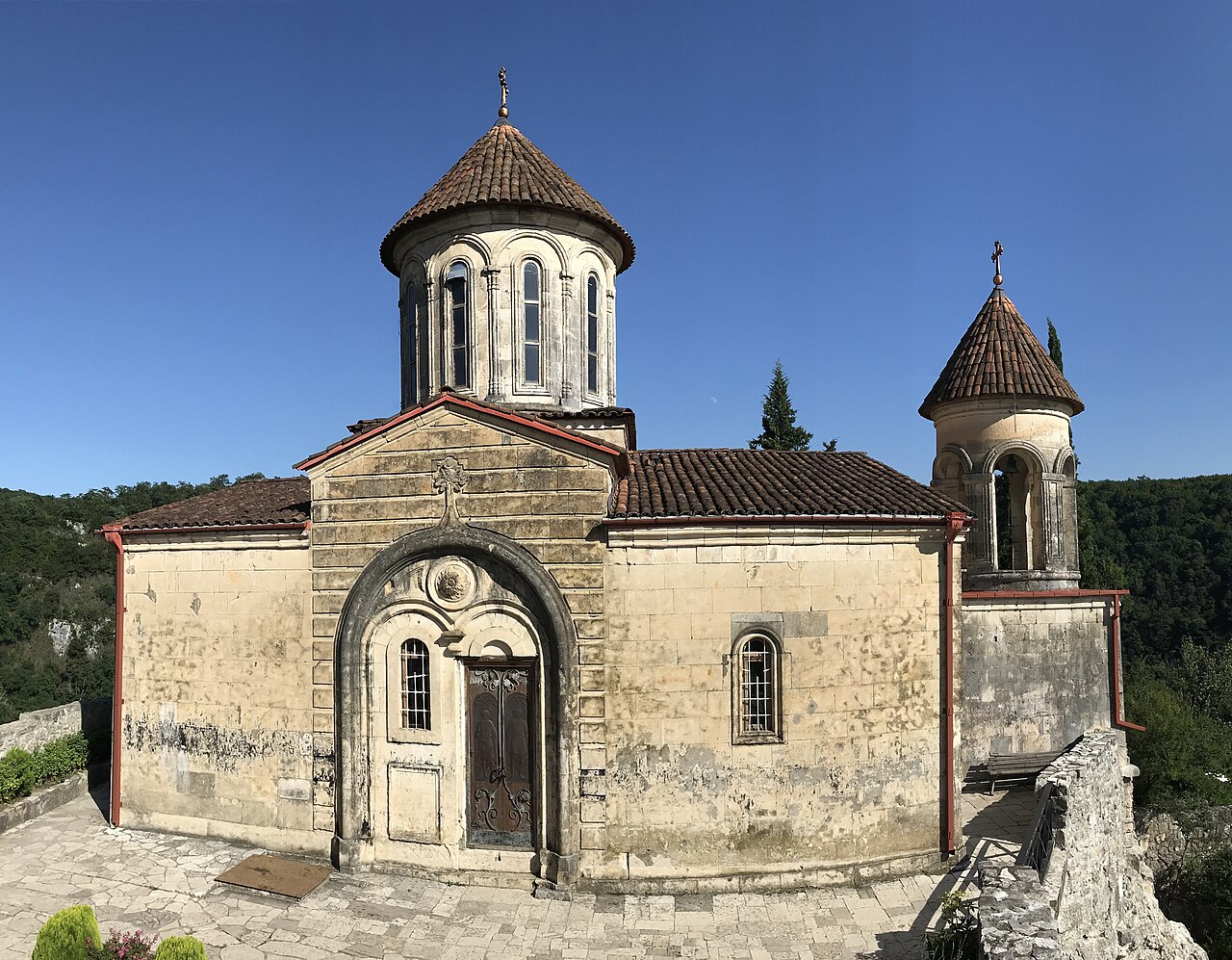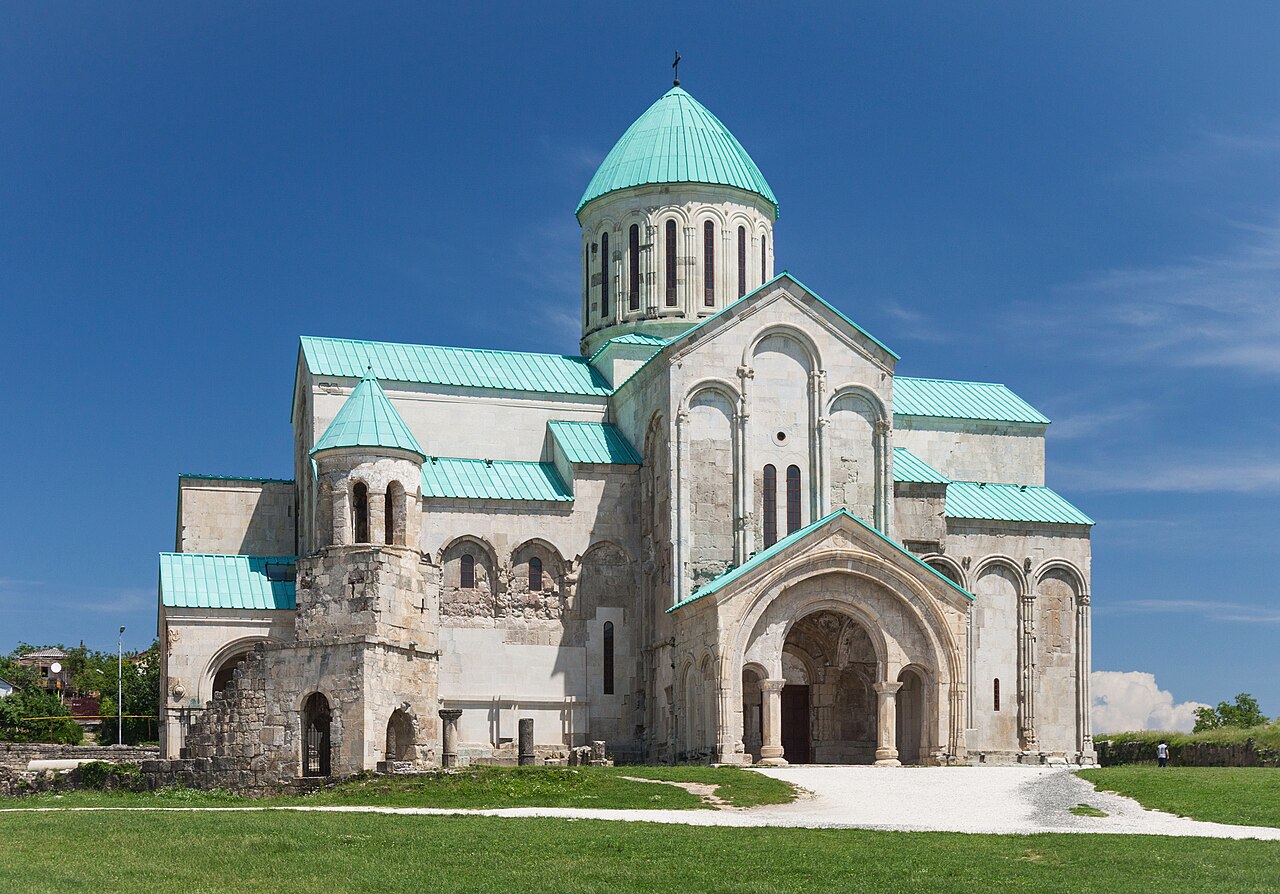
Bagrati Cathedral crowns Ukimerioni Hill above the Rioni River and is the first thing most visitors want to see in Kutaisi. It was built in the early eleventh century under King Bagrat III, the monarch who brought the Georgian kingdoms together, and for a thousand years its pale stone walls have stood as the city’s signature silhouette. The cathedral is a large cross-in-square church of golden-grey stone, partly ruined in the seventeenth century, partly rebuilt in the modern era, and still used for worship. The terrace in front is free to walk and offers the classic panorama of red roofs, plane trees and the river bend, with the mountains of Imereti folding away behind. It is a short, rewarding visit that fits easily into a first morning in town.
The story of the building is the story of Georgia. King Bagrat III, who completed the unification of the western and eastern Georgian lands, had the cathedral built in 1003, and it became the spiritual centre of the Kingdom of Georgia while Kutaisi served as its capital. The church was damaged repeatedly by invaders, and in the seventeenth century Ottoman forces blew up the roof, leaving it a roofless ruin for centuries.
Together with Gelati Monastery it was inscribed on the UNESCO World Heritage list in the 1990s, and it was later removed from the list after a controversial modern reconstruction added a new roof, floors and a lift. Visitors can still see where the medieval stonework ends and the modern work begins, and that argument about authenticity is part of what makes the visit interesting.
Inside, the space is plain and tall, with a modern floor, bare stone walls and a quiet atmosphere. Some of the original medieval fragments survive, including carved details and traces of earlier paintings, and a few old inscriptions are visible on the stone. Dress modestly, as it is a working church: cover shoulders and knees, and women are expected to cover their heads inside, with scarves often available at the door.
Photography outside is unrestricted, and the grounds around the cathedral include the ruins of old fortifications and a small area of lawn where locals sit in the evening. Services bring candles, chanting and a very different feel to the place, so ask about timings if you want to hear them.
The approach matters as much as the building. You can walk up from the old town through quiet residential streets, passing wooden balconies and small courtyards, or take a taxi to the top and walk down. The lower path leads through the Mgvimevi side of town and towards the river, and makes a pleasant circuit if you start at Bagrati and finish at the central square.
Sunset is the best moment for photographs, when the stone turns honey-coloured and the lights come on across the city. Many guided day tours combine Bagrati with Gelati and Motsameta in a single half day, which is a good way to see the three main religious sights without arranging transport yourself.
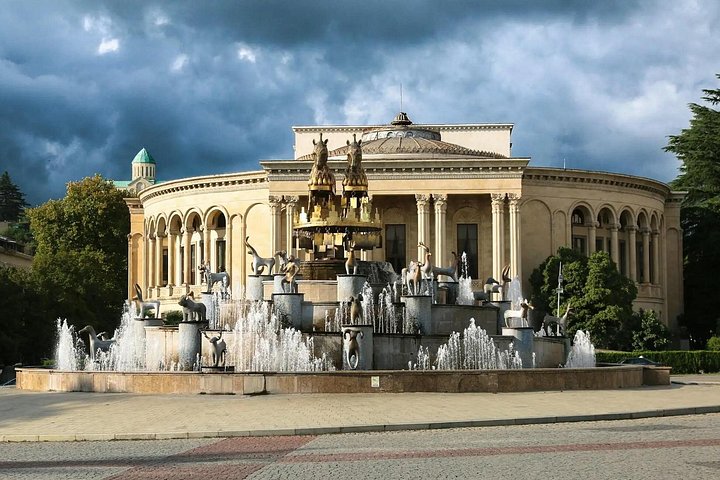
It helps to treat Bagrati as the opening move of a Kutaisi stay rather than the whole of it. The hill gives you your bearings: the old town spreads at your feet, the river curves through the middle, and you can pick out the central square, the Opera Theatre and the green roofs of the market.
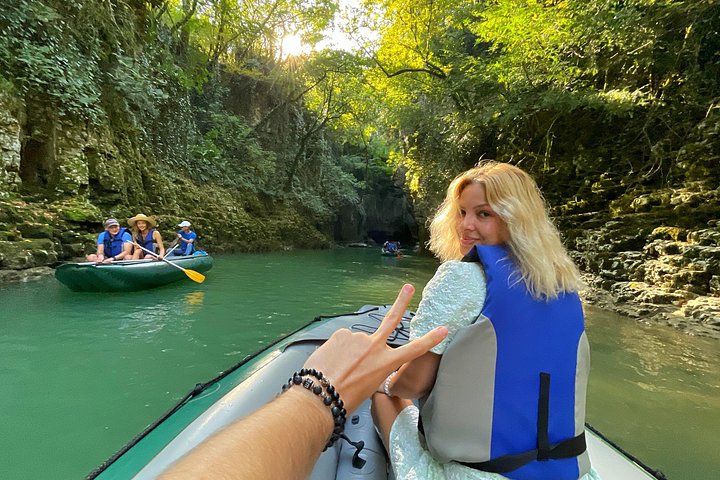
Photographers will find the angle from the lower slope, looking up at the cathedral wall against the evening sky, as rewarding as the terrace view. Because the visit is short and free, it also works well as a fallback on days when rain or tiredness rules out the longer excursions to the caves and canyons.
What to expect
The experience
A self-guided visit to a medieval cathedral on a hill, with a terrace overlooking the city and the Rioni River. Entry to the grounds is free and the church is open for visitors outside service times.
Best time
Late afternoon to sunset for golden light and the city view; early morning for quiet. Services bring a different atmosphere.
How long
About 45 minutes, or an hour with the walk up from town.
Tips
Cover shoulders and knees, and bring a scarf for women. Walk up from the old town and take a taxi down if the hill is hot. Combine it with Gelati and Motsameta in one half day.
Quick picks
- Best for
- First-timers and anyone who wants the signature view of Kutaisi in under an hour.
- Families
- Easy for children outside the church; the grounds and terrace are open and the walk is short.
- Couples
- Sunset on the terrace, followed by dinner in the old town, is a classic Kutaisi evening.
- Pair with
- Gelati Monastery and Motsameta Monastery, usually visited together in a half day.
- Time needed
- Under an hour, plus the walk up if you do not take a taxi.
Good questions
Is Bagrati Cathedral free to enter?+
Visiting the grounds and terrace is free, and the church is open to visitors outside service times. Donations and candle offerings are welcome.
What should I wear?+
Modest clothing: shoulders and knees covered, and women are asked to cover their heads inside the church. Scarves are often available near the entrance.
Is Bagrati still a UNESCO site?+
It was inscribed together with Gelati Monastery in the 1990s and was later removed from the World Heritage list after a modern reconstruction. Gelati remains inscribed.
How do I get there from the centre?+
It is a walk of roughly twenty to thirty minutes uphill from the central square, or a short taxi ride. Many people take a taxi up and walk back down.
When is the best time to go?+
Late afternoon and sunset for the light and the city view, or early morning for quiet. Services are held regularly, so check times if you want to attend or avoid them.