Gelati Monastery sits on a forested hillside a few kilometres from Kutaisi and is the finest medieval monument in western Georgia. King David IV, called the Builder, founded it in 1106 as a royal monastery and academy, and for centuries it was one of the great centres of learning in the Caucasus. The main church of the Virgin holds the best-preserved Byzantine-style mosaic in the country, a gold-and-blue apse image of the Virgin and Child, along with wall paintings from several centuries. Smaller churches, a bell tower and the remains of the academy stand around a quiet courtyard. It is a UNESCO World Heritage site and one of the few sights in Kutaisi that justifies a full unhurried visit.
The monastery was conceived as a statement of Georgian power. David the Builder, who drove the Seljuks out of much of the country, wanted a religious and intellectual centre that could rival the great Byzantine foundations, and he gathered scholars, translators and philosophers here. The academy became known as a second Athens in Georgian tradition, and David himself is buried in the gateway, in a spot he chose so that visitors would walk over his grave as a sign of humility.
The tomb is marked by a simple slab, and local people still stop to pay respects.
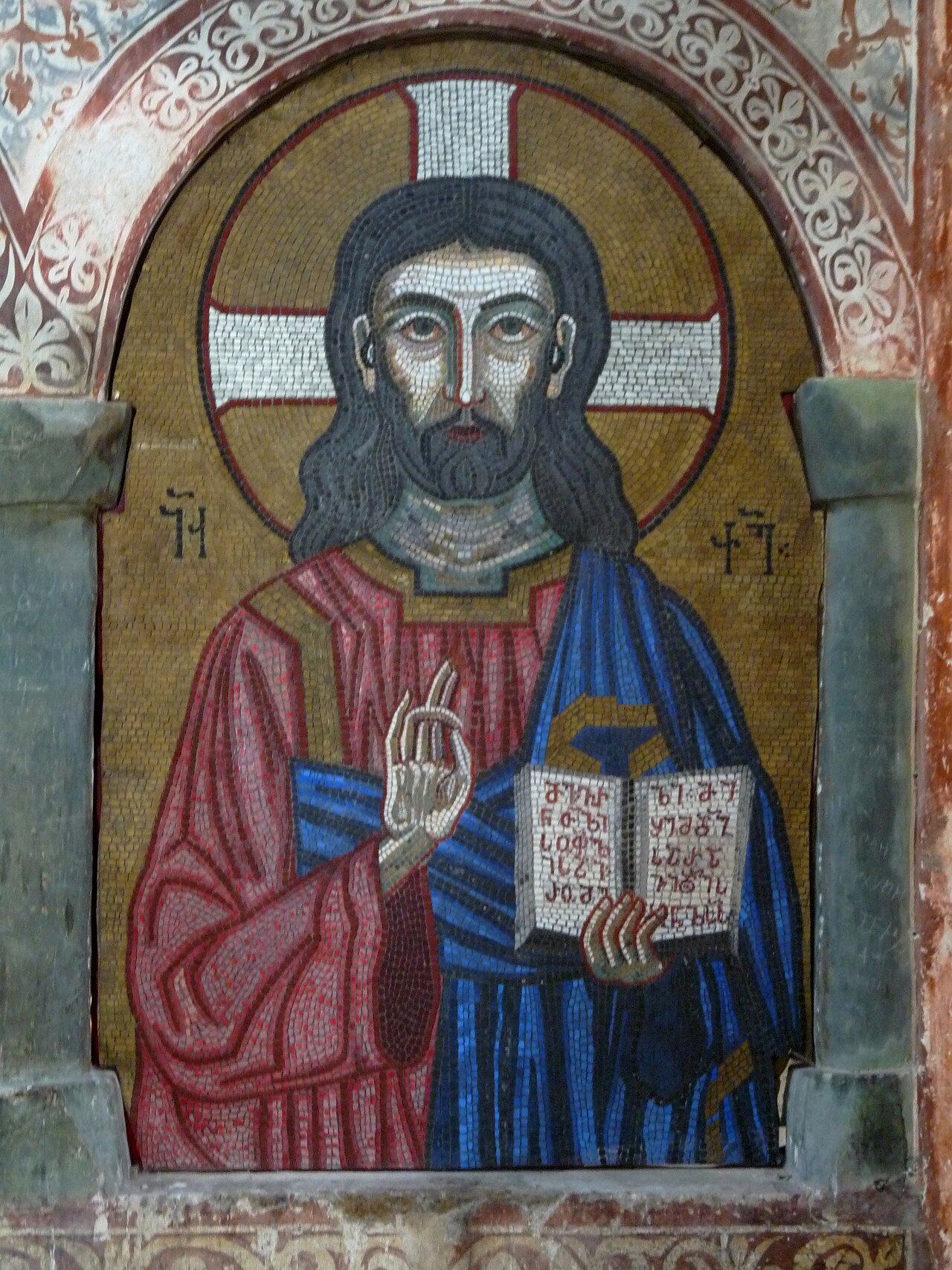
The great mosaic in the apse of the main church, dating from the early twelfth century, shows the Virgin enthroned with the Christ child, flanked by archangels. Seen from the entrance, with light from the narrow windows catching the gold, it is a remarkable thing, and nothing else in Georgia quite compares. The walls beneath carry layers of fresco from the twelfth to the seventeenth centuries, including portraits of kings and church figures.
Two smaller churches, dedicated to Saint George and Saint Nicholas, stand beside the main building, and a free-standing bell tower and the former academy building complete the group. Inside the churches dress modestly and expect worshippers; photography rules vary, so follow the signs.
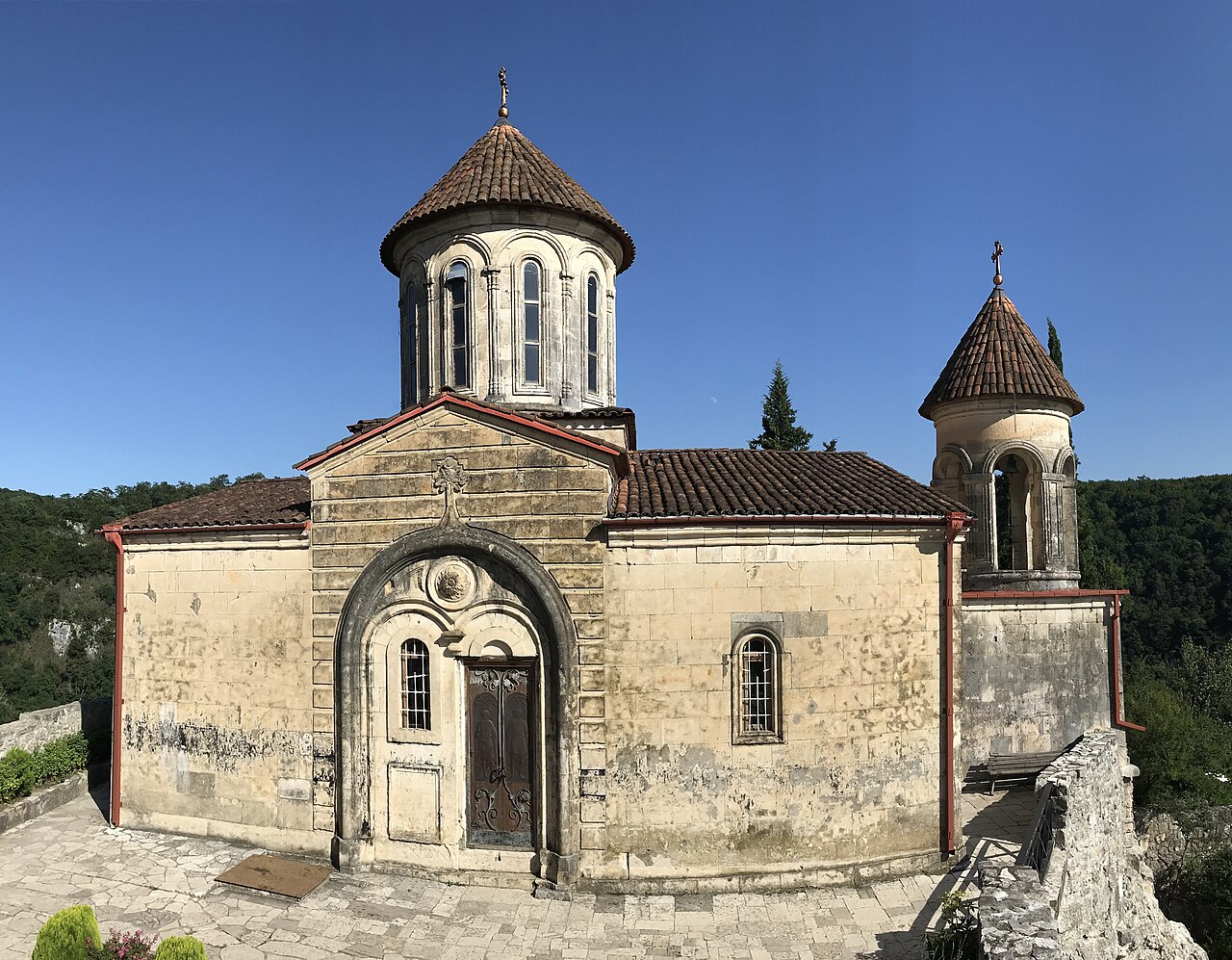
Practicalities are simple but do need some planning. Gelati lies roughly ten kilometres from the centre of Kutaisi on a winding road, so most visitors arrive by taxi, by a group half-day tour, or by combining it with Motsameta. Entry to the complex is generally inexpensive or free, with small charges for some additional services, so check on the day.
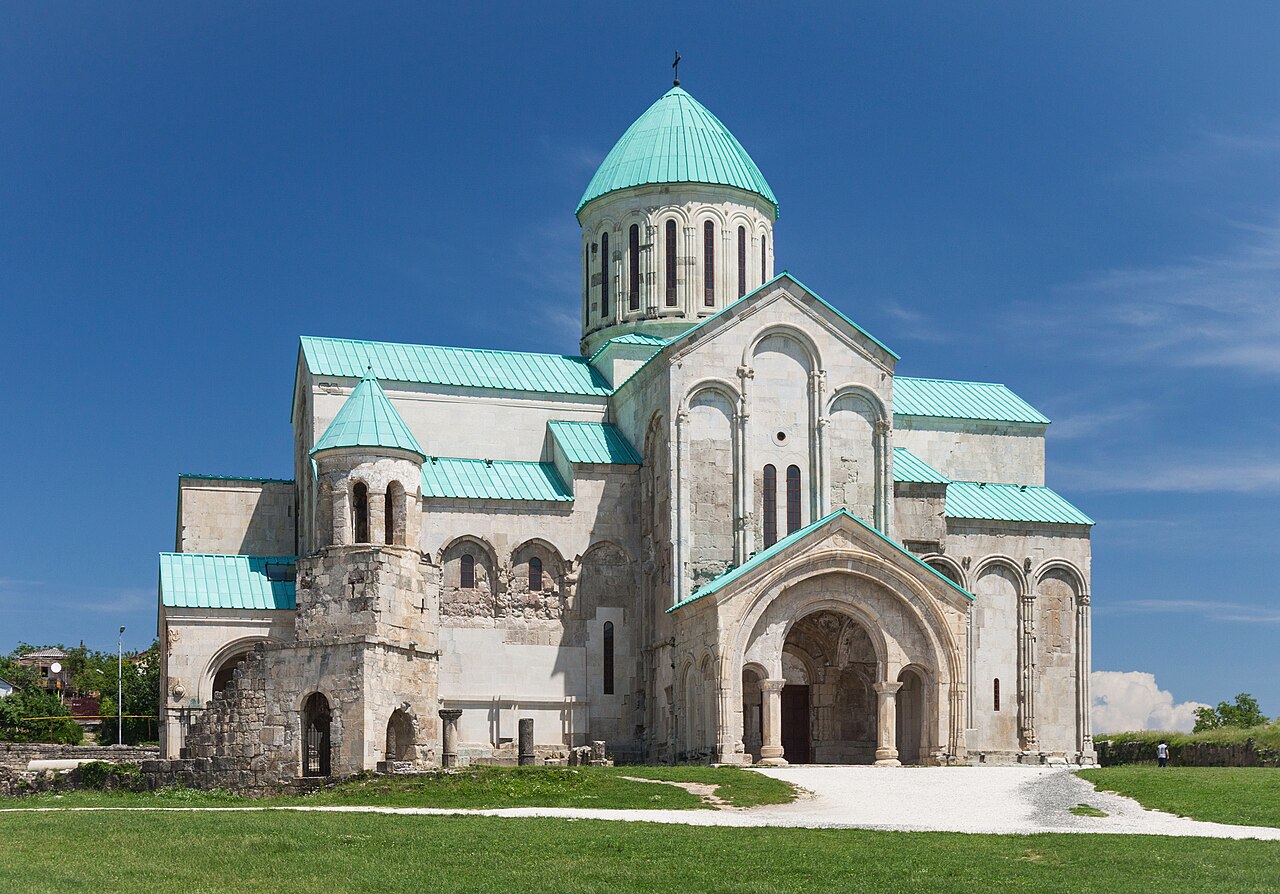
Bring a scarf or wrap, wear shoes that cope with steps and cobbles, and allow about ninety minutes. Early morning and late afternoon are the quietest periods, and the surrounding forest makes it pleasant to linger on the benches outside. Many travellers pair Gelati with Bagrati Cathedral and Motsameta Monastery for a classic Kutaisi religious heritage circuit.
The surrounding landscape adds to the visit. Gelati is set in a quiet wooded valley with a spring nearby, and the paths around the walls are shaded and pleasant on hot days. Many visitors find that the silence matters as much as the art: there are no cafes or shops inside the walls, only candle sellers and the occasional monk.
If you have time, sit for a while in the courtyard and watch the light change on the church walls. Combined with Bagrati and Motsameta, Gelati makes up the classic religious heritage circuit of western Georgia, and a half day is enough to see all three comfortably without rushing.
What to expect
The experience
A self-guided visit to a medieval monastery complex with a main church, two smaller churches, a bell tower and the remains of the academy. Entry is inexpensive or free, with small charges for some extras.
Best time
Early morning or late afternoon for quiet and soft light on the mosaic.
How long
About 90 minutes, longer if you want to sit in the grounds.
Tips
Cover shoulders and knees. Go by taxi, tour or with Motsameta in one trip. Look for the mosaic first, then the king’s tomb in the gateway.
Quick picks
- Best for
- History lovers and anyone who wants to see Georgia’s best medieval mosaic.
- Families
- Fine for children who like open spaces, though the churches are quiet places of worship.
- Couples
- A hillside monastery in a forest setting is a calm, scenic stop on a Kutaisi day.
- Pair with
- Bagrati Cathedral and Motsameta Monastery in the same half day.
- Time needed
- About ninety minutes plus travel from the city.
Good questions
Is Gelati Monastery worth visiting?+
Yes. It is a UNESCO World Heritage site with the best medieval mosaic in Georgia and a peaceful forest setting, and it is the main historic highlight outside the city centre.
How do I get from Kutaisi to Gelati?+
It is about ten kilometres from the centre. Most people take a taxi, a minibus or a half-day group tour, and many combine it with Bagrati and Motsameta.
Who is buried at Gelati?+
King David the Builder, the founder, is buried in the gateway, in a place he chose so visitors would walk over his tomb.
Do I need to pay to enter?+
Entry to the complex is generally inexpensive or free, with small charges for some additional services. Check the conditions on arrival.
What should I wear?+
Modest clothing, with shoulders and knees covered. Women are usually expected to cover their heads inside the churches.