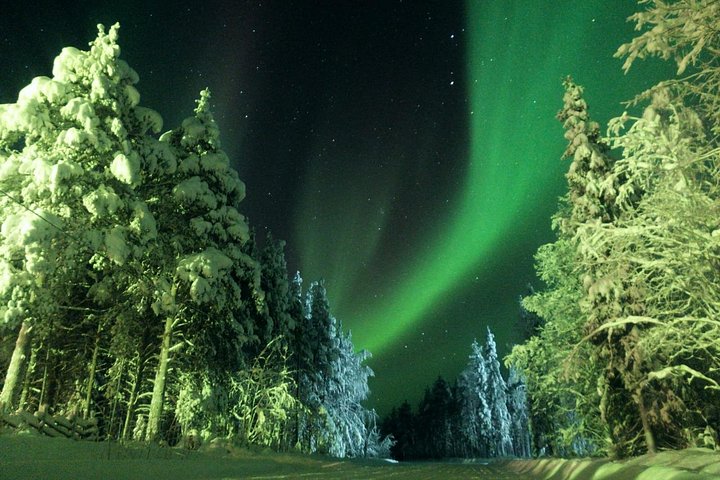
Levi lies under the auroral oval, which makes it one of the better places in Europe to see the northern lights. That does not guarantee a show, but it means that on any clear night in the season there is a real chance. The aim of this guide is to explain how the aurora works well enough to plan sensibly, and how to choose between the many ways of looking for it.
What the aurora is
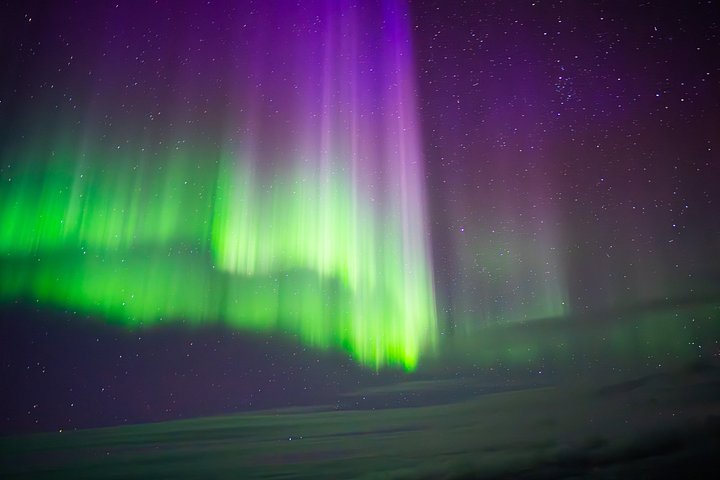
The lights appear when charged particles from the sun hit gases in the upper atmosphere and make them glow. Green is the most common colour, with pink and violet at the edges of strong displays. Activity follows the sun's cycle and varies from night to night. Forecasts of geomagnetic activity help, but local cloud cover matters just as much. A quiet sun with a clear sky often beats an active sun with thick cloud.
The season
The aurora season in Lapland runs roughly from late August to early April, when nights are dark enough. September and March are popular for milder temperatures, while December to February offers deep snow and the longest darkness. The summer months have too much light. Moonlight does not prevent a strong display, though it does reduce contrast for faint ones, so do not rearrange a trip around the lunar calendar.
Choosing a format
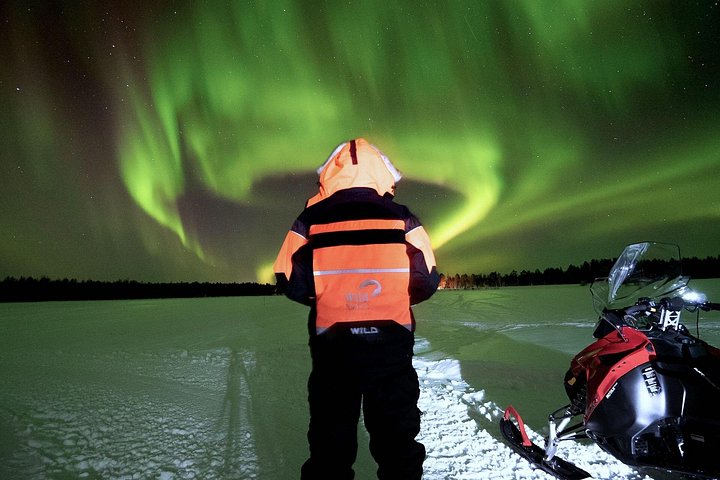
A standard guided hunt takes a small group by vehicle to dark clearings and is the most reliable option for most people. A snowmobile hunt adds adventure and covers more ground. A snowshoe walk is quiet and immersive but less mobile. A photography tour helps you capture the lights. A private hunt gives you control over timing and pace. A kota dinner combines food with a sky watch in a warm setting. Many visitors combine two formats on different nights for more chances.
Book early, book twice
The most common reason people miss the lights is putting all their hope on one night. Try to arrange at least two or three evenings in the first part of your trip, and keep the last night free if possible. Ask operators about their policy on repeat nights or rebooking when conditions are poor. Some products include extra chances, which can be good value.
What to wear and bring
Standing still in the cold requires more clothing than active outings. Wear thermal layers, wool socks, insulated boots, a windproof outer layer, a warm hat, a neck gaiter and mittens over thin gloves. Hand warmers help. Bring a charged phone, a spare battery and, if you have one, a tripod. A thermos with a hot drink is welcome if allowed. Keep batteries inside your clothing until you need them.
Photographing the lights
Use a wide lens, a tripod, manual focus at infinity and an exposure of a few seconds to twenty depending on brightness. On a phone, use night mode and brace the phone on a solid surface. Use a timer to avoid shake. Do not use flash. A guide on a photography tour can help you set all this up, and portraits against the sky are a popular souvenir.
Check the forecasts
Use a geomagnetic activity forecast and a cloud forecast each afternoon. Do not obsess, but let them guide whether to go further for clear sky. Remember that the lights can appear suddenly, even on a night with modest forecasts, and that your guide will usually know the local patterns better than any app.
Accommodation choices for aurora hunters
You can watch for the lights from almost any Levi accommodation on a clear night if you step away from bright lights, but some stays are designed for it. Glass igloos let you watch from bed, while apartments on the edge of the village may have darker terraces. Ask if your hotel offers an aurora alert service and whether it has a quiet, dark area for viewing. If you stay in the centre, plan a guided trip for darker skies and return afterwards for a warm drink.
Myths and realities
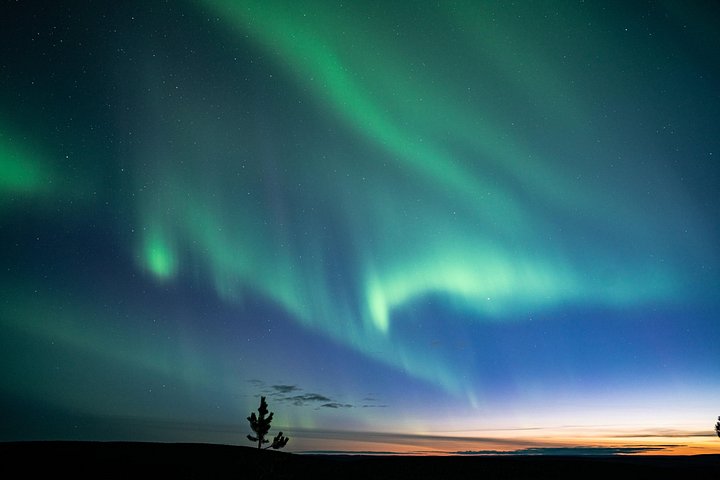
Many travellers expect constant moving curtains of green and pink as seen in long-exposure photographs. In reality, many displays are subtle and pale, and the camera sees more colour than the eye. A faint arc can look like cloud until you take a photograph. Strong displays do happen, with fast-moving rays overhead, and are unforgettable. Understanding the range helps you appreciate whatever the sky offers and avoids disappointment. Remember also that the aurora is a natural phenomenon and no operator can control it.
Be patient and enjoy the rest
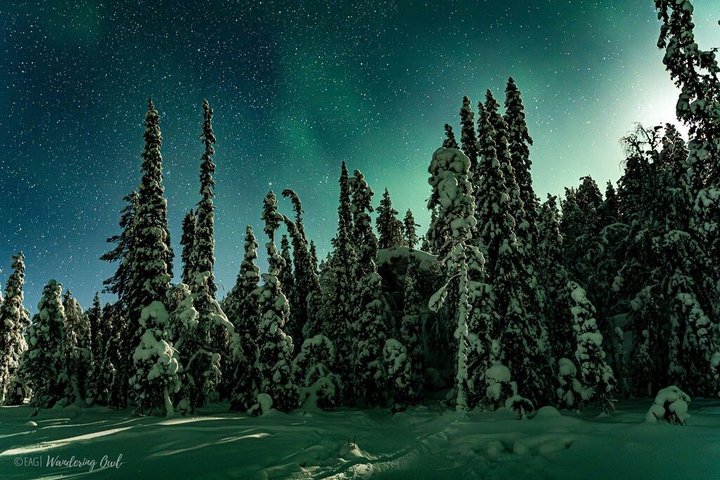
Even without the aurora, a night in the Lapland forest, with a fire and a vast sky, is a rare experience. Travellers who relax and enjoy the setting are usually happier than those who stare at a phone screen waiting for something to happen.