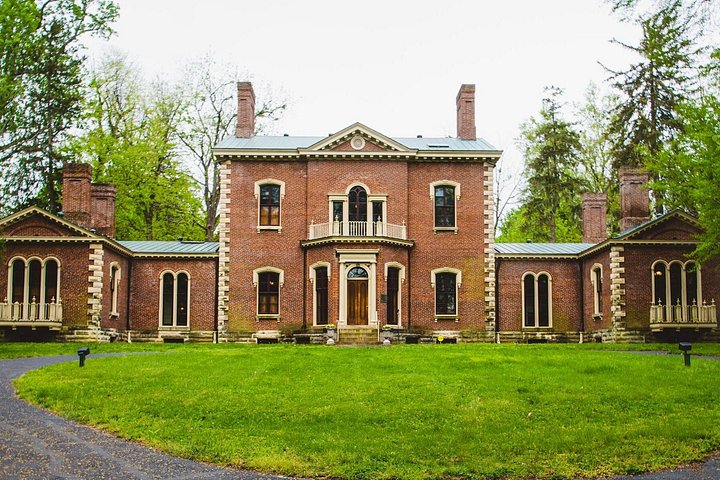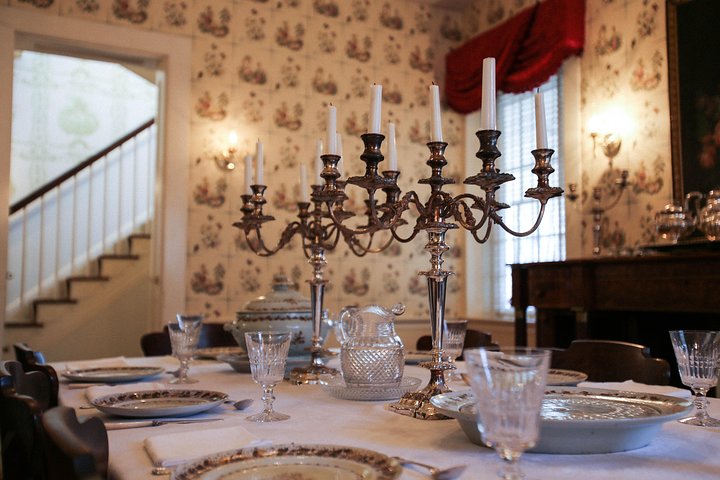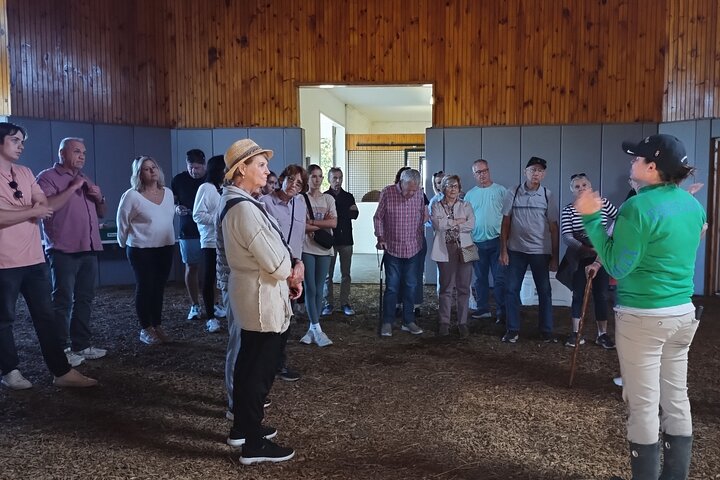
Waveland is a window onto the antebellum Bluegrass. Built in the 1840s for Joseph Bryan, a nephew of Daniel Boone, the Greek Revival mansion stands on a rise south of Lexington, surrounded by lawns and old trees. Its columned facade and spacious rooms speak to the wealth of the Kentucky landed gentry, who made their fortunes from hemp, tobacco and livestock, and who relied on the labour of enslaved people to do it. The site is run by the state and interprets both the house and the working farm that surrounded it. A guided tour walks through the principal rooms, which are furnished in the style of the period, and then moves outside to the slave quarters, the smokehouse, the ice house and other outbuildings. Guides discuss the daily rhythms of the farm, the roles of the family and the enslaved workers, and the ways the plantation economy shaped Kentucky society. The site does not romanticise the era, and it offers a more complete account than a simple mansion tour. Seasonal events add variety, from garden days and holiday tours to demonstrations of period crafts. The grounds themselves are quiet and attractive, with a kitchen garden and walking paths, and they are a pleasant place to rest between visits to the horse farms and distilleries nearby.
Waveland is a short drive from downtown Lexington and close to the University of Kentucky, which makes it easy to fit into an afternoon. Check hours before you go, since the tour schedule varies by season and the site may close on certain days. Tours are generally offered on a set schedule, so arrive a few minutes early.
Combine Waveland with Ashland and the Mary Todd Lincoln House for a history day that examines the same era from three perspectives: a statesman's estate, a girlhood home and a working plantation. The three together give a vivid sense of how the Bluegrass economy, culture and politics fit together.
The site is suitable for adults and older children, and it is a good fit for travellers who like a quiet historic house. Wear comfortable shoes and be prepared for stairs in the mansion and some uneven ground outdoors.
Allow extra time if you enjoy gardens or photography. The lawns, mature trees and outbuildings offer good compositions, particularly in the soft light of late afternoon. If you visit during a special event, such as a seasonal market or holiday programme, expect more visitors and check whether the standard tour schedule is still running. Picnicking arrangements vary, so ask on arrival if you plan to bring food.
The farm buildings reward a closer look, from the stone smokehouse and ice house to the quarters, each of which tells a different part of the story. Guides often point to small details, such as hand-hewn beams, door hardware and worn thresholds, as evidence of daily life. If you have a keen eye for architecture, bring a notebook or camera and spend extra time outdoors, where the proportions of the mansion can be appreciated from several angles and the old trees frame the view.
Bring water in summer, since the outbuildings are not air conditioned, and ask about accessibility to the lower levels.
What to expect
The experience
A guided tour of an 1840s Greek Revival mansion and the working farm outbuildings, including the slave quarters.
Best time
Spring through fall for the grounds. Check winter hours and seasonal events.
How long
About an hour to an hour and a half.
Tips
Arrive before the scheduled tour, wear comfortable shoes and check for special events.
Quick picks
- Best for
- Visitors who want a rounded view of antebellum Kentucky life.
- Families
- Older children interested in history will enjoy the outbuildings and grounds.
- Couples
- A quiet, scenic afternoon.
- Pair with
- Ashland, the Mary Todd Lincoln House and a distillery stop.
- Time needed
- One to one and a half hours.
Good questions
Who built Waveland?+
Joseph Bryan, a nephew of Daniel Boone, in the 1840s.
Does the tour cover slavery?+
Yes. The outbuildings include the slave quarters, and guides discuss the role of enslaved workers on the farm.
Is it a state site?+
Yes, it is a Kentucky state historic site.
Is it open every day?+
Not necessarily. Check seasonal hours and closing days before you go.
Is it suitable for children?+
Older children will enjoy it. Younger ones may find the house tour long.